HomeBrowseNewslettersContestsAskShare 
AllGuidesQuestionsVideosBy DateRecent Feedback My AccountAbout Us
Budget & Finance > Debt Reduction > Advice on May 17, 2011

Getting Out of Debt

Getting Out of Debt, Picture of a woman cutting a credit card.Consumer debt is at all time highs and the interest on carrying large amounts of debt is very expensive. Carrying less debt is something that every household should strive for. This guide is a guide about getting out of debt.
     

Solutions: Getting Out of Debt

Read and rate the best solutions below by giving them a "thumbs up".

Snowball Payments to Get Out of Debt

Years ago, a good friend of mine and I were discussing finances. I was a newly single mom, and was feeling overwhelmed by the prospect of trying to pay my bills. My friend told me how she handled those bills that are payments (not regular monthly bills, but things like furniture payments, car fixits, medical bills, car payments, etc.). By organizing and paying them as follows, you will be surprised how quickly they can be paid off!

First of all, figure out your budget. How much is each payment? List the debts in order from smallest to largest. Make payments to each, EVERY month. List the following information:

  • Pay to:
  • Balance owing:
  • Payment:
  • New balance:

Do this for each bill.

  1. Make the largest possible payment to the first bill (which has the lowest balance), as well as the normal payments for the rest of the bills. As soon as that first bill is paid off, draw a line through it and mark it as paid. Psychologically, that is a real boost to see the progress you're making.

  2. Now apply THAT payment to the next bill on the list, in addition to the regular payment. (Example: If you are making $25 payments on each of five bills, and you just paid off the bill at the top of the list, now apply THAT $25 payment to the second bill. Now the bill at the top of the list (in this case, No. 2), is now getting $50 per month, and the rest are still getting $25). Because the payment is currently double, obviously that bill will get paid off more quickly, and you can cross that one off.

  3. Repeat this pattern down the list, now that two are paid off, the next bill payment for Bill Number 3 is $75. By being disciplined in paying the bills in this fashion, you will be surprised how quickly you can knock off these bills and how much faster your stress level drops!

By paying the bills in this way, when one is paid off, you can make progress very quickly on the list of bills, without changing your budget/spending. It's very easy when a bill is paid off, to simply incorporate that money into the spending. By exercising discipline in paying the bills off in this way, when you get all the bills paid off, you can now put the money into savings, which was previously spent on these "one-time bills!

I hope this system of bill paying helps others who are struggling with finances! I have found that most people are good about working with a person if they receive regular payments. This way, everyone gets a little something, and the top bill on the list gets the most. By the time you get to the bottom of the list, you can make a hefty payment instead of the $25 (or whatever) you previously were able to make! Good luck!

Source: Another single mom struggling to make ends meet!

By Bzladi from Storm Lake, IA

25 0SharePrintFollow9 Feedbacks

Paying More Than the Minimum Payment

Making only the minimum payment on your debt not only lengthens the time it will take to pay off but it also ensures that you pay more interest. Why give them more of your money than necessary. You don't have to make huge payments, anything over the minimum will help. But the more you can afford to pay, the quicker you will be out of debt.

It is also important to avoid creating more debt, whether it is charging more on your credit cards or taking out loans. This will allow you to focus on paying off what you have. You don't want to stretch yourself so thin that you can't make your payments.

1 0SharePrintFollowPost Feedback

Ideas to Get Out of Debt

Getting Out of Debt, Picture of a woman cutting a credit card.

Plan

I ran across a little plan to get out of debt that really works if you just stick to it. Here it is:

  1. Begin with your debt that has the highest rate of interest. Now pay the minumum payment plus 5%-10% of your monthly income, whatever you can commit to on a regular basis. Continue to pay the minimum payment on all other bills for now.

  2. When the first bill is paid off (WOOHOO!) take the amount of the 1st bill's min. pay.+ the 5%-10% that you had been putting onto the 1st bill and add that to the min. pay. for the second bill. Pay this every month until the second bill is paid in full. Continue to pay the min. pay on your other bills.

  3. Now that you have the second bill paid off, take the min. pay. from the 1st bill, the min. pay. from the second bill, and the 5%-10%, and add this to the min. pay. for the 3rd bill. Now you are making a nice payment to this bill and it is being paid off more quickly than usual. Of course, continue to pay the minimum payment on your other bills. Keep up the good work!

  4. By the time you get to the 4th bill you are making what will seem like lump sums to paying off this bill. The trick is to keep the money that you were putting on bills going to paying off bills instead of incurring more bills with the extra money each month.

As with anything, this takes time, and as a result, takes patience.

I would also add that you must begin to live more frugally, learn to tell a want from a need, and enjoy the contentment that can come from being in control of your finances instead of them controlling you.

Fab4mom

First Step: Get Rid of Credit Cards

This is not something that is easily or quickly done. The first thing you need to do is get rid of any credit cards. Make as much as you can for payments on any loans or credit card bills you currently have. Before you ever borrow money for something make sure that it really needs to happen.

I am 31 years old and own my home (owe nothing), I drive an older car that I saved money for and paid cash. I only have to pay monthly living expense bills. Due to this when I lost my job the beginning of this year we were able to survive on my husbands income.

Our rule of thumb is if we can't pay for it now we don't have to have it. If we really want it then we save for it. My husband just built a garage this summer that we paid for with money that he has saved for the past 5 years. It would have been nice to have the garage 5 years ago but we survived with out it.

By DPCW

Start Paying off Highest Intrest Debts First

  1. Dont make any new debts.

  2. Pay off your debts starting with the one charging the highest interest. Make minimum payments on the others.

  3. When you get the one charging the highest interest paid off, start on the one with the 2nd highest interest and pay that one off, and so on. Do this until all debts are paid including your car and your house. Do not acquire any more debts until all your current debts are paid off.
Make a distinction between "wants" and "needs."

By Carol

Cut Out the Extras

Sit down and really look at your bills. Is there anything you can cut? For example: Keep the basic phone service but get rid of call forwarding, call screening, and anything else you are paying extra for. Keep the basic cable but get rid of the "premium" channels. Do you subscribe to lots of magazines? I was shocked and appalled to realize how much money I spent on subscriptions. $10 here and $10 there adds up and I hardly had time to read them anyway! I contacted all my magazines and asked them to stop service immediately due to "financial difficulties" and refund the unused portion of what I had pre-paid. I wound up getting about $30 back!

The secret is, whatever money you get back, you add to any other "found money" (like the amount you have saved by reducing other services) and you apply this money to your debt. Another huge difference for me was sending an additional payment as soon as I received "found money" instead of waiting to send it when the bill was due. Your credit card company or other people you owe money to will be happy to accept a payment at mid-billing-cycle, call and get instructions, and be sure to put your account number on the check. That way, you won't be tempted to spend the money on anything less important than getting out of debt. YOU CAN DO IT!!!!

By Becki in Indiana

Monitor Your Spending Habits

First, spend 2 weeks-a month writing down every penny spent. Even the quarters you drop in the charity bin. You'll be surprised how much the little things add up.

Then use your red pen to mark the unnecessary expenditures. Entertainment and convenience foods are big ones. These expenditures can be cut, and the money used towards paying off debt.

Figure out what you owe, and how much "extra" in fees you are paying everyone. Pay off the highest interest/lowest bills first. Hospital and college loans usually can wait the longest, don't put those on credit if you can make a deal. Pay minimum payments on all but one bill and put *everything you can* into that one bill. Once its paid off, do the same with the next card. If you have Discover or another card with good rewards, use it for groceries, pay it off completely each month, and use the rewards to pay extra bills or to buy essentials.

The important thing is to cut your spending so you can pay off bills ASAP.

0 0SharePrintFollow1 Feedback

Debt Crash Diet: Plan Well

Pre-teens are notorious drama queens. (The girls and the boys equally!) There is no easy way to tell them things are going to change drastically. Giving them a couple of months heads up helps.

When my husband and I decided to go on a Debt Crash Diet in 2006 we gave ourselves three months to plan. During those months, we eased our kids into the changes that would affect them the most.

We also took a good hard look at our spending habits. We kept a record of our spending and our earnings. You'll find that this is one of the most important steps you can take. Once you have concrete information about how you spend your money, you'll be able to define Extreme Frugality for your family.

We will live on $28,800 in 2006, $14,700 of which is rent. (We considered renting an apartment for year but decided, with the Las Vegas housing market in such turmoil, to stay where we are. Our rent is moderate for our city.)

During the three months prior to the start of our Year of Extreme Frugality, we also got our food budget under control and built up a good stockpile of staples. During our Debt Crash Diet we will cut the $1000 we normally spend on food and consumables (including restaurant meals) by three quarters down to $300. It was nice to have three months to ease into that.

The most important thing you can do during this planning period is dream. Dream big, and out loud. Do it in front of your kids, and you might have an easier time getting them on board. Put together a Debt Crash Diet scrap book filled with your ideas of what a debt-free, job-optional life would look like to you.

By Shaunta Alburger

0 0SharePrintFollow2 Feedbacks

Debt Crash Diet: Earn More

In order to meet our goal of paying off nearly $20,000 in debt and saving $12,000 in 2006, it was clear that we would have to earn more money.

To bring in more money, we can earn more per hour, work more hours, or sell something. We plan on utilizing all three strategies during the next year.

For three years I was a paralegal with a home-based business preparing divorces and bankruptcies for my clients. I found the work depressing, so last year I started a different business, an online vintage clothing store. As much as I love my store, I can earn at least twice as much money per hour as a paralegal, so I've hung my shingle back out again. I can do anything for a year, right?

Kevin already works at a fairly high-paying casino on the Las Vegas strip. There are a small handful of very-high-paying and hard-to-get-into casinos in Las Vegas, and he will apply for work at this year. In the meantime he's taken a part-time second job.

We will also be selling my vintage clothing stock and a collection of memorabilia that is a throw-back to Kevin's bachelor days. By using these strategies, we'll be able to raise our income from $45,000 to about $60,000 in 2006.

I get a lot of email from people who want to get out of debt quickly, but don't want to do what they have to do to raise their income. While it is certainly possible to get out of debt on whatever your current income is, you probably won't be able to do it very quickly.

Get in the habit of reminding yourself that you can do anything for a year. When the year is over, your life will go back to normal. Except that you'll be debt free and have substantial savings, so suddenly even your one job is now optional.

By Shaunta Alburger

0 0SharePrintFollow1 Feedback

Debt Crash Diet: A Giant Step Toward a Different Life

Editor's Note: Shaunta Alburger has agreed to write articles for ThriftyFun. This is Part 1 of a 4 part series she has written about her plan to go on a Debt Crash Diet in 2006.

Do you have to work a job that doesn't fit your life because you can't afford to quit? It boils down to one thing; you work the job for the paycheck. You need the paycheck because you have debt.

I have a solution. Go on a crash diet. I'm not talking about giving up food so that you won't need to work as many hours. Go on a debt crash diet. Are you serious about being a full-time writer (or something else)? I have a plan that could bring you one giant step toward that goal.

A debt crash diet is simply a year of very intense thrift, during which time debt is eliminated and savings are built. Let me put my money where my mouth is, and tell you that my family is going on a debt crash diet in 2006.

A debt crash diet will take fifteen months; three for planning, followed by that year of intense thrift.

Will it be easy? I really doubt it. We're cutting our food bill by 2/3 and putting off replacing our twelve-year-old minivan. For one year, we are giving up movies, eating out, gym memberships and cable TV. Our goal is to pay off nearly $20,000 in debt, and to save $12,000 in one year.

I'd like to ask you to stop for a moment and ask yourself what being completely out of debt and having a four-month supply of money would mean to you. Could you stand to live a work-optional life? I thought so.

I can't promise that a debt crash diet will make your full-time writing dreams come true. I can promise that when you're through, you will be working to pay for today, instead of yesterday with interest. You will have gained some valuable insight into which material needs are most important to you, and which you can give up for good.

By Shaunta Alburger

0 0SharePrintFollow8 Feedbacks

Debtors Anonymous For Financial Help

I just found a great financial resource. We all have issues around money, and a place to take those issues is Debtors Anonymous (or DA for short). It's a 12 step program all around financial issues, and it includes working with businesses, too, which I didn't know before. Went to a meeting with a friend, and the folks were very nice and the atmosphere was healing, unusual to find around monetary problems! The national site, with links to your local groups. Boy, 12 Step Groups are a thing to be proud of, and all run on modest donations.

By pamphyila from Los Angeles

0 0SharePrintFollowPost Feedback

Not Buying Scratch Tickets Helps Pay Off Debts

For every day I don't buy a scratch-off lottery ticket, I put the $2 I would have spent on it, and put it into an envelope and as it builds up I take it and apply it to a debt. It seems like found money and feels great making the payments

By Michael McIntosh from Greenwich, CT

0 0SharePrintFollow3 Feedbacks

Debt Crash Diet: Spend Less

In the book Your Money or Your Life, author Joe Dominguez makes the point that money is really an exchange for your life force. Every dime spent, represents the time and energy you spent earning it. So, being good stewards of our money really means being good stewards of all of our resources.

When I prepared bankruptcies for a living, I was constantly surprised at the amount of money people throw at their cars. My clients were sitting in my living room discussing their impending bankruptcies. And for many, their biggest concern was holding on to their $600 a month SUV.

Occasionally, if a client seemed interested, I would mention that our entire ugly, elderly mini-van cost $600. This statement was universally met with blank stares, followed by an awkward silence.

The fact that I was dealing daily with people who would file bankruptcy before driving an old car is one reason why I stopped doing it.

Kevin will be working a full-time and a part-time job away from home during our Year of Extreme Frugality. I'm very aware of the sacrifice he's making, especially considering the amount of time he will miss with our baby daughter, Ruby.

I consider it my job to make sure that every penny we earn is well spent. We will be living on less than half of what we earn. That's a big change for a family that has been living on every penny we earn, plus some that we borrow from credit card companies.

If your goal is to live on one income when your debt crash diet is over, start doing that now and use the rest for debt repayment and savings. Sit down and figure out the very least that you can live on, and then vow to spend a year living on that much. Every other penny gets saved.

We were able to reduce our home phone, cell phone, cable television and internet services from nearly $500 a month to less than $200. We gave up cable all together. We're also giving up restaurants and movies in 2006.

What can you give up in the name of being debt-free and job-optional? Can you eek some extra money out of your food budget to use for paying down your car loan? Do you need high speed internet? Could you get by with one car for a year? Maybe move into an apartment until your debt is repaid?

By Shaunta Alburger

0 0SharePrintFollow4 Feedbacks

Simply Debt Free

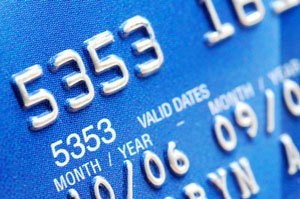
Close up of Credit Card The average American credit card debt is over $5,100. While it may not seem like it, this balance is manageable. Within three years it can easily be paid off provided that new charges are not added to the debt. That's the most difficult part of the plan. Take this not-so-new and not-so-difficult plan of action towards eliminating your credit card debt.
The Habit

No plan will work if you continue to build up the balance on your cards. First, focus on the habit of not using your credit cards. Pretend you no longer have them. Pay in cash instead and do some evaluation of needs versus wants. While my house needs new windows throughout, we created a plan to replace a few in spring and a few more in fall. Within two years my entire house will have new windows and I will have added $0 to my credit balance. I certainly could justify installing all of the windows now; they're old and somewhat drafty. However, I can pull down the storm windows for one more winter. It's a good feeling to write the check and know that I don't owe on the new set of windows. Instead, I can start to save for my next set without paying extra interest charges.

Organize the Plan

Once you have established the habit of not using the credit cards, look at what you owe. Inventory all of the accounts, their balances, and their interest rates. Now, there are two ways to tackle this inventory.

  1. If one card carries a small debt, try to pay it off in one or two months. This isn't your most profitable plan, but sometimes having the debt spread out is confusing and overwhelming. By eliminating a few smaller bills you can now easily focus on the larger ones.
  2. The most profitable plan is to pay off one debt at a time, starting with the one with the highest interest rate. While it may look like chipping at a mountain with an ice pick, it is the best choice. Pay all the minimum fees on all of your cards, and then pay extra towards the highest interest card. A good rule of thumb would be to pay an extra $100-$200 dollars each month.

With this plan all of the cards are moving towards the goal of debt free, but the most expensive one is moving at a faster rate. Whenever extra money comes your way from overtime, bonuses, or other incomes apply that extra money directly to your month's payment plus the extra $100 you intended to pay. When it gets frustrating, use that frustration to motivate yourself further. When you're debt free all of your money is yours. Keep in mind that the end is in sight in a few years.

Amazingly, the first credit cards were issued in 1950 and there were only 200 of them. That's a far cry from the 1 billion credit cards found in America today.

By Kelly Ann Butterbaugh

0 0SharePrintFollow1 Feedback
Share Your Feedback: Once you try any of the above solutions, be sure to come back and give a "thumbs up" to the solution that worked the best for you. Do you have a better solution? Click "Share a Solution" above!

Questions

Here are questions related to Getting Out of Debt.

Help Dealing With High Interest Credit Card Debt

I cannot keep paying this credit card at 39%, what can I do?

By yoyojoe from Las Vegas, NV

SharePrintFollow4 Feedbacks

Most Recent Answer

By Anonymous 08/28/2009

Just came across this and it might have some helpful info for you:

http://www.nytimes.com/2009/08/22/y ... r=rss&emc=rss&pagewanted=all

Sinking In Debt, More Bills Than Income

We have over $22,000.00 in credit card debt, 2 car payments and can't get rid of them for we owe more than they are worth, a house payment and heloc loan we got when we purchased our home for the down payment, medical bills, and the utility bills.

We have an 18 y/o senior without a car but she works a part time job which is not enough to save for a car, she has a 3.86 grade point average but has not qualified for a college scholarship which she needs desperately.

Bottom line is that we have way more bills than income and are sinking fast. I am married and mother of two. I hardly know them anymore for I work all I can.

The bills are all paid on time so far but I know without a miracle, we will sink . Does anyone out there have an answer that will give us some hope? Your help is much appreciated.

My husband is out of work on medical leave in which doctor will not release him to work at this time. He still has insurance from his job but has used up his disabilty money which has left him with no income but his company is still providing the medical insurance.

I am a nurse and work hard. We are not lazy people but I know we have made bad choices. Thank you in advance for some good advice and your prayers most of all.

ablssdmm

SharePrintFollow27 Feedbacks

Most Recent Answer

By TXBetty 10/09/2009

I have upmost respect for those who get out of credit card debt and learn their lesson; for the others I have no sympathy. For those who don't pay, the rest of us pay in the long run.

Getting Out of Debt

I hope someone can help me with my problem. I am deep into debt and I would like to know if someone could guide me with a very basic easy way to get myself out of this ordeal. I have tried everything that i could and still I fall back. I am going to start this week when i get paid to get this monkey off my back. Could suggest a very simple and basic budget or using the envelope method what ever it takes. I don't want any thing that is to complicated right now.

I am looking at about seven thousand in total debt that includes miscellaneous items and credit card debt. I also owe the IRS. What should i do first? I get paid bi-weekly total of 679.86 monthly. Also, I have a second job in retail so that check is not always the same, It goes by the hours I work. Help me please someone.

Malmal from Boston

SharePrintFollow24 Feedbacks

Most Recent Answer

By Pay Off Your Debt (Guest Post) 07/25/2008

Don't claim bankruptcy. It's not fair to put your bills on others and drive them under too. Pay them off gradually as best you can.

Best Strategy for Paying Off Debt and Repairing Credit

Would it be better to get my credit repaired by going down the list to pay off collections, charge offs, and other delinquent debts when I get my taxes, or shall I seek a credit counseling service, or a debt consolidating company, or should I wait til these reduced percentage choice offers come through the mail box? Please help me because I am truly suffering, I cannot get a loan. I am constantly rejected.

By Crissie from Los Angeles

SharePrintFollow3 Feedbacks

Most Recent Answer

By Lorelei 12/30/2010

If any of the bills are medical or hospital, you can speak with the billing dept. or better yet drop in and take all your outstanding bills with you and they can help set up a monthly payment plan that's affordable and it helps in the long run. You're still paying them off, but it shows you really are caring and trying to pay them off in their time frame. In my case, I had 18 months and was able to pay it off sooner.

What are the main priorities in your stack of debt that really should be paid off first? Yes, high finance charges is one option to choose, but what if it is a need for another vehicle to be replaced in the very near future and to pay down the debt before trade in time is another option. OR, someone needs medical attention that no longer can be put off, perhaps getting those bills paid down will be more critical. Talk to your c.c. company(ies) and see if they'll bring down the interest if you agree to work on paying it off and not put to use in the meantime. You can have your own c.c. account frozen w/o the assistance of another party involved.

I don't really like to recommend refinancing large debts like homes, cars and such, but sometimes one feels the dire need to do so and that helps take the strain off the budgeting; however, it oftentimes does not stop the spending spree or puts the extra dollars to best use. Consider that before doing any refinancing.

When you get single dollars back from making change at store or gas station, etc, put them in a safe place and keep adding to it. Before you know it, you've enough money for an emergency or to help pay on a monthly bill. This really does work and a lot faster than coins. I got this idea from a professional money advisor in some magazine article and I surprised myself at seeing how many single dollars added up quickly after trying.

Keep a close check on everything you buy starting with one week; save all those register tapes to refer back and see where your money goes on what. You might decide where you can cut back even more. Write down amounts and what it was for if you do not have any register tapes like gas stations or such.
This gives you a visual aid to see where your money goes and on what.

If you do movie rentals, go to the local library where you can get them free with your library card. Look at your phone landline bill and see if you can cut back on charges that aren't necessary they bill you for monthly like the internal lines just in case it ever needs replaced. Use fluorescent light bulbs in your home as it's low energy. Look for ways you can save dollars and cents around the house. Close off any rooms you don't use to save on heating expense. Unplug a lot of appliances that aren't used all the time like a toaster, radio, etc. Current is still traveling through those lines even when not in use. There are lots of little things that can help cut daily expenses to bring down costs each month. Learning to teach one's self thrifty ways isn't easy as it's sacrificing and take practice, but it's not impossible either. Just get your mind set on a plan and follow through til you've reach your goal which is helping to get out of the debt burden. Good Luck to you.

Reducing Debt

Do I really need a credit card? I am a divorced mother of two and wanted to get rid of some debt. Does it make sense for me to have a credit card? I'm wanting to close my credit card and just put money into a savings account.

By Cheryl

SharePrintFollowPost Feedback

Most Recent Answer

By barbg7 10/31/2012

I would keep it. You never know when you might need a new fridge, stove or something that you just don't have the money for and they won't set it up on payments. You never know when an emergency will come up. Just don't use it otherwise.

If an emergency does come up and you use it, pay it off as soon as possible, preferably pay it in full when the credit card bill comes in. Always pay as much as you can on the credit card bill. Do not pay only what the monthly payment is.

Tips for Becoming Debt Free

How to become a debt free?

By Roager F

SharePrintFollow2 Feedbacks

Most Recent Answer

By frugalsunnie 05/27/2012

The best way to become debt free is to sit down and write out a budget. There are several sites (including this one) that have loads of free info on how to create one and many offer free template downloads.

But the basics are this-in one column write down all the bills you must pay each month (rent or mortgage, utilities, personal loan and credit card repayments, insurance, cable and internet, mobile phone, etc).

In the next column list what you spend on groceries, petrol, clothing.

In yet another column list what you spend on 'misc' items like books and magazines, theatre tickets and/or movie and video games, meals out, cigarettes, beer or other alcohol, and similar expenditures.

Be honest-if you splash out on a latte every day, write it down! If you spend a lot on groceries, make sure you write that down. Always round up to the nearest dollar to give yourself a bit of a cushion for price rises.

Total each column and then add the totals together to arrive at one sum to represent your total monthly outgo.

Now list your total monthly net (after taxes) income.

Compare the two totals.

Oh dear! You're spending far more per month than you are taking in!!

So go back to the outgo columns, figure out what you can eliminate and then do so. Stick to it.

It will take a while to pay down whatever debt you have, so stick to it. Double up on payments like mortgage and credit card or other personal debt-make sure to note on the doubled payments that the extra is to apply against the principal or the sorry creditors will apply it against interest only, and you'll still have that big principal to pay down. They love to do that because the higher the amount of the principal, the more interest they can charge you-it's a vicious and never ending cycle, and that's how they make their money, from interest!

It won't be easy but being debt free is the absolute best feeling ever.

Dealing With Credit Card Debt

My income is cut in half. My credit card bills are overdue. They are calling all the time and I don't have extra money to pay them. How do I start climbing out of this hole that I am in? I can't get a second job; I have tried! I can't even sell the family heirlooms. I am scared and worried! Any advice?

By Lynette from Ann Arbor

SharePrintFollow8 Feedbacks

Most Recent Answer

By netters 06/06/2010

Thank you all this has been very helpful! I have done many of the things that are suggested . But I am going to do more. I do believe in god and am praying a lot. Thank you all! God Bless!

Archives

Here are archived discussions related to this page.

Help Dealing With High Interest Credit Card Debt

I have a major problem. When I was in my late teens I moved out on my own and got approved for two credit cards. Of course not thinking ahead I maxed them both out and beyond that point. It is now several years later and my 23% interest rate credit cards still exist with a combined total of about $6,000.00.

I haven't used them in about two years now. I have a very strict budget and only can afford to pay about $10.00 over the minimum payment due. But with the interest rate being so high it doesn't seem to make a difference what I pay on them I can never get ahead.

I really want to pay this dept off! I want to buy a house so badly, but with my credit being so bad I feel like that is never going to happen. I have tried calling my credit card companies to lower the interest rate but they are not very helpful. What can I do? I need advice so badly, please help. Thank you.

Robin


RE: Help Dealing With High Interest Credit Card Debt

Robin,
Congratulations on stopping your use of the credit cards! That is the first step in getting out of debt. If I were you, I would look for a new credit card that will accept balance transfers at a reduced rate. Credit card companies offer this all the time. Just make sure that the reduced rate is for the life of the transferred balance, not just an introductory period of a few months. I just got an offer from my credit union to transfer balances for 8% for the life of the balance. If you have made regular payments on your credit cards, then your credit should still be good.

A good starting point would be your bank or credit union. You could also ask your friends and family to keep their eyes & ears open for you for any similar offers they receive and then you could call the company and apply. Good Luck! If you stick with your budget, I know you'll have success. (02/19/2005)

By Debbie

RE: Help Dealing With High Interest Credit Card Debt

Either, 1. Get one very low interest card to transfer the two accounts onto, and pay onto the one what you are currently paying the two, pay it off completely. OR, 2. Pay 15 over minimum on the lowest balance until paid off (5 over minimum on the higher balance), then put that total (paid off card payment + regular payment on higher card) towards the balance left on the remaining card. It might take a couple of years, but you will save your credit. (02/19/2005)

By connie

RE: Help Dealing With High Interest Credit Card Debt

There are many credit card companies that give an introductory period of three to six months without interest. I suggest that you switch the entire balance often to one of these companies, and keep paying anything you can afford. (02/20/2005)

By Karen.

RE: Help Dealing With High Interest Credit Card Debt

How about contacting a debt-relief program? We were in a similar situation (to the tune of $8000). I called Consumer Credit Counseling Service. They were really friendly and helpful. They contacted the credit card companies and got most of them to reduce the interest. We paid $40 a week until it was paid off. It took 5 years but it was worth it. Five months after paying off credit cards, we qualified for a Rural Development loan and now live in our own home. I don't know if this company is available in your area, but there may be similar ones. Good luck and hang in there, it will get better. (02/21/2005)

By Michelle

RE: Help Dealing With High Interest Credit Card Debt

Hi Robin,

Please call Genus Credit Management at 800-955-0412. Genus Credit Management is a not-for-profit credit counseling agency, offers free debt management and educational programs that help financially distressed families and individuals effectively manage their finances. Our clients are asked to make a contribution to AFS-Genus if they can afford to do so. All contributions are voluntary.

Website: http://www.genus.org/

If any company indicates a handling fee - DO NOT USE THEM. Genus Credit Management has been around for 20+ years - longer than 95% of the companies out there that say they can help you reduce your debt.

Trust me - I've been in banking for over 25 years, and I refer clients to this organization! Cindy (02/22/2005)

By ChildlikeGrownup

RE: Help Dealing With High Interest Credit Card Debt

For sure transfer the balances to another credit card with lower interest. You've probably been bombarded with credit card offers from other companies like my teenage son was once he started using his credit cards. He also went over the limit on his, and is in the same situation. I transferred his balance to another lower interest card, cut up the cards and he paid his off in 6 months. (03/06/2005)

By lilithjune

RE: Help Dealing With High Interest Credit Card Debt

The key is, even if you only pay the minimum (or $10-$15 over), do not decrease that amount as the balance goes down! Credit card companies WANT you to only pay the minimum, that's why they make it so low and decrease it as the balance decreases. Keeping your payments level (even at the minimum payment when you first start on the program), you'll pay them off much faster.

Go to www.cheapskatemonthly.com or bankrate.com and use their calculators. Good luck. (05/29/2006)

By miarocks

RE: Help Dealing With High Interest Credit Card Debt

Does anyone know if I can call the credit card company and ask them to apply my monthly payment to the higher interest rate on my card? I have a promotional rate and a high regular rate. I would like to pay the higher one off first but they always apply it to the lower rate first. (12/06/2006)

By andy

RE: Help Dealing With High Interest Credit Card Debt

Andy, you should try to call your company and ask them. If they won't do it, then find a new company. I recently changed companies and went with Capital One and have been very happy with them (so far). (12/06/2006)

By Persnickety Paula

RE: Help Dealing With High Interest Credit Card Debt

If it is a good card company they will work with you in order to keep your business. Last year our card company raised their yearly fee to almost double. I contacted them and told them I wanted to cancel my card, they asked why and I told them. They agreed to reduce the yearly rate to back to where it was before so I would keep the card. Doesn't mean to have to continue to use the card, cut it up! They won't know, they will think as long as the account is open that one day you will use it again, but in the mean time you will save a little money. Then when it is totally paid off, cancel the card. (12/06/2006)

By imaqt1962


Snowball Tip For Getting Out Of Debt

These tips are for getting out of debt. I came across the snowball tip when listening to Dave Ramsey, so I can't take full credit. First of all, create a budget that allows for a reasonable standard of living or else you won't stick to it. Then, focus on paying off the debt with the smallest balance by paying every last extra cent you have toward it. Once that's paid off, focus on the next one with the lowest balance. You'll be able to apply the amount you were paying on the first bill in addition to what you normally were paying. Keep this up until everything (maybe even your house) is paid in full and don't accrue any more debt in the process.

By Michelle from Lompoc, CA


RE: Snowball Tip For Getting Out Of Debt

It might be a good idea to pay off the debt with the highest interest rate first, rather than the one with the smallest balance. Mathematically, this saves you money in the long run. (01/09/2007)

By Beth

RE: Snowball Tip For Getting Out Of Debt

Dollface, just wanted to say a big-time thanks for getting the word out about Dave Ramsey and deep-sixing debt. Good luck with your own dough. Way to go, baby! (01/09/2007)

By DEBTective

RE: Snowball Tip For Getting Out Of Debt

The deal with paying off the smallest first with Dave Ramsey's method is the emotional satisfaction you get by paying off the smallest debt first. Then, you gain a foothold and you have one less monkey on your back a lot faster than if you go for the interest rates. (12/06/2008)

By Susan


Dealing With Credit Card Debt

Dealing With Credit Card Debt
Consumer debt is through the roof right now. Americans have more credit card debt than ever and are having a hard time paying it off. With lowering home values and skyrocketing foreclosure rates, many people are struggling to keep their homes and maintain a good credit record. More and more, we have become a culture of debt.

What are you tips for paying off credit card debt? Please post them below.


RE: Dealing With Credit Card Debt

I learned from a class that I took called "Financial Peace," written by Dave Ramsey. His website is www.daveramsey.com We learned how to do the payoff each by the "snowball." (02/26/2008)

By okstamper

RE: Dealing With Credit Card Debt

Quite simply, don't carry your credit card in your wallet. That way you won't be tempted to buy something you really can not afford.

Also, when you do use your credit card, if it's not a purchase you can pay off in one billing cycle. Set up a personal plan to pay it off as soon as possible. Budget, budget and budget. (02/26/2008)

By Tigger1971

RE: Dealing With Credit Card Debt

I use this payment method with my clients:

Write down the balance you owe on each credit card, next to that write down the minimum payment the credit card company wants you to pay each month. Then divide the balance by the minimum payment and write this next to the minimum payment. Pay off the lower number first with whatever you can afford AND continue making the minimum payment(s) on the other credit cards. When the 1st card is paid off move to the next card and pay the minimum amount PLUS the payment you've made on the 1st card. Do this on all the credit cards until they are paid off. AND DO NOT charge anything unless it's truly an emergency. (02/26/2008)

By Steve

RE: Dealing With Credit Card Debt

Don't run up credit card debt in the first place. It takes self-control to resist temptation in stores - marketers have spent their entire careers thinking up ways to make you "need" something that you really don't. An eye-opener for me was taking an elective class in marketing when in college. The ways the marketers add what they call "value" in the customer's eyes are infinite.

Look at the way cosmetics and jewelry items are displayed in a department store. They are very carefully lighted, and placed in display cases that you have to walk completely around to get to the other side of the store. Or analyze the marketing that goes into something as mundane as a vacuum cleaner or tube of toothpaste. Really LOOK at the ad - what is the message behind it? That if you buy this product you will be a better person? That your spouse will love you more if you buy this or that thing? How can a vacuum cleaner or toothpaste do that?

The background music in stores is selected for the customers they are trying to reach. Now they're experimenting with smells too. Or even the tool sections at Sears, Home Depot, Lowe's, etc. - look at the lighting and bright colors, all designed to make you want this or that product. EVERYTHING in that store is designed and intended to separate you from your money. If you walk into a store knowing that, you are forearmed. (02/26/2008)

By Walt816

RE: Dealing With Credit Card Debt

If you have trouble balancing out the month, set aside cash equal to your credit purchase, and keep that up each day. At month's end, write the check, which your cash covers, and owe nothing. Why bother with credit cards, then? Why indeed. Well, you may like not having to carry the cash, though stores raising their prices 2-3% to compensate for card users seems a bit...unthrifty, nor much fun. (02/26/2008)

By peseta

RE: Dealing With Credit Card Debt

We had accumulated some credit card debt from school and major car repairs, and it seemed like even though we paid much more than the minimum on our card every month, we weren't making a dent in the balance.

So, we transferred all our debt to our other card that offered us 0% interest for 6 months. Beware of these, they do charge fees to transfer, but sometimes the fee is a savings over the many months of interest charges. We used a card we have had for many years and it has worked for us to do this.

Then, we locked our credit cards in our safe so they wouldn't be a temptation in our wallets. We haven't used them since. This is key! Don't charge ANYTHING else or you'll never get out of the debt hole.

I also found a part-time online job and ALL of the money I make from that is going to the debt. We made a schedule of how much we are paying off each month, and it shows how long it will take to get down to zero $. Seeing that schedule keeps us motivated! We want to see that $0 balance!

With all of those things combined, we are making a HUGE dent in the debt! It feels great! (02/26/2008)

By CiCi

RE: Dealing With Credit Card Debt

Avoid buying anything that you can live without, and use only cash. Pay off credit cards with highest interest rate first. (02/26/2008)

By Lucille

RE: Dealing With Credit Card Debt

This site is great; http://cgi.money.cnn.com/tools/debtplanner/debtplanner.jsp (02/26/2008)

By paula

RE: Dealing With Credit Card Debt

I learned a long time ago to just stay away from stores. I keep a shopping list at home, and I don't go to a store until it is filled or until I have a real emergency for something. Otherwise, I make do. I don't look through any catalogs that I get in the mail and I don't watch infomercials on TV. When I go to the store, I charge my purchases to get points on my credit card (money back) and I subtract that amount from my checkbook, so when the bill comes, I have the money to pay it in full each month.

I also save all my change and deposit it into a bank account so I have an emergency fund for those unforeseeable circumstances, and so we're not tempted to charge more. We also do odd jobs for some elderly neighbors (mow lawns, rake leaves, take their trash out, make minor home repairs, etc) and stash all that money in our emergency fund. A few dollars here and there add up fast. These simple measures have really helped keep us out of debt. (02/27/2008)

By susanmajp

RE: Dealing With Credit Card Debt

First of all, I use only cards that offer rewards. As soon as I make a purchase, I also make a payment, usually the full amount of what I have just bought. This way, the cards are making money for me, not the credit card company. If it is a store card, you can usually pay at the checkout at the same time, - other cards, I use online pay method. If it is a large purchase, I pay as much and as often as I can to avoid interest. (02/27/2008)

By ERP

RE: Dealing With Credit Card Debt

We paid off our credit card debt by taking out A Line of Credit on our house. The interest rate is lower. We never use credit cards now. And we are able to save on the side for our retirement, or emergencies. This is in Canada, I'm not sure what is available in the States. (02/27/2008)

By Pennypacer

RE: Dealing With Credit Card Debt

I agree with the Financial Peace University class taught by Dave Ramsey. You can also listen to him on the radio for free. Go to his website and look up a station near you.

My husband and I just started his teachings and so far we have paid off 3 credit cards and are working on one more loan. It is a new way of thinking for my husband but it is working. Not only does Dave teach you how to pay off debt, but how to stay debt free and learn to save and invest. I highly recommend it. (02/27/2008)

By Guest from Michigan

RE: Dealing With Credit Card Debt

I know this will sound mean, but try, try, TRY not to get any credit cards in the first place. Save your money up to buy what you want (by then you will know if you really want it). It is very hard these days to keep and budget money, but credit cards end up costing you twice or three times as much as the item you bought in the end. Plus, the way the contracts on credit cards are written now, they will always find something else to charge you for. Is a credit rating really worth all the money and frustration? Sometimes it is better to have no credit rating at all than a bad one. (03/02/2008)

By laramay

Follow ThriftyFun