Gourmet lettuces and salad greens are among the earliest, easiest, and fastest crops a gardener can grow. Many of today's varieties are as beautiful to look at as they are nutritious. Plant them in blocks or rows in the garden, or use them to add color and texture to the edges of flower beds, or container plantings.
Lettuces and salad greens are cool season crops. The best time to sow them is in the early spring and again in the fall. Both seasons can be extended by growing them under cloches, cold frames, or protective row covers. Because salad greens cannot be stored for long periods of time, a continuous harvest can be achieved by making succession small plantings instead of one large one.
Different salad greens have slightly different cultivation requirements (e.g. spacing, thinning) but here are some general tips that you can apply to them all:
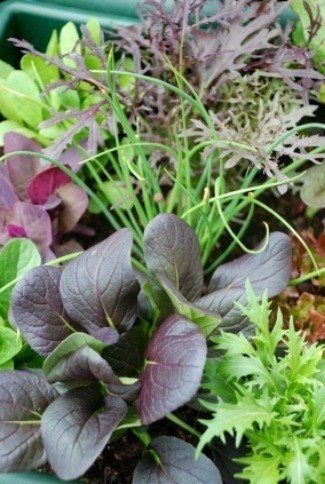
To keep your salads flavorful and visually appealing, mix lettuce varieties that have different colors and textures. There are dozens to choose from'here are just a few.
Arugula (Eruca sativa): Also known as rocket or roquette, arugula has smooth, green, spiky leaves and a peppery flavor. Harvest the leaves when they are small, about 3 to 4 inches long. Make succession sowings every two weeks from early to late spring, thinning to 6 inches apart. Harvest about 5 weeks after sowing, cutting individual leaves or the entire plant soil level (they will re-sprout).
Endive/Escarole (Chicorium endivia): Endive is a lettuce-like salad green with a nutty, bitter flavor. There are two main varieties: escarole (broad-leaved endive) and the curly, narrow-leaved type. Both are ready to harvest approximately 45 days from planting. In grocery stores, endive is often seen blanched (with pale-colored leaves). This can be accomplished in the garden by covering the heads with a pot or cardboard box for several days before harvesting.
Mache (Valerianella spp.): Also called corn salad, lamb's lettuce or lamb's tongue, Mache has small, tongue-shaped leaves and a sweet and nutty flavor. It's grown as a winter green in mild climates and tends to bolt in warm conditions. Harvest leaves individually or cut the entire plant when it reaches 3 inches tall.
Mesclun (mixture of several species): Mesclun is a blend of gourmet baby salad greens that can be mild, pungent, or bitter, depending on what mixture you choose. Sow thickly in wide rows or blocks, two weeks apart, and harvest by snipping the leaves with scissors when leaves are only a few inches tall.
Mustards (Brassica spp.): These spicy greens are perfect for adding a bit of zing to salads. Most are able to tolerate heat better than lettuces and are well worth growing at any season. Give them full sun in well-prepared garden soil and consistent amounts of moisture. Plants grown in dry soil will develop a very hot taste.
Leaf Lettuce (Lactuca sativa): Also called cutting or looseleaf lettuce, these fast-growing, mild-tasting lettuces take only 45 to 60 days from seed to maturity. Many cultivars are available, with leaf edges ranging from wavy to frilly, or lobed.
Spinach (Spinacia oleracea): One of the most popular and nutritious of the salad greens, spinach has dark green, oval, smooth to crinkly leaves and a sweet, mild flavor. Plant thinly'about 3 inches apart. Harvest leaf by leaf or cut off the entire plant, usually about 40 days after planting.
Swiss Chard (Beta vulgaris, Cicla group): Closely related to beets, Swiss chard produces greens for salads or cooking throughout the entire growing season. The leaves are always green, but the ribs vary in color (red, orange, white, or yellow). Harvest chard leaves when they are young and tender by snipping off individual leaves.
There are so many gourmet salad greens, it's impossible to list them all. Here are some less common greens to consider for your salad garden. Many of these have strong flavors, so you may want to plant them in smaller quantities.
About The Author: Ellen Brown is an environmental writer and photographer and the owner of Sustainable Media, an environmental media company that specializes in helping businesses and organizations promote eco-friendly products and services.
Add your voice! Click below to comment. ThriftyFun is powered by your wisdom!