| Botanical Name: |
| Allium schoenoprasum |
| Common names: |
| common chives or onion chives |
| Description: |
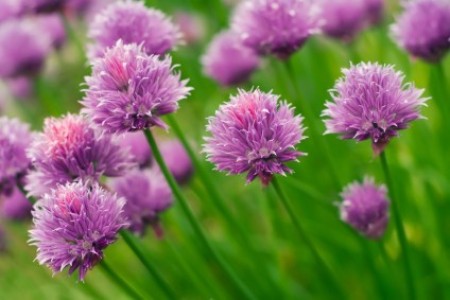
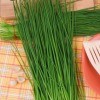
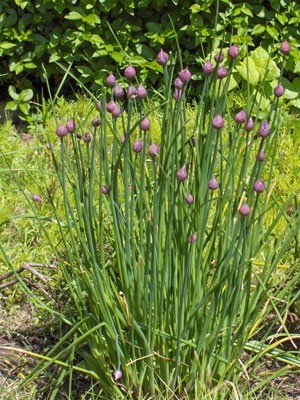
| The common chive makes an attractive edging for a flower garden or border, as well as a versatile herb to have on hand in the kitchen. Its green, grass-like leaves grow 12 inches tall and end in a single pink or purple pom-pom like flower. Advertisement |
| Life Cycle: |
| hardy perennial |
| Exposure: |
| full sun or partial shade |
| Cultivation: |
| Chives like moist, fertile, well-drained soil. They are easily started from seeds in the spring and grow attractively in large clumps along garden walkways and borders. Harvesting can be extended for as long as nine months if the plants are given protection from frost. Chives also grow well in pots and window boxes and are often grown in a sunny windowsill in the kitchen. Remove flowers as they form to prevent plants from over-exhaustion and divide as necessary in the spring or fall. |
| Propagation: |
| division or seeds |
| Parts Used: |
| leaves |
| Harvesting and Storage: |
| Cut young leaves for use as needed. Pinch them off at the base to avoid unsightly brown stubs. |
| Medicinal Uses: |
| mild antiseptic |
| Culinary Uses |
| onion flavored garnish for a variety of dishes, soups, salads, etc. |
| Other Uses: |
| perennial beds and borders |
This page contains the following solutions.
If you only have room to grow one type of herb in your garden, then consider growing chives. This common perennial herb is easy to grow and definitely earns its keep.