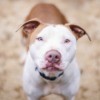
Even though he can't talk, your dog can be very expressive! If you're not sure what a particular stance means, this may help.
Confident Body Language
A confident dog will stand tall with his tail up. He may wag his tail slowly. His ears will be up and alert or relaxed, and he will look at you directly.
Advertisement
Fearful Body Language
A fearful dog will hunch lower to the ground with his tail down or tucked under. He may not look directly at you, and the whites of his eyes may show. He may bark, to try to keep whatever he is afraid of away.
Playful Body Language
Your dog may signal that he wants to play by pawing at the air or giving a play bow. Barking can be a part of play -- you may find that your playful dog's bark is higher pitched than his usual bark. Even if your dog is playing very roughly with another dog, you can rest assured that it is only play if his lips are relaxed (not drawn back in a snarl) and his tail is wagging.
Aggressive Body Language
An aggressive dog will stare directly at you. His ears will be close to the head, either pointing forwards or backwards, and his teeth will be bared. His body will be tense, and you may see the hackles on his back raised. His tail may stick straight out, like an exclamation point!
Advertisement
Curious/Eager/Excited Body Language
An interested dog will have perked up ears and wide eyes. He may pant lightly, or have his mouth open in a smile. Your excited dog may wiggle or dance a bit, waiting to see what happens next. His tail will be up, and possibly wagging.
Dominant Body Language
A dominant dog will stand over another dog, sometimes hooking his chin over the submissive dog's shoulders. He will seem confident and alert, but calm. Humping another dog can be a sign of dominance, or a sign of play.
Submissive Body Language
A submissive dog will accept another dog's display of dominance. He may squat and piddle, or roll on his back to show submissiveness. A submissive dog may lick a dominant dog's mouth and face.
My dog is half Chihuahua and half weenie dog. She is small and looks like a Chihuahua. I was wondering why she likes to lay on her back under my chin when I'm laying down?
 Even though he can't talk, your dog can be very expressive! If you're not sure what a particular stance means, this may help.
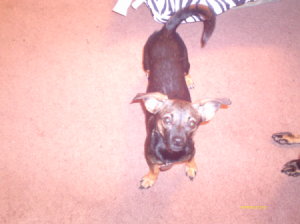 My dog is half Chihuahua and half weenie dog. She is small and looks like a Chihuahua. I was wondering why she likes to lay on her back under my chin when I'm laying down?