 I use a spreadsheet I made up to list all expenses and income right down to the penny. The spreadsheet lists income, and then all expenses such as groceries, gas, each utility, eating out, prescriptions, credit card bills, miscellaneous expenses (which I describe at the bottom of spreadsheet), absolutely everything.
It is updated every couple of days and balances with my check register which is kept on an 8 1/2 x 11 inch paper. The spreadsheet shows the whole year at a glance so at the end of the year, on one sheet of paper, you have all your income and expenses, and you can see where your hard earned money has gone, as it is automatically in categories.
By Marti S. from Athens, GA
This page contains the following solutions.
When it comes to our finances, they're very abstract. Check cards and electronic bill paying don't make it much easier; the concept of exactly how much money is spent is a difficult one to grasp.

The first and most important step to setting up a budget is to find out where your money is going now. It is pointless to sit down and write out a budget with imaginary numbers such as 'Groceries - $200' when you are actually spending $400 at the moment.
Start by listing everything that you spend money on each month and how much you spend. Add up the list to get your current total budget.
Here are the questions asked by community members. Read on to see the answers provided by the ThriftyFun community.
I am asking for help with my finances. Just recently I stopped working my second job because of the very long house. Now I just have one job and the problem is that it pays bi-weekly. Because I have just one income I have been behind on my bills the credit cards are at the limit and above some are in collection because of late or non-payments.
I just need to be able to pay of the bills and save some money. I tried the envelope budgeting. How do I start a basic budget without any large problems, something very very simple on a bi-weekly paycheck of a small amount. Once again, how does the old fashion envelopes work?hi i would be happy to help you with this. i have also had some hardships and needed help with budgeting and a close friend helped me to pay off a lot of bills and start saving right away. i didn't use the envelope method but to save money in what she had me do was write down all my bills in a notebook and using my take home pay build my budget from what i bring in rather than on what is going out.so it went something like this.... i have 600.00 coming in every 2 weeks for a total of 1200.00 per month. my bills equaled 1600.00 per month so i separated my fixed(needs) from my wants needs were rent,electric,phone,gas,insurance,food.
wants was ...credit card bills,fun time out,coffee at convenience store, lunch out..etc... so my needs equaled 1000.00 per month so i had 200.00 for wants fist put 10 percent in an envelope this is your savings next use80 percent or 160.00 on credit card bills paying the most to the smallest one as to pay it off first. this should leave you 20.00 for emergencies in another envelope. this is just an example so use the numbers which work for you and remember to pay everyone something each month so when they call and they will you can tell them you are doing your best to pay them in a timely manner. if you would like to talk my name is denise and my email is warnerd5 AT aol.com i hope this helps you! god bless
Hi Malmal,
I don't know anything about the envelope method but here's what worked for me. It is not something that will happen quickly but it is something that is definitely worth doing.
Step One
Take all your credit cards out of your wallet, cut up all except one that you will have in case of a serious emergency. Put this card away somewhere safely out of reach, it is only to give you peace of mind, not to be used other than in a real emergency.
Step Two
Get a big notebook and as you spend money record it, then if you could have done without this item or settled for a cheaper alternative put a big red mark after the money you spent. Be really honest with yourself, think of how you could have spent less.
Here are a few ways to instantly save some money.
Bring your lunch to work instead of buying it.
Buy store brands instead of name brands for some things.
If you take a bus then think about walking some of the way to save some fares, this will also get you fitter.
Join the library instead of buying books and magazines.
Step Three
Instead of going for expensive nights out, invite your friends around, explain that you are just watching your finances and need to curb your spending for a while.
Step Four
Plan your grocery shopping. Make a list of what you need for the week, and only buy what is on the list. DO NOT SHOP WHEN YOU ARE HUNGRY it is too tempting to buy extras.
Step Five
Plan how you will pay off your debts, every dollar helps, so if you have a few dollars left over at the end of each two weeks then pay extra off your biggest debt.
Step Six
As you pay off your debts you should also save for something you would like to do in the future when you are out of debt, maybe a special holiday. Little by little you will see this money mount up as you are achieving your goal of becoming debt free.
Step Seven
Now that you are not working two jobs you have more time to yourself, use this time to do a complete clearout, go through every box and cupboard in your house and have a yard sale. Then whatever money you make should be divided equally between each of your debts and your savings.
Step Eight
According as you completely pay off a credit card cancel that card.
Finally, congratulations on taking this step to control your spending and shaping the new you. It worked for me and I have never again been in debt in 18 years. It was hard work to get started on but it got easier along the way and was definitely worth it.
Mum
This is a great article about budgeting...
articles.moneycentral.msn.com/
This is a great book...
The Wealthy Barber, Updated 3rd Edition: Everyone's Commonsense Guide to Becoming Financially Independent
by David Chilton
This is another great article about budgeting to get out of debt...
www.cheapskatemonthly.com/
I had a budget some time ago like poster number 1. I liked the idea of paying off the smaller credit card first. A step further though is once that credit card is paid off, take the amount that you were paying on that card and add it to the next card. So if you're paying $30 a month for each card and you get the smaller card paid, then add that $30 to the next card, so you're paying $60 a month on that card. As it's paid, add $90 to the next card, etc. Goes much faster that way.
You might check with Crown Financial Ministries (crown.org), they have a small army of volunteers who will meet with you for FREE and tell you what to do, see all your notes and whatever else you want. A Christian organization, but never pushy, only doing whatever you want. I had great success with them once, and I'm debt free (it was $55K at the time).
www.daveramsey.com/
www.daveramsey.com/
See if the information given in those links help.
One thing I've had to do is make a "when to pay what" plan. My husband gets paid biweekly, and I get paid ONCE a month. (!) So for each of the three paychecks, I have a list of things that I pay. Here's my list-- maybe it will give you some ideas:
Husband's first paycheck:
emergency savings
tithe (10% of half expected monthly income)
credit card
water bill
electric bill
life insurance
Husband's second paycheck:
save for my masters degree coursework expenses
save for husband's retirement in his Roth IRA
save for Christmas
tithe (10% of other half of expected monthly income)
pay credit card
My paycheck (always the 20th of the month)
house payment
save for my retirement in my Roth IRA
undergrad student loan payment
save a little more for masters degree coursework expenses
save a little more for emergencies
We use our ONE credit card for as many of our expenses as we can to earn the rewards, and we pay it off by the end of the month. I know this is kind of controversial, and I would not recommend it to someone who is not disciplined in the use of a credit card. But we are. We have a budget that we live by and using a credit card does not change what we spend on things. For example, I could pay cash or I could use a credit card, but either way, I will not spend more than $250/month on groceries. Also, a few of our bills we pay by credit card (cable, internet, netflix) and those amounts won't change depending on our payment method. (That's why they're not listed above--they're lumped into the credit card bill.) And as you can see, we save a lot. We basically save the equivalent of my paycheck. We do this by paying ourselves first--as soon as we get paid, we put the savings money away. If we know it isn't available in the checking account to pay the credit card bill with later, we won't run up the credit card bill. We have a savings account we can tap into for emergencies--I would NOT recommend using a credit card for emergencies as a long-term plan.
I am proud of our money managing ability and I'm not ashamed to brag about it, lol. One time I wrote one of those "My Frugal Life" things: www.thriftyfun.com/
So, anyway, that's what works for us. I hope that helps!
Always pay your necessities FIRST
house (rent or payment)
utilities
car
food
READ Dave Ramsey! It is a fun read with great ideas for "living like no one else...so you can eventually Live like no one else"
Good Luck! WOrk hard at it an you'll be successful!
Don't mean to be nosy, but the first thing you need to do is ask yourself what percent your rent is of your take home pay: R/Total monthly take home. What kind of heat do you have, and what do your utilities add up to: lights, heat, water. To some degree utilities can be trimmed by careful monitoring. Phone for now should be basic land line, use calling cards for long distance; the ones at the dollar store will give you 20 minutes/$1 dollar if you use them at home.
Eat very simply for a while, using cheapest ingredients: no box cereal, use hot cereal or whole wheat toast; fills you up more. Eggs and toast. Sandwiches for lunch. Crock pot dinners make a nice lunch next day. NO POP/purchased junk beverages. Water, 100% juice, tea or coffee prepared at home. No ATM withdrawals; that eats away at your account.
Walk everywhere; great for your health, saves on gas. Library for entertainment: movies, books, ideas for stay at home fun. Make your life small. Walk in your neighborhood. Visit with neighbors. Garage sale like a miser...For every coffee cup for 50 cents, there is one for a dime...but you get shopping out of your system.
NO NEW clothes unless you need nylons. Buy clothes at garage sales for a year. It won't be hard, and it's new to you. Add up all necessary expenses to stay alive (literally). Everything else is a luxury. Debt is a luxury you can't afford. If you are alive and healthy you have enough. Use your imagination to fill in the blanks in your life. You would be amazed and astounded at what we don't need.
If you think about what you need, and are honest about what you can pay (ie, I had a big bill and I have 50 cents to my name), I promise you you will find it for 10-25 cents. Trust that you are enough for life and you don't have to buy your place in life.
Write everything down on paper, and add things up in lots of ways. You will start to get a truer picture of your position and suddenly you will know what to do. That may take some days. If someone in your family became ill and you were consumed with caring for them, the last thing you would think of would be spending, and time would pass and you would be okay. We can go days without spending and nothing bad will happen. Read "A Tree Grows in Brooklyn" to see how people micro manage when they have to. That's probably a picture of as bad as it can get and still survive, so anything more is better...I read somewhere the first place to start saving/budgeting is by not spending; I find it to be true also. Because for every dollar we spend we have to earn about 1.35-1.50 before taxes.
Back to the rent per cent of income. If it's more than 40% (even that is really too high), you may have to either do that second job, or be very careful with every penny and watch amounts of water, use of electricity, etc. Dry clothes on lines or in bathroom if you can, at least until almost dry, then you won't use so much electricity. The dryer uses a lot of power.Unplug all appliances at bedtime except clock...They use power.. Sorry to throw all this at you, but as you can tell, I'm from another time, and people used to live carefully all the time, and not too many people know how anymore. Pikka
How do you make a budget and stick with it?
By verenl from Huntingburg, IN
I am 62 years old and this has worked for me all these years. First get you a notebook to write in. Make columns in it like you would a checkbook. One column for date, check no., transaction, amount, deposit; then start listing your bills. I make a column for yearly, like car ins., taxes, tags, house ins. and so on. The next is utilities and this includes phone, light bill, paper, trash pick up. Just keep going with your columns up and down the paper with the headers across the top until you have a column for every bill you have.
Next as your bills come in list the amount at the very top and divide this into how many times you get paid. For example light bill. If it is $100 and you get paid twice a month divide by 2. Every time you get paid put $50 in that column. Keep going with every bill you have doing the same thing. The first time you get the bill of course you will have to pay it. But the next time you get paid you will deposit half in your column for that particular bill. It will probably take you about a year to go through every bill you have because some you won't remember until they arrive. Your yearly bills will be divided by every how many times you get paid in the year.
Your monthly bills will be divided by how many times you get paid in a month. Your weekly and bi-weekly the same. The lest over money will be for groceries, gas, lunch, clothing etc. The left over is what you will draw your savings from. Don't spend it all. Keep the notebook up to date and if a particular bill increases, then increase the amount you take out of your check. I keep this notebook up daily and even go on-line daily to check my balances at the bank. Every purchase I make with checkcard or check goes into this notebook. I track everything and it has been a true blessing, wisdom from God Himself over the years. God Bless and Good Luck.
Try purchasing books like miserly mom at the miserly moms website. Helpful hints at Frugal living.com. Living on a dime website is really helpful. I love the mixes to have on hand, keeping the grocery bill lower. Anything helps and having a saving mindset really is the most helpful thing of all!
Using a too hot shower as a simile for one's monthly budget, learn how you can adjust your expenditures to fit your budget rather painlessly. The following essay discusses why a budget is like a shower.

This is a page about create a budget with the envelope system. Before credit and debit cards most of people made purchases and paid bills either with cash or by check. The envelope budget system allows you to set aside money for certain expenses without the risk of running short.
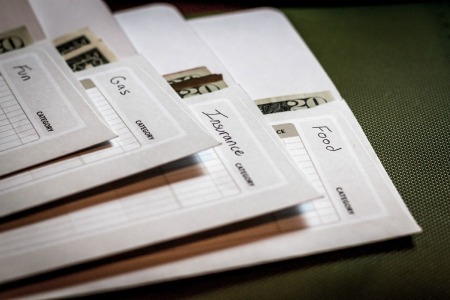
This is a page about setting up a household budget. Preparing a budget can help you see how much money you need each month to cover your basic household expenses.

ThriftyFun is one of the longest running frugal living communities on the Internet. These are archives of older discussions.
Please help me learn how to make a good budget and manage to follow it? Any tips would be appreciated.