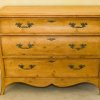
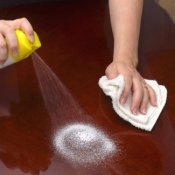
 Clean all surfaces using only a damp cloth followed by a dry cloth. Use a mild soap as required.
Avoid using wax or harsh detergent. They may damage the finish.
In order to prevent fading, do not expose any furniture to extreme sources of heat or direct sunlight.
Never place pots on surfaces or electrical appliances.
Refrain from writing without a desk pad.
Avoid contact with rubber protectors or plastic place mats on items such as lamps, radios, computers, or telephones.
Keep even humidity conditions in your home to prevent splitting.
Remove spills or liquid from furniture right away.
By Mpr3ssive from New York, NY
This page contains the following solutions.
I have a cleaning service and if I am dusting particularly dusty furniture, I like to spray orange oil on my rag, run hot water over it and wring it out.
Dip an old soft toothbrush into furniture polish and brush lightly. Then buff with a clean cloth. By Peggy
The best way I've found to clean chair and table leg or staircase spindles is to use wet dental floss. It gets into all the grooves and you can get to the dust quicker and more efficiently than by using just a cloth.
Here are the questions asked by community members. Read on to see the answers provided by the ThriftyFun community.
Cleaning person used some kind of cleaner that left greasy streaks on new coffee table. Any suggestions on how I remedy this?
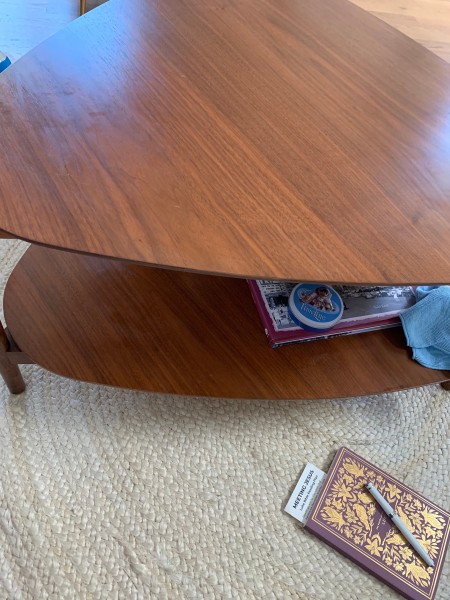
You can use equal parts of white vinegar and hot water. Use a little on a soft clothe. Finish off by using a dry soft clothe to finish drying residue.
Dish detergent offers the gentlest way to clean steaks like this from a coffee table. You will need to mix equal parts of your dish detergent with warm water in a bowl. Now mix this up so that it suds up. Now apply only the suds to the table. You don't want to apply water to your brand new coffee table no matter what. Water can damage your wood and warp your table. The suds alone will clean the greasy streaks off the table. Apply the suds with a nice clean cloth and rub them around. Make sure not to get too much water on the tabletop. Now keep rubbing until it is clean and dry.
Take a slightly damp microfiber rag and squeeze a dab of white, pasty toothpaste on it. Rub gently on the surface where the streaks are.
I would suggest looking for the brand name of the table and contacting the company for advice on how to clean this table as there are so many different types of finish on tables and some 'cleaners' could damage the surface.
Or; contact the store where purchased (even if it has been several months ago) and ask same question or try and get contact information on company that made the table.
I do not believe I would try anything more than 2 or 3 drops of regular strength blue Dawn dish soap (careful if it's concentrated kind) mixed in a quart of water (cleans grease off the baby ducks - right?). Use a clean soft cloth, ring out well and wipe across table - finish wiping table quickly and immediately dry/polish with a soft dry cloth.
I would say to be sure you do not let anything you try on the surface stay very long or you may have more (different kinds) spots.
I recently bought a wood dresser which has a sort of rough finish. Whenever I pass over it with a paper towel or a micro fiber rag it tends to grab and pull the material I am wiping with (I'm using Pledge on the rags).
There is now paper towel caught in-between the grooves. Can someone recommend a type of material I should buy which won't get caught in the grooves of the wood?
There is nothing wrong with rough surfaces, except that they can be difficult to clean at times. However, the rustic look is very in right now! This includes some things having a rougher finish.
Enjoy your new dresser!
We have some chairs with wooden arms and these have become dirty from use (dirty hands?). Does anyone know how to clean this black off the arms without removing all of the varnish and stain stain?
By cybergrannie from Ocala, FL
Please be careful using any type of oil in a homemade recipe. I made up a recipe using oil (besides other stuff) and it too me weeks and weeks to get the gunk off my furniture!
If it was my chair, I would just use a regular cleaner like Mr. Clean. A cleaner such as that will not damage the varnish with occasional use. I take it you are simply trying to remove grubby fingerprints and skin oils and such that has built up over time. Don't be putting any sort of oil on it, that will just add to the gunky buildup.
I have a cleaning service and one of my customers is allergic to everything! The only cleaner she can stand is Windex... you would be surprised what regular old Windex cleans! From stains on your carpets to oil and gunk on furniture, cabinets etc.! I advise trying a small amount on an unseen area!!
I have a fifty year old dark pine dining room set that needs a good cleaning to make it shine again. What can I use?
I would use Murphys Oil Soap
My nana would never put anything on her wood furniture but a small drop of dish soap on a white cotton rag that was slightly damp or if it was really dirty, she would break out the mineral spirits and dip the rag into it and clean.
I have no clue if mineral spirits still exist today, but dish soap certainly does and it is inexpensive. Back then she would have used Joy or Lux or whatever was the cheapest. Today, I would use plain old blue Dawn (the simple, not the extra strength) and an old white tee COTTON shirt (this allows you to see the dirt coming up. Don't use anything with poly or rayon as it can scratch.
Test it on a the underside in a place that you can be sure it will not damage the finish and work in small circles being careful not to press to hard or scratch the furniture with your finger nails.
If a good cleaning like this does not work, you may want to consider sanding and re staining (but that would be the last resort).
Post back with before and after photos!! Happy cleaning!
I just purchased a used cherry table with a matte finish. Down the center of the table there is a high-gloss sheen. I think it may be from the previous owner using a high gloss spray oil and then realizing they should not have. Any clue what I can use to safely remove the high gloss oil from the table, without hurting the original matte finish?
The image is dark, but you can see the high gloss down the center. Ignore the fan, still looking for the right chandelier :)
Try Guardsman Furniture polish. It cleans and polishes.
I know what caused that shine because the same thing happened to my lovely table. They have used a paste of baking powder and water to remove heat stains. This method removes stains, but if your furniture has a matte finish unfortunately it then leaves a shiny mark. I was so sorry I used the baking soda paste method on my table as apparently it works well on shiny furniture but ruins matte furniture. I am yet to find a solution for my shiny patch.
I am trying to clean a filthy curio cabinet. It is just the wood. What can I use that I have around the house to clean the wood?
By Kim Hunter
If this is just wood and not pressed wood you can normally use just soap and water to clean this with. You can even use a steel wool pad to help peel off the dirt. Let it dry and give it a good coat of Old English when you're done.
Murphy's Oil Soap is great for cleaning wood.
I just bought a used large desk (very shiny, nice cherry veneer) which has what looks like many oily fingerprints. I tried to use just a soft, dry rag but it didn't help a lot. I was afraid of using a wet rag or any chemicals to avoid causing damage. Any tried and safe method to clean the cherry veneer furniture without harming it? Thanks.
By Sue F. from Portland, OR
You may need to use a furniture polish on it and buff them out.
I use Guardsman Furniture polish. I use it with a dampened soft cloth, and buff with a dry soft cloth.
I would like to give my dining room furniture a good cleaning, what is the best cleaning method and product?
By Joan
Depends. Is it wood? Are you also talking upholstery chairs as well?
Use Lemon Oil once a month to protect and condition wood furniture. Lemon Oil keeps your furniture from drying out and cracking.
What is the very best furniture polish? I don't care about the price. I just bought a new real wood table and chairs and I want to use the very best. On hand, I have Pledge and Old English oil. The pamphlet that came with table said not to mix different brands/types or the wood may appear cloudy.
By judy from Riverside, CA
My dining room chairs seem to have caked on dirt, and I do not know how to clean them. It is probably there from people's hands. I had them cleaned once, but the dirt seemed to come back.
By Barbara W.
I have redone house (wood work included) it does get build up. The dresser I have in my bedroom is way over 100yrs old, maybe I can help. If it's just build up from every day living like you said I would try plain vinegar (if you want to put lemon you can) maybe the citrus would help out, some don't like vinegar smell if its strong.The strength depends on how built up they are? So first go with 1/2 vinegar 1/2 water; if you add lemon just squirt the juice 2-4 times or 1 whole lemon. That is for quart size spay bottle. If that doesn't easily remove it add more vinegar. After you get them clean,you can make your own Murphy's type oil with either baby oil or mineral oil.If you are wanting to use a more soapy cleaner like Murphy's soap you add a squirt of dish soap to the oil. I hope this works for you. The only other thing I could suggest without seeing them is take straight half lemon with salt rubbing in a circular motion (how I clean my cutting boards or really dirty wood). Without a picture one of these will work.
goop, or any "waterless hand cleaner". Not the one with "grit." Use a paint brush and brush it on the top rail, let it sit for 5 to 10 minutes, and then wipe it off with paper towels. When nothing more comes off on the paper towel, wipe it with cheesecloth or some fabric that will absorb any leftover moisture and gunk. Then buff if you feel like it.
Needs be, do it again. Does not affect the wood unless you leave it on too long so that it dries. Not caustic. Might want to cover the seat because it will drip. If you're cleaning a table, do a section at a time so it doesn't dry. Can also be used on "desk" leather. Amazing stuff.
I would like to clean up the dust which accumulated over the years in the cracks of my big wooden table. I was thinking of using a Q-tip and a small hand vacuum, but I am wondering if there is any other way to do this?
I would try an old, dry toothbrush (one that's too worn to use for tooth brushing any longer). I've had good success cleaning small items and things with crevices with an old toothbrush. Just don't brush so hard that you create scratches.
Our cat vomited on our oak end table while we were on vacation. We returned to find the mess thoroughly dried out. We removed all the loose bits, but now the stuck on bits remain. What is the best way to remove the rest without damaging the wood?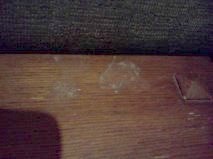
By TM
First try cooking oil. Place an oil soaked cloth over it and keep it well saturated with oil. If after afew days it isn't softer then try a new cloth soaked in bio detergent. You may have to abandon the cloth and just keep soaking the stain uncovered. Another idea is to use a spray called Koh available online , just google koh. It is genera l use and very good. One use shouldn't harm your table.
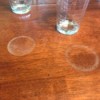
I use felt pads on lamps to keep lamp movement from scratching. I notice though that when I change objects or lamps there are sometimes circular rings from the tabs. They will not wax or buff out. How do you remove them?
By Terry O. from Nashville, TN
How can I get dried fragrance oil off of my wooden dresser?
By shawntae lewis from Hagerstown, MD
I have a dark wood table, that has what looks like oil spots on it but it will not come off. I have used mild soap and water and furniture polish. Any suggestions?
ThriftyFun is one of the longest running frugal living communities on the Internet. These are archives of older discussions.
To clean wood furniture, etc., pour two tablespoons vegetable oil, add 4 tablespoons white vinegar and 1 quart warm water into a container.
Help. I made up some homemade wood cabinet polish with olive oil and lemon juice and applied to my oak and teak furniture.