Browse   Newsletters   Contests   Ask   Share   Account   About Us

Growing Bearded Irises

Growing Bearded IrisesBearded iris come in a variety of colors. They are hardy, easy to grow and a good bulb for the beginning gardener. This guide is about growing bearded irises.
     

Solutions: Growing Bearded Irises

Read and rate the best solutions below by giving them a "thumbs up".

Some Bearded Irises are Re-bloomers

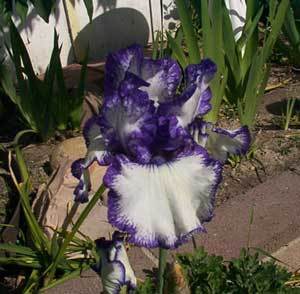
Some Bearded Irises are re-bloomers. That is they bloom twice or more in the same year. You should get the most for your money by checking before buying. Here is one that I like a lot called Congeration. The Yellow Iris is called "Luxor Gold". Bearded Iris Yellow Bearded Iris

By Great Granny Vi

0 0SharePrintFollow1 Feedback

How to Grow Bearded Irises

There is no shortage of reasons to fall in love with Bearded Irises. They come in hundreds of stunning colors and color combinations, they grow happily in all but the hottest and coldest zones, they have a tendency to fill out their corner of the flower garden rapidly, and some of them ("rebloomers") even bloom more than once in a season. It is not surprising then, that Bearded Irises are grown, collected, and admired by millions of gardeners around the world.

What Makes An Iris Bearded?

I'm not kidding when I say enough iris-specific lingo exists to fill a small dictionary. Most of it is used to describe type, style of color patterns, season of bloom, parts of the flower, and height of the bloom stem. To understand what separates a Bearded Iris from a Beardless Iris or an Aril Iris, it's helpful to understand some basic iris terminology.

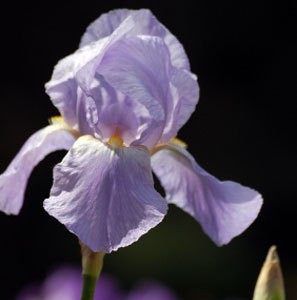
Beard: The thick bushy hairs on the upper part of each of the falls. Falls: The three downward curving lower petals (sepals) of the flower. Standards: The three upward arching petals of the flower.

According to the American Iris Society, a Bearded Iris is an iris identified by thick, bushy hairs ("beards") on each of the falls (lower petals of its blossoms).

Classifying Bearded Irises

Bearded Irises are divided into six groups according their size and form: Miniature Dwarf Bearded (MDB), Standard Dwarf Bearded (SDB), Intermediate Bearded (IB), Border Bearded (BB), Miniature Tall Bearded (MTB), and Tall Bearded (TB). The smaller the Bearded Iris, the earlier in the season it tends to bloom.

Planting

Getting Bearded Irises off to a good start is more complicated than just plopping them in the ground, but only slightly. Anytime between July and September, select a location that receives full sun (some cultivars do well in light shade) Bearded Irises are not terribly fussy about soil pH, but good drainage is essential because the rhizomes will rot if they stand in water. (A rhizome is a thick bulb-like underground stem with roots and leaves).

One way to ensure good drainage is to plant Bearded Irises in raised beds. Another way is to create a small mound of dirt when planting. The rhizomes should sit on the mound at ground level, allowing the roots to cascade down the sides beneath the soil. Some growers suggest covering the rhizomes very lightly with soil, while others say to leave them exposed to the sun. I'm not sure it matters. Either way, the roots should be covered completely. Space clumps 18 inches apart with all of the fans (leaves) facing the same direction.

Watering

Spring blooming Bearded Irises are considered quite drought tolerant. The reblooming cultivars need to be watered more frequently throughout the summer. All newly planted Bearded Irises should be watered frequently throughout the first season until they become established. Strive for moist (not wet) soil around the roots.

Fertilizing

In the average garden, Bearded Irises get all of the nutrients they need from the soil. If plants have healthy green foliage and show vigorous growth, they do not need fertilizer. In cases where fertilizer is needed, use it sparingly. Add a teaspoon of low-nitrogen bone meal around (not on) rhizomes once in the fall, and for rebloomers, again after they finish their first flush of flowers.

Care and Maintenance

After Bearded Irises bloom, cut back spent flower and stems, but let the leaves die back naturally. In the fall, cut the fans (leaves) down to a height of 6 to 8 inches.

After 3 to 5 years, your irises will be sufficiently crowded and need dividing. This can be done in the fall, or 4 to 6 weeks after flowering. Dig out clumps and wash away excess soil with a hose. Using a sharp knife, cut the rhizomes apart so that each one contains a fan and one set of healthy roots. Discard any soft or diseased rhizomes. Allow rhizomes to dry for 1 day to seal division wounds, then replant and water well until new divisions become established.

By Ellen Brown

0 0SharePrintFollowPost Feedback

Growing: Bearded Iris

Growing Bearded Iris

Botanical Name:

Iris x hybrid

Life Cycle:

perennial

Planting Time:

mid to late summer or fall

Height:

4" to 48"

Exposure:

full sun

Soil:

average to rich, well-drained soil

Hardiness:

best for zones 3 to 10 (mulch over winter in coldest zones)

Bloom Time:

summer

Flower:

most colors

Foliage:

greenish-silver, blade-like leaves

Propagation:

division of rhizomes

Suggested Use:

beds, accents, mass plantings, cut flowers and rock gardens

Growing Hints:

Start with purchased plants or bulbs. Bearded Irises are often sold as rhizomes for mid to late summer planting. Plant so that the upper half of the rhizomes is even with or slightly above the soil surface. Divide them in the spring every 3 to 4 years to keep them looking their best.

Interesting Facts:

Bearded Irises are especially susceptible to borers. Symptoms include smelly, rotting rhizomes and larvae snacking on leaves. Giving plants full sun in a well-drained location and making sure irises are planted so rhizomes are on or above the soil surface will help prevent attacks.

Photo by Great Granny Vi
By Ellen Brown

0 0SharePrintFollowPost Feedback
Share Your Feedback: Once you try any of the above solutions, be sure to come back and give a "thumbs up" to the solution that worked the best for you. Do you have a better solution? Click "Share a Solution" above!

Questions

Do you have a question related to this page?
Follow ThriftyFun