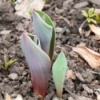
More than a few gardeners have been disappointed by "one-year wonder" tulips. These spring bloomers are perennials, but they don't always act like it-producing spectacular flowers the first year, only to peter out or disappear altogether the second. Here are a few tips to help you extend the life of your tulips and keep them performing for as many years as possible.
By Ellen Brown
Also, when I use seed from packages, I put the empty package in a photo album and then I can see when to water, feed and all I need to know about the item I have planted. Sure has helped me a lot. Happy gardening!
By dwedenoja from new creek, wv
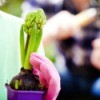
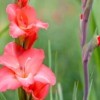
About the time roses and other perennials take a respite from mid-summer heat, summer bulbs step into the scene with an explosion of color. That's because unlike their spring-blooming cousins, summer bulbs are programed to thrive when temperatures rise. Here's what you need to get started growing them.
Tender bulbs are made up of a group of tropical and subtropical bulbs. None can withstand very cold temperatures, so depending on the severity of your winters, they will either need heavy protection, or you will need to dig them up at the end of each growing season and store them indoors. In the warmest climates (zones 9-11) tender bulbs can be grown as perennials. In most other climates they are either treated as annuals, or lifted in the fall and stored over winter.
The tender bulbs encompass a large group of plants, some of which are hardier than others. It's important to note that depending on where you garden, there may be a good deal of crossover between the classifications. A bulb considered tender in one growing zone may be considered hardy in another.
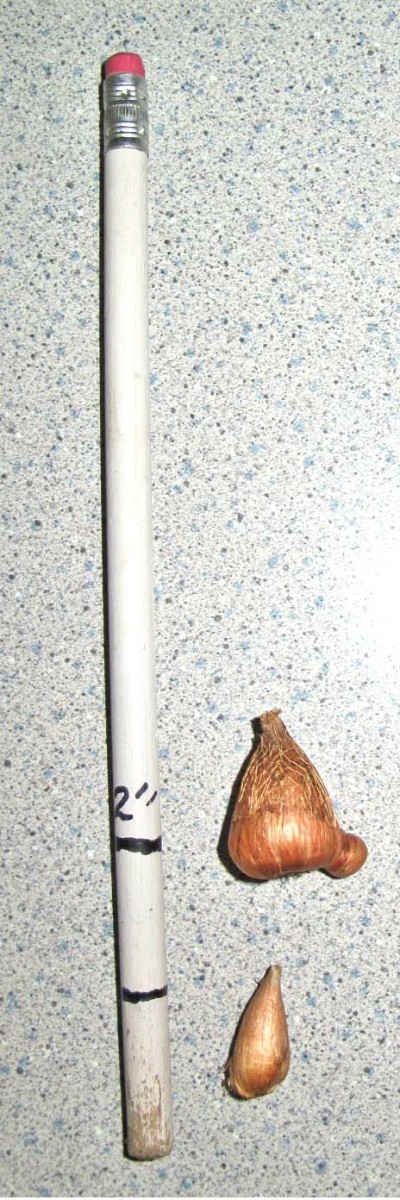
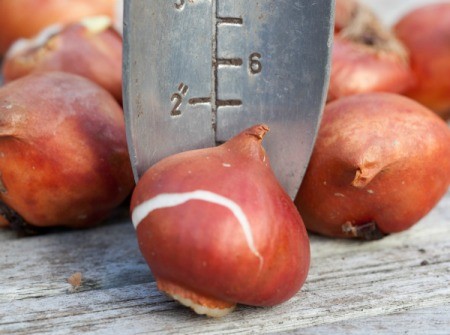
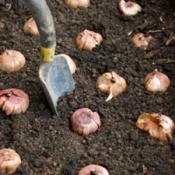
The general rule for planting bulbs is to plant them at a depth 3 to 4 times the height of the bulb. This will help to protect the bulbs against frost and (sometimes) foraging animals. Deeper planting also encourages stronger stems. A tubular bulb planter or narrow trowel is the best tool for the job. Simply stab the soil (or twist the planter), lift out the dirt, and place the bulb (pointed side up) in the bottom of the hole. Fill half of the hole with dirt, water lightly to settle the soil, and fill in the remainder of the hole. Firm the soil gently with your hands and water again.
Timing: The timing for bringing the bulbs in varies depending on individual species. Cannas and dahlias, for example, will tolerate some cold. Leave them in the garden until after the first frost. Tender species like tuberous begonias that cannot tolerate frost should be removed from the garden as soon as nighttime temperatures start dropping below 40 degrees F.
Markers: If the plant's foliage dies back before it is time to lift the bulbs it can be difficult to remember where you planted them. An easy way to remedy this is to surround your bulbs with a small piece of chicken wire at the time of planting. The wire will be easily hidden by growing foliage and reappear again as soon as it dies back.
Lifting: Use a trowel or spading fork to carefully lift your bulbs out of the soil. Trim back dead foliage to within 1/2 inch of the bulb and remove excess soil from around their roots with your fingers (or a gentle garden hose). Spread bulbs out on a newspaper in a shady spot to dry.
Storage: Once dry, loosely pack the bulbs in paper or mesh bags each labeled according to variety. Toss in a handful of slightly dampened peat moss to help prevent them from drying out. Store the bags in a cool, dark place for the winter, like a basement or garage. Temperatures between 45 and 55 degrees F degrees are ideal. Check the bags occasionally throughout the winter, adding moisture if necessary, and discarding any bulbs that show signs of shriveling or decay.
By Ellen Brown
Fall is the season for planting spring-blooming bulbs. The idea of planting dozens of bulbs can seem like an intimidating task - especially to new gardeners. Here are some tips and techniques to help make the job easier.
Approximate planting times:
By Ellen Brown
We've all seen the pictures. Masses of tulips or hyacinths growing like wildflowers among trees or in grassy meadow, looking like they've been there since the beginning of time. These bulbs have been naturalized. Achieving this look isn't hard, as long as you keep a few basic principles in mind.
To achieve the "wildflower effect" naturalized bulbs are usually set in a woodland or grassland environment. For gardeners limited by space, a cluster of bulbs planted in uncut grass around the base of a tree, or a small patch left wild in the corner of the garden can create a striking effect.
Mixing multiple types of bulbs or planting a single species will give you radically different looks, so search online and in gardening books to get ideas. Also keep in mind that if you choose spring-flowering bulbs, you'll need to wait for the flowers to go to seed and the foliage to fade (up to 6 weeks) before cutting the grass. This is so that the bulbs have time to produce and store food for next year's color. If you choose fall-blooming bulbs, you'll need to stop cutting grass in late summer/early fall to allow the shoots ample time to grow and bloom.
Ideally, the bulbs you choose should:
Use a spade for mass planting instead of digging hundreds of individual holes. Start by cutting the grass, Then peel back the sod and remove the soil to the required depth (approx. 2 inches for small bulbs and 4 inches for larger bulbs). After loosening the surface of the exposed soil, place the bulbs where you want them and replace the sod. Water the area thoroughly.
Wildflowers don't grow in perfectly spaced rows, and neither should naturalized bulbs. Dropping handfuls of bulbs and planting them wherever they land will help create a more natural look.
By Ellen Brown

How To Plant Bulbs
The Bulb Planter: This cylindrical hand-held tool is designed specifically for planting bulbs. Simply push it into the ground and pop out a soil core. Bulb planters come in handy if you're doing a large planting, but they are difficult to use in compacted soils. Most have depth measurements stamped on the side of the cylinder.
The Dibber (also called the dibble): The beauty of the dibber lies in its simplicity. Shaped like a carrot, it's only job is to poke holes in the dirt. A dibber is a great choice for planting small bulbs but can be difficult to use in compacted soils.
By Ellen Brown
I bought some bulbs called "PaperPlates", I put the bulbs in pots around Christmas. I could see them grow a 1/2 inch daily; well now they have bloomed. What do I do?
Do I cut them down till next year and store the bulbs? If I store bulbs how do I do that? Can someone help me? I do not have a green thumb and love plants and flowers indoors.
Hardiness Zone: 6a
By DeeDee from Muskegon, MI
Any forced bulb will eventually (within 6mths-18mths) bloom again if planted outside. This is of course providing it normally grows in your Zone. The paper plates bulb referred to - could it perhaps be PaperWhites? As far as I know, it is a type of daffodil & will rebloom outdoors. I keep forced bulbs inside in their pots watered (well afer they have bloomed) & plant them outside early/mid May. They almost always bloom for me the next spring. I am a Zone 6a. Freesia, on the other hand, I have had no luck overwintering in my root cellar. Maybe too cold? Marg
When is the best time to plant bulbs, in September or October?
Hardiness Zone: 5a
By Debbie from WI
Don't plant your spring blooming bulbs until after the the 2nd frost in your area otherwise they might try to bloom in late fall and you could mess up their cycle.
I live in zone 9 and really want to grow callas. Can I start them indoors to get a good start now (January 1) for spring planting? We get a few days of freezing and have already lost quite a few bulbs planted outside in summer.
By Gayle
![]() |
I Live in zone 6 or so and currently have freesia bulbs I want to plant but I want to grow them indoors. Do these bulbs need to be cooled for a period of time before planting? If so, for how long?
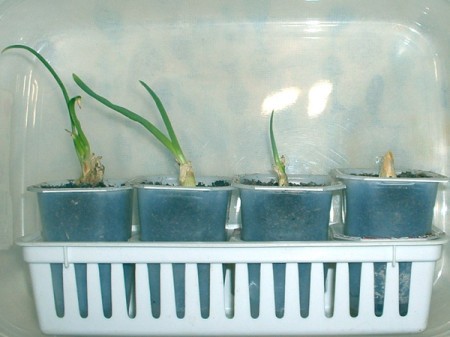
I also have some tulip bulbs that are starting to sprout that are not yet planted. I'd also like to grow them indoors. I understand there's a cooling period for these. If I can't put them in my fridge, what might my options be?
If I put them in my fridge, I've heard you can't have apples in the fridge. Is this true?
And finally, for what period of time would they have to be in my fridge or is it too late because they're beginning to sprout?
Thanks for any help you can provide from the one who loves only fragrant flowers.
Fragrance Lover
I'll answer these one at a time.
Good luck!
Ellen
About The Author: Ellen Brown is our Green Living and Gardening Expert. Click here to ask Ellen a question! Ellen Brown is an environmental writer and photographer and the owner of Sustainable Media, an environmental media company that specializes in helping businesses and organizations promote eco-friendly products and services. Contact her on the web at http://www.sustainable-media.com
|
Hardiness Zone: 6b
Thanks,
Chas from WV
Tulip and crocus bulbs can both be planted in the fall, lily bulbs and iris tubers in the spring or fall. Iris tubers are planted just below the soil surface (about 2 inches), so if you plant them in the spring, the roots have enough time to get established and you stand less of a chance of losing them due to winter heaving. If you to plant them in the fall, give them plenty of time to establish their roots before winter (July-October).
Tulips are planted about 6 inches below the soil surface and look best when planted en masse rather than individually.
For crocus bulbs, dig holes 2 to 3 inches deep. If you are planting a lot of crocuses, dig shallow trenches. Leave 2 to 4 inches between bulbs.
Plant lilies in groups of three or five bulbs, with each bulb spaced 8-12 inches apart. Space the different groups of bulbs three to five feet apart from each other. Small lily bulbs can be planted two to four inches deep and large bulbs four to six inches deep.
All of these bulbs prefer full sun and nutrient-rich, well-drained soil.
Ellen
About The Author: Ellen Brown is our Green Living and Gardening Expert. Click here to ask Ellen a question! Ellen Brown is an environmental writer and photographer and the owner of Sustainable Media, an environmental media company that specializes in helping businesses and organizations promote eco-friendly products and services. Contact her on the web at http://www.sustainable-media.com
By Susan (07/01/2005)
By ThriftyFun
I would like to start planning on planting my bulbs. Where is a good source to get info on the types of bulbs? Do bulbs only bloom in the spring? Are there any summer and fall blooming bulbs? Thanks so much. I love this site!
Hardiness Zone: 6b
By Mindy
By MartyD
By T&T Grandma