This page contains the following solutions.
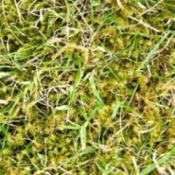 The invasion of moss in your lawn occurs when you try to grow grass in places that are too shady, too wet, or on very poor soil-conditions that do not support grass. To eliminate moss and prepare the soil for grass, you'll need to change your lawn's growing conditions.
The best way to discourage moss is to grow better grass, and to do that you need to create the right conditions. If your lawn has moss, then you probably dealing with underlying soil problems such as compaction, low fertility, acidity, excess moisture, inadequate soil depth or excessive shade. Start with a simple soil test. Your county extension agency can give you more information on how to go about collecting samples and where to send them. Tests are inexpensive (usually around $15) and will give you a wealth of information about your soil, including pH and nutrients levels, as well as recommendations for fixing any problems.
The fact that the moss is growing in a specific area signals that it's not an ideal environment for growing grass. If you can change the following environmental conditions, you may be able to promote the growth of grass over moss. If you can't, planting a shade-tolerant ground cover may be a better solution.
If moss is still a problem after trying the above methods, here are some simple homemade recipes to help get rid of it. Although these solutions are considered more environmentally friendly (at least compared to commercial moss killers), they should still be applied with caution as they are capable of killing or injuring the surrounding grass.
Homemade Recipe #1
Mix together and saturate small areas using a hand sprayer.
Homemade Recipe #2
Mix together and saturate small areas using a hand sprayer.
Homemade Recipe #3
Use this recipe if you need to kill moss over a large area. Apply with a 20-gallon hose-end sprayer attachment, and repeat every two weeks until the moss dies.
Once the moss is dead (it will lose its color and start drying up), remove it using a heavy garden rake with fixed metal tines. Keep in mind that killing moss is only a temporary solution, so if you want to remove it permanently you will need to correct the soil conditions that allowed it to thrive. After removing the moss, retest your soil, add any necessary amendments, and re-seed the bare areas with a grass mixture suitable for the light conditions.
If you have tried everything and the moss will simply not retreat, then consider living with it. There's nothing wrong with letting (even encouraging) moss to grow. In fact, there are entire books and websites dedicated solely to the art of moss gardening! As a ground cover, moss has a lush green color, it's velvety on bare feet, and it's virtually maintenance-free. Instead of fighting Mother Nature, try defining the area with large rocks, pieces of driftwood, or interesting statuary. If done right, a moss garden can be a beautiful way to enhance your existing landscape.
Spread some lime over the area to get rid of the moss, or a cheaper method if you have a fireplace is to lightly spread some of the ashes over the area. If you wet it down, it sort of makes the gray disappear, but it gets rid of the moss.
Here are the questions asked by community members. Read on to see the answers provided by the ThriftyFun community.
How can I kill moss in the lawn?
By Rick S
There's no moss killer available where I live (Northern Calif) so I'm using a bow rake and raking it off each weekend. Comes up easy. Also aerated the lawn to make sure water goes where it needs to, and shortened watering to 2 min 3 times a week. We have clay soil.
We have an entire area by a large evergreen that does get sun, but the moss has taken over the grass. I don't want to use chemicals because we have dogs and the kids play out there. As pretty green as it is and the weeds don't grow in it, I would much rather have green grass.
By Lisa
I wish I had your Moss! I let it grow where ever it will. If moss is happy there grass probably won't be and you will wind up with dirt and roots. You can 'scrape' it with a flat edge shovel to remove and then spray with Round Up etc. or vinegar if you don't want to buy expensive weed killer. I would say keep it and let the kids have a soft green carpet to play on.
I've put weed killer on the garden and killed all the moss which is what my aim was. I'm not sure if I have to remove the dead moss or will it disintegrate by itself?
By Peter James from Ireland
Peel dead moss up from its bed and discard.
Good luck.
How do I get rid of moss in the grass close to my sidewalks?
Moss grows where it is shady and damp. You can kill it with a strong vinegar and water solution and or a bleach, but that will also kill the grass. You may need to trim trees or let the area get more fresh air and sunshine.
You can pour boiling water on them.
You can get zinc strips from Home Depot or Amazon. They will help prevent the moss, too.
Why is there moss in my garden?
Hardiness Zone: 6a
Damp/wet, shady, conditions will cause moss to grow.
I also have moss. Moss likes acidic soil, shade, and dampness. Be careful to check your roof as it can cause damage to your roof if it is growing there.
I am trying to cut dowm some trees and low growing branches to allow more sun into my yard as a remedy for this. For you, it may help to add lime to your soil.
You are right those conditions allows moss to grow but it is more than that. I have moss growing on hot boulders sitting in the sun.
We have lots of moss growing in the grass, how can we kill it?
I don't know much about moss. I have read that it prefers nutrient depleted soil. It may be that your lawn needs both fertilizer and lime. An inexpensive soil test (contact your county ag agent) can tell you exactly what your lawn needs in the way of nutrients.
How do I get rid of moss in a rock garden without damaging plants?
Thanks for your non-metalic solution. I am not in Seattle, but have moss in my back garden too. I applied it once. but it didn't kill my moss. At least it didn't kill grass as lawn sand or ferrous sulfate did to my lawn. I think I didn't apply enough. How big is the small area you mentioned about? If my lawn is about 250m2 (about 100sqft), how many gallons of the solution should I use?
Thanks.
By Quyen