 Do you have cockroaches lurking around your home? This works like a charm - Diatomaceous Earth. It sounds like a big name, but it is simply a total natural sea fossil ground to like talc powder. Spread it around your entryways and you will find the rascals belly up and totally dessicated.
By Pamela Rochelle Woodworth from Sun Lakes, AZ
This page contains the following solutions.
Controlling your garden pests is easy with natural pest control. Natural pest controls allow your plants to grow in natural harmony with nature. Even though the insect eats your plants they are a crucial part of the system. When finding insects in your garden, take time to watch what they are doing.
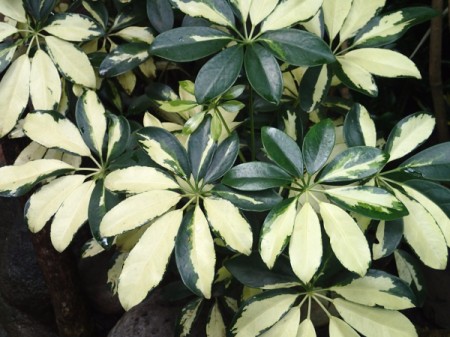
I hate any kind of bugs or spiders, even ants. The solution I found was so easy, cheap and works. Cajun pepper sprinkled around doors and next to the wall gets rid of any problem without poison or finding a dead mouse in those traps.
Keep several bottles of bubbles on bricks around the parameters of your garden if you have lots of bug problems. Let the kids play with the bubbles around the garden, not really blowing them directly on the plants but above them.
Most gardeners encounter pest problems at some point during the growing season. Organic gardeners "control" (within tolerable levels) these insect pests without the use of synthetic chemicals.
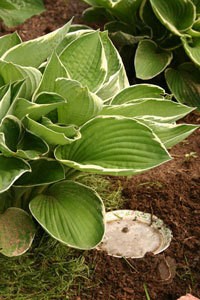
Instant solutions to pest problems can be harmful to the environment, pets, wild birds, fish (when the run off goes downstream) and beneficial insects (ladybugs, honey bees).
Mix 1 to 2 tablespoons of Dr. Bronner's liquid peppermint castile soap in 1 quart of water. Fill a spray bottle and use on your outdoor plants.
Sprinkle flour over plants and flowers to keep bugs off and rabbits away.
Here are the questions asked by community members. Read on to see the answers provided by the ThriftyFun community.
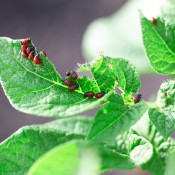
I would like to know how to get rid of stink bugs and these red and black bugs on my tomato plants without using a lot of chemicals
Hardiness Zone: 8b
You might want to try an insecticidal soap (usually approved for organic gardening) available and some major home improvement stores or local co-ops. Also, you can mix 1 part ivory dish soap with 3 parts water and spray directly onto the plant.
I agree an insecticidal soap is the only way to get rid of stink bugs but you have to spray it directly on the bug and keep spraying every time you see them. If you make your own soap solution make sure you are using soap and not detergent, detergents can damage or kill your plants.
The only red and black bugs that I get on my tomato plants are both mature and immature lady bugs, neither of which you want to kill. Please identify the immature ladybug before you kill them, since they look really different from the mature ladybug.
I am sure these are not lady bugs. They look like a immature version of the larger stink bugs only they are red and black.
Could be that your "bugs" are Harlequin Bugs....another true bug belonging to the same order as the stink bugs...Hemiptera? These suck sap from plant leaves like aphids or white fly leaving white and yellow blotches. If problem is severe enough plants can wilt and die.
creatures.ifas.ufl.edu/
We have had stink bugs in our home for about 4 months and I cannot get rid of them in our house, curtains, carpets, etc, etc. It is winter here in the east, but they are still around.
Just thought I'd post a pix of the ladybug nymph because they look so different from the adults.

For the second year we are having a problem with blister beetles on our tomato plants. Last year they were pretty much confined to the tomatoes and we treated with pesticides. This year they seem to have spread. I just saw them on plants on the other side of the house. They are eating the leaves, leaving the veins. I forgot to plant marigolds, and now I wish I had. I would like to treat the beetles organically this year if possible. What are some good, fairly inexpensive, organic, nontoxic pesticides I can use?
Here is a site I found. I'm fighting off a Japanese Beetle infestation right now so I am sypmathetic with your plight. Good Luck! Next year I'm planting cat nip & an herb garden along the outside of my veggie garden. The beetles are getting everything! Cukes, Tomatoes, Broccoli, Strawberry. I'm not sure what I'm gonna do this year if the suggested organic deterrents don't work, but I'm going to give it a try!
Is there any natural remedy I can use to get rid of these bug?
By Terry from Harrison county
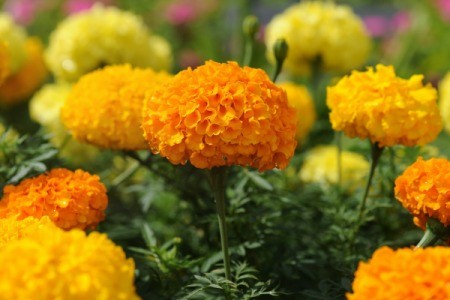
Marigold flowers have many effective natural pesticides that can be beneficial around your garden. This is a page about using marigolds to control bugs on your tomato plants.
If you don't want birds in your garden, especially if you have fruit trees, CDs can provide a bright flash that many birds avoid. Using CDs to keep birds out of your garden is a common and effective practice.

You don't have to use dangerous chemicals to control pests. There are many organic options to use as pesticides in your garden. This is a page about organic pesticide information.
Our gardens are attractive not only to us, but typically to a variety of wildlife as well. To encourage your guests to not make a smorgasbord of your flowers, shrubs, trees, and vegetables try some of the eco-friendly suggestions on this page.

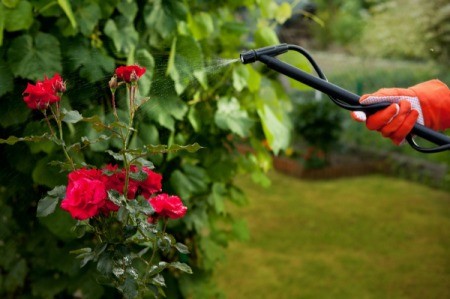
When used incorrectly, even solutions made from common household ingredients can damage beneficial organisms and the environment. This is a page about the right way to spray insecticides and fungicides.

This is a page about using tobacco juice to control garden pests. Tobacco leaves or cut tobacco can be mixed with water and sprayed on veggies to control some garden pests.