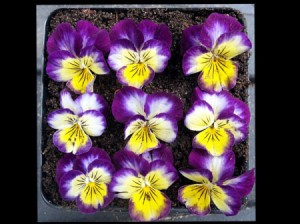
 Even though I'm frugal minded and sometimes pay as little as 10 cents for a 6 cell pack of flowers, many of my discounted purchases turn out to be quite nice. Sadly, there's no guarantee I'll be able to find those same flowers next year, even at regular price.
My solution is to save seed for as many of these 'keepers' as I can. When you grow as many flowers as I do, keeping track of all of them can be a chore. I tried writing a description of the flower to go with the saved seed. That didn't work, at all. A picture is the only way to go.
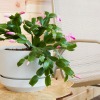
I'll give the pictured viola a name. This is my first saved viola seed this year, so it gets the name 'Viola #1'. On the seed packet, I'll write that name and the word 'pic' ('pic' will let me know there's a picture to accompany the seed). In my 'Saved Seed 2016' folder on my computer will be a picture with the name 'Viola #1', along with any notes I may have made.
There is a little time and work involved, but later I'll thank myself. Rather than thinking 'Now, which viola was this? Did I like it enough to plant it, again? Where did I have it growing? Would it look better here, or there?; one look at the picture and I'll have an answer for all those questions.
This page contains the following solutions.
I recently posted a tip on the importance of testing seed. This is a good practice if you have older seed, or seed you, for any reason, have doubts about.
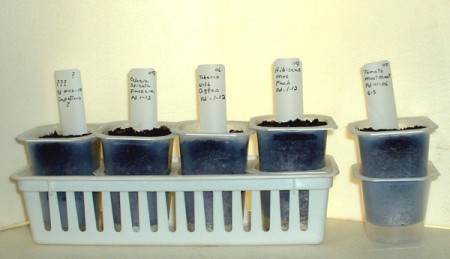
Collecting and saving your own seeds is easy and rewarding. It's a great way to save money, preserve and perpetuate scarce varieties and cultivate the best plants suited to your particular growing conditions.
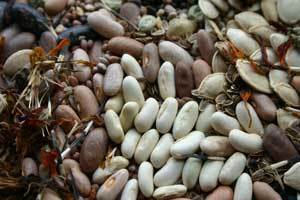
Here are the questions asked by community members. Read on to see the answers provided by the ThriftyFun community.
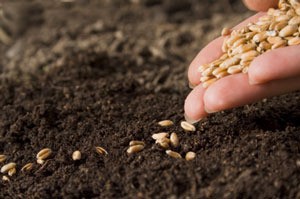 How long are seeds good for? Advice from the ThriftyFun community.
By Roz Graham
By Beth
If 8 out of the 10 seeds sprouted, you have an 80% of viability. If 2 seeds out of the 10 sprouted you have 20% viability. This way you will know to increase the amount of seeds you want to plant.
Do not waste the seeds you have sprouted, you can always put them in pots and wait till they get to be a decent size and then plant or them in the garden.
By Babette
By Louel53
Post your ideas below.
Some seeds last 5 years, some last 50 years, and some a shorter or longer amount of time. It depends on how well you care for the seeds, the environment you store them in, and the condition seeds are in at planting time. Seeds can be stored in a dry sealed container in the freezer or in a dry sealed darkened environment (like a sealed dry seed packet stored in a metal tin placed in a dark cabinet). The condition is that you do not want the seeds to get moisture, humidity, or exposure to sunlight. Do not ever take the whole seed packet outside in the garden if you plan on saving some of the seeds for a later planting date. Take out what you will plant for the garden, then store the other seeds in a safe environment immediately to protect until they will be used. [Seeds exposed to sunlight may not germinate well or at all if stored until a later planting date.] You can test the seeds for germination before planting by placing a few in a damp paper towel or a small pot with soil, then place it on your hot water heater or other warm environment, (due to energy efficient appliances your refrigerator top may not be warm enough - be sure you feel warmth first by placing your hand on top of the appliance.) Google for the book "Seed Savers Handbook", it is a very good source of information for planting by seed.
If I remember correctly, seeds found in the pyramids sprouted sucessfully. So I'd say seeds can last indefinitely. I certainly wouldnt throw any away. The only way one can be sure they are good or not is to plant them.
I find the seed companies list a shorter life span than is actually the case. With old seed you won't get the high percentage success rate, but it is surprising that with really old packs you sometimes get a few seedlings to germinate. It can work out expensive though in terms of the cost of compost used on the chance that nothing will show. But having said that I have bought fresh seed packs and had zero seedlings show. I usually plant old seeds as it is all the more rewarding if you do manage to get something to grow.
Kindest Regards - Borasic Lint
I put many of my seeds in the freezer a couple weeks before I plant them, it fools them into over wintering. not all seeds work this way though.
I'm a seed saver of flowers but don't know how to get them from several plants . Petunias, stock, pansy and several others. Does any one know of a web site that shows pictures of what they look like.
Hi Sharyl
When dead heading the petunias put them in a basket with newspaper in the bottom. Leave in a dry place and check them once they are dried out you will see little tiny black seeds. Also if you throw the dead headed flowers on the ground near your petunias next year you will have petunias!
I love the smell of petunias & so does my cat
Liz acraftycat
try this site for all kinds of useful pics.
hope this helps :)
To Diamondee. THANKS for Seed Site . It,s a great web site.Helped A LOT. Sharyl
TO LIZ. thanks For Petunia tip. When i need to deadhead i will use your method. THANKS SHARYL
Saving seeds from plants is a great way to save money in your garden. Feel free to post your tips about saving seeds below.
I have a great morning glory vine? should I clear it away now that it is gone? Can I harvest the seeds/pods?
These are in a side garden where I have begun composting, and plan to have more vegetables this summer.
Thanks! Laura
Morning glory seeds come from the flowers when they die off. Also the actual plant itself (in the UK) just dies. You get a seed head which you can take off towards the end of the season and then leave them to dry over the winter. When they form, the seeds are white and wet (I know this as I opened one up to see what it was like!); when dry they are brown and handlable. You should get 3 or 4 seeds from each head. I saved mine for the first time in September 04 and am waiting to plant them to see what results I get. Hope this is helpful.""
I am wondering why everyone says to clean seeds and let dry? cant I just plant them as is?
I just collected a few thousand seeds off of a dried up aster type flower in a pot from a nursery. Can I test the seeds now (Sep 29) so I know which ones to keep. Will it hurt to test them now if I thoroughly dry them again before storing the viable ones? Or do I have to wait till spring?
One last question. The plant was left in the sun without water for a couple of weeks. Could that effect the seeds ripening? I actually did throw a few hundred in a tall glass of cool water and they are all floating (even after stirring vigorously) except for about 20 of them. I really enjoy collecting seeds and have had fair success in the past. I want to make sure I use my time, money, space, and efforts on seeds that will grow as I don't have a lot of it to spare. Any advice or experience in regards to these questions is welcomed.
Yes, you can test the seeds, now. You cannot test seeds for viability and then save those same seed to be planted, later. It doesn't work that way. Also, you cannot know which seeds are viable until they have germinated. What you will know after testing the seed is the approximate percentage of viable seed in the untested batch.
Do your testing this way:
Clean and dry the seed in preparation for storing til Spring. Separate a small amount of seed for testing. Let's say you have 1000 seed and you separate 100 for testing. If you have 50 of those 100 seed to germinate, then you can expect 50% of the remaining 900 to germinate when planted next Spring (assuming the seed were properly stored during Winter).
The plant going without water for a period of time could affect seed maturation. If the seed were mature before the dry period, that period would not affect the seed.
Do not wet the seed you plan to keep til Spring. It will reduce the viability, greatly. Self sown seeds may go through many wettings and dryings during the Winter and still remain viable, but you cannot duplicate the natural conditions that make this so.
Thank you that answered all my questions.
I want to make sure that I am harvesting the cone flower seeds correctly. Do I wait till the blooms are dried out looking and gathering them in a bag for next spring?
By Lena74
I would like to know when and how to save seed from daisies?
By garden maid from Clarksville, TN
Some gardeners save seeds from year to year and for years at a time. Prior to planting season it is a good idea to do a bit of testing to check their viability. This is a page about testing seeds for viability.