HomeBrowseNewslettersContestsAskShare 
AllGuidesQuestionsVideosBy DateRecent Feedback My AccountAbout Us
Holidays and Parties > Halloween > Advice on August 25, 2011

Safe Trick-or-Treating

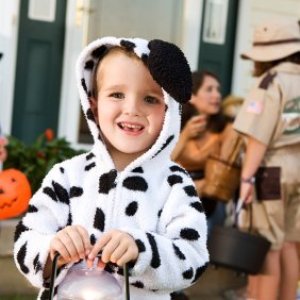
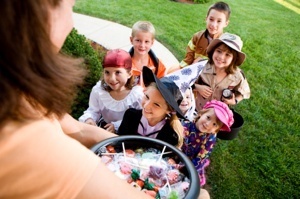
Child in Dalmation costume trick or treating.The practice of trick-or-treating has been popular in the US for decades. Kids have great fun dressing up in costume and collecting the tasty treats. However, there are some steps parents can take to ensure that this is also a safe activity. This is a guide about safe trick-or-treat practices.
     

Solutions: Safe Trick-or-Treating

Read and rate the best solutions below by giving them a "thumbs up".

Keeping Trick or Treaters and Pets Safe on Halloween

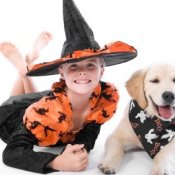
A young witch with a cute Halloween puppy. Halloween is around the corner, and people everywhere are looking forward to being scared and dressing up in costumes. The same is not true for dogs or cats, however. The mischief for which the holiday is infamous present a myriad of potential dangers that can take dogs, cats, and their owners completely by surprise.

If you want to include your dog in your Halloween celebration, make it an event that is safe and enjoyable for both of you. Here are some tips:

  • People love Halloween candy and so do dogs, but while candy is a great treat for us, dog owners need to make sure that it's not accessible to their animals. Most owners know that chocolate is poisonous for dogs, but so is almost everything else that you'd find in a trick-or-treat bag. Artificial sweeteners, raisins, and other candy items can mean serious health hazards or even death for dogs. The wrappers can be ingested and cause choking. Keep healthy, natural-ingredient dog treats on hand for your dog and other dogs that might show up at your door. Just before opening the door, you might give your dog a tiny treat.

  • Your dog potentially could be hit by eggs or other thrown objects if left out in the yard alone. It's better to be safe than sorry. Keep your dog safe from Halloween tricks by keeping it in the house and not alone in the yard.

  • If you're having a party, make sure your dog is in another room. Dogs are curious about strangers in the home, and even familiar people can cause confusion and stress when dressed strangely. Dogs may be frightened by unusual costumes, especially those with flashing lights or odd sounds such as a monster voice or high-pitched witch's screech. A party also presents additional food challenges. Make sure the human treats, especially alcoholic drinks, are not accessible to your dog.

  • Decorations and dogs are usually a bad pairing. New objects in the house are likely to arouse your dog's or cat's curiosity, and it could get tangled on light cords or accidentally knock over candles. Cornstalks and pumpkins look great outside, but could be tempting chewing material if within your dog's reach in your home. If your dog swallows any of these substances, it might suffer an upset stomach or more serious intestinal problems.

  • If your dog is OK with wearing a costume, make sure the costume is comfortable, not too warm, and doesn't have any parts that could be chewed, swallowed, or tripped on. Have your dog try on the costume a few times before the big night, and if it seems uncomfortable, allergic, or frightened, don't force the issue. A Halloween bandana or an orange collar and leash are good alternatives for dogs who don't like costumes for elaborate costumes. Most dogs are OK wearing sweaters, so if you do buy a costume for him, make it one that resembles a sweater in the way it's made. And make sure there are no flashing lights or noises on it either. They would only frighten your dog.

  • Many people will put their dog in a bedroom or another room while trick or treaters are coming. Although the idea behind this is good, it's actually worse on the dog. Keeping your dog in another room when the doorbell is constantly ringing is extremely upsetting for him. The dog is simply trying to protect it's owners and by putting him in another room you are stopping him from protecting you and the dog will get even more upset every time the door rings.

  • A better method is to barricade a section around the front door, or to barricade a section of the living room. The barricade will make it so that the dog can not get to the door, but it can still see who's there. Teach the dog to quiet down when you tell him he's barked enough. I taught mine (by squirting them in the butt to get their attention, then saying "enough" very sternly till they hushed. It didn't hurt them at all and they learned quickly, only a few squirts. After that all I had to do was pick up the bottle. They are allowed to bark at the door until I open it and then I say "enough", then they quiet down. The dog needs to see that you are safe and there's no danger at the door.

  • Cats on the other hand, should be put in a bedroom, but I usually set up a table or chair for her to sit on at the window if she wants. This way I don't have to worry about her scooting out the door if she gets scared with all the commotion at the door. And she can watch safely, but leave the window as she pleases.

By Cricket from NC

3 0SharePrintFollowPost Feedback

Keeping Halloween Safe

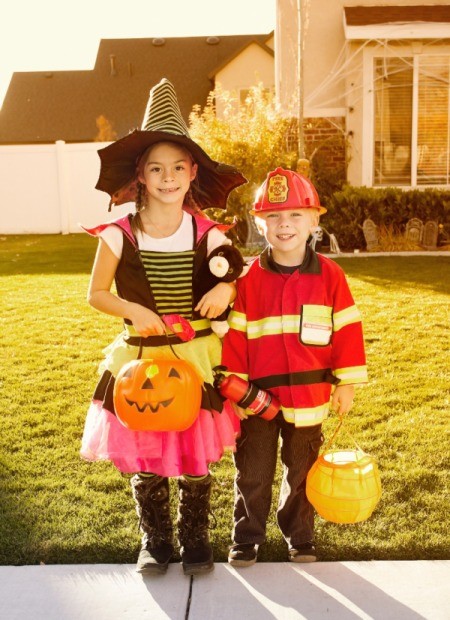
Children out trick or treating Did you know that 4 times as many children ages 4-15 are killed on Halloween evening as compared to other evenings of the year?* Falls are another leading cause of injury on Halloween. Follow these safety precautions and keep safe on this SCARY night.

Children should:

  1. Travel in groups and be accompanied by an adult

  2. Go only to well lit houses

  3. Never enter a home, remain on the porch

  4. Carry a cell phone for emergencies and KNOW their home phone number

  5. Bring treats home to inspect them prior to eating

  6. Avoid flowing costumes that could be ignited by a flame or pose a tripping hazard

  7. Avoid costume accessories with sharp edges that could cause injury if you were to fall on it (replace a plastic sword with one made of foam)

  8. Have their name, address and phone number on the INSIDE of their costume in the event of an injury (use an address label on the hem of the costume and at the back closure)

  9. Use flashlights

  10. Cross streets at crosswalks whenever possible. Do not cross between parked cars

  11. Avoid crossing unfamiliar yards which could have unseen fences, holes or pets

  12. Consider face painting instead of masks which impair vision

Parents should:

  1. Supervise children under age 12

  2. Prepare homes for ticker-treaters by clearing sidewalks, porches and lawns

  3. Keep pets indoors until the festivities have quieted down

  4. Use electric candles in pumpkins or place your pumpkin inside a window

  5. Inspect all candy before allowing it to be consumed. Throw away any home-made treats unless you know the people who have made it. Throw away unwrapped candies or wrappers that are not intact.

  6. Drive slowly and carefully

Have fun! Be Safe

By skibum1910 from Prospect, KY

*Editor's Note: This statistic appears to be true regarding pedestrian deaths. Scary, nonetheless.

2 0SharePrintFollow1 Feedback

Teach Your Child Halloween Safety,

Before going trick or treating, go over the rules with your children. Because it's an exciting night and emotions can affect clear thinking and "remembering," go over them several times.
Here's a website that lists some rules in kids' language: http://www.halloweenmagazine.com/rules.html and has an interactive "game" to reinforce understanding.  Add rules as fit your circumstances.

The rules should cover the following areas:

1. STRANGERS

If you were a pedophile, wouldn't Halloween night come to mind as an opportunity?  Describe to your child what a "stranger" is. Caution them to avoid strangers, stick to the agreed route, and not to go inside any houses.  Discuss that the "offer" may be enticing and must be ignored (see example on website).

2.  CARS

More children are killed by cars on Halloween night than any other night of the year. Make sure their mask allows visibility and their costume doesn't trip them.  Review "stop, look and listen" and "walk don't run".  Remind them that a parking lot has moving cars in it too, to stick to sidewalks and, and to cross only at intersections - in a group, not straggling.

3. SAFETY IN NUMBERS

Go with your child if he's young. Older children should go in pairs or 3s.

4. REMEMBERING WHEN IT'S HARD TO

The rules are no good if your child forgets them. This is a good time to go over Emotional Intelligence 101 - paying attention and thinking even though there's emotional distraction. Find examples the week before that can be learning opportunities.

5. PEER PRESSURE

What you said holds, no matter what the other child wants to do, or what they say their mother said was OK. (Good practice for peers who do drugs.)

6. FOOD SAFETY

Your child must return all candy and food to you for inspection before they eat it. Go over the "no matters" - no matter how good it looks, no matter how hungry they get, no matter if Billy says he's sure it's OK.

7. FIRE SAFETY

Those luminaria, lanterns and jack-o-lanterns with live candles in them are a fire hazard (and can be very enticing). Point out dangers.  Flame retardant costumes are of course advised.

8. MANNERS

This ranges from saying "thank you" for treats, to not going to houses that don't have their lights on, to respecting the property of others.

9. COSTUME SAFETY

They must be able to walk in their costume, and to see through their headgear or mask. They should have a tote bag that's manageable (think of the disruption if they have a bag that tears). They should carry a flashlight and/or wear lighted sneakers.

10. SAFETY SAFETY

And, last but not least, what should your child do if he gets lost or in danger? Run away and scream if someone follows them or tries to force them into a car. If lost, ask a woman with a child for help. How to dial 911 at home and on the cell phone. Go over what to do in different scenarios.

For a comprehensive list of safety tips for a large range of situations, go here http://www.nlm.nih.gov/medlineplus/child safety.html , the US National Library of Medicine.

By Susan Dunn, MA

0 0SharePrintFollowPost Feedback

Accompany Your Children Trick or Treating

It sounds so simple and yet so few parents do it. ACCOMPANY your children around your neighbourhood. Not only does it keep them safe, it allows you to meet new neighbours and to promote goodwill with in your area.

Ang from New Zealand
0 0SharePrintFollow2 Feedbacks

Simple CPSC Safety Tips Help Prevent Halloween Hidden Dangers

CPSC Encourages Parents to Incorporate Safety into Celebration

WASHINGTON, D.C.- Children around the country are eagerly anticipating the night when they will wear their favorite costume and search for fun and delicious treats. As Halloween creeps up, the Consumer Product Safety Commission (CPSC) reminds parents and caregivers that when it comes to Halloween safety, there is no trick. Hidden dangers associated with costumes, treats, and decorations can be easily prevented, so that the holiday celebration is a real treat.

According to the CPSC, the most serious Halloween-related injuries involve burns from flammable costumes and decorations, including ignition from open flames, such as candles and Jack O'Lanterns. Other incidents have involved abrasions from sharp objects attached to masks or costumes.

Home-made costumes that are not flame resistant continue to be the major concern, said CPSC Acting Chairman Nancy Nord. "When making a costume, parents need to use inherently flame-resistant fabrics, such as nylon and polyester. Also, they should avoid long-draped items that could cause an entanglement hazard."

CPSC helps keep children safe by enforcing the Flammable Fabrics Act and by recalling products at Halloween and throughout the year that can cause injury.

Follow these safety tips to ensure this year's holiday is a safe one:

Costumes
  • When purchasing costumes, masks, beards and wigs, look for flame-resistant fabrics such as nylon or polyester, or look for the label "Flame Resistant." Flame-resistant fabrics will resist burning and should extinguish quickly. To minimize the risk of contact with candles and other fire sources, avoid costumes made with flimsy materials and outfits with big, baggy sleeves or billowing skirts.


  • Purchase or make costumes that are light, bright and clearly visible to motorists.


  • For greater visibility during dusk and darkness, decorate or trim costumes with reflective tape that will glow in the beam of a car's headlights. Bags or sacks also should be light-colored or decorated with reflective tape. Reflective tape is usually available in hardware, bicycle and sporting goods stores.


  • Children should carry flashlights to see and be seen.


  • Costumes should fit well and not drag on the ground to guard against trips and falls.


  • Children should wear well-fitting, sturdy shoes. Oversized high heels are not a good idea.


  • Tie hats and scarves securely to prevent them from slipping over children's eyes and obstructing vision.


  • If your child wears a mask, make sure it fits securely, provides adequate ventilation, and has eye holes large enough to allow full vision.


  • Swords, knives and similar costume accessories should be made of soft, flexible materials.
Treats
  • Warn children not to eat any treats until an adult has examined them carefully for evidence of tampering.


  • Carefully examine any toys or novelty items received by trick-or-treaters under three years of age. Do not allow young children to have any items that are small enough to present a choking hazard or that have small parts or components that could separate during use and present a choking hazard.
Decorations
  • Keep candles and Jack O' Lanterns away from landings and doorsteps where costumes could brush against the flame.


  • Indoors, keep candles and Jack O' Lanterns away from curtains, decorations and other combustibles that could catch fire. Do not leave burning candles unattended.


  • Remove obstacles from lawns, steps and porches when expecting trick-or-treaters.


  • Indoors or outside, use only lights that have been tested for safety by a recognized testing laboratory, such as UL. Check each set of lights, new or old, for broken or cracked sockets, frayed or bare wires, or loose connections. Discard damaged sets.


  • Don't overload extension cords.
0 0SharePrintFollowPost Feedback

Halloween Safety Tips

Before Halloween
  • Plan costumes that are bright and reflective. Make sure that shoes fit well and that costumes are short enough to prevent tripping, entanglement or contact with flame.
  • Consider adding reflective tape or striping to costumes and Trick-or-Treat bags for greater visibility.
  • Secure emergency identification (name, address, phone number) discreetly within Halloween attire or on a bracelet.
  • Because masks can limit or block eyesight, consider non-toxic makeup and decorative hats as safer alternatives.
  • When shopping for costumes, wigs and accessories, look for and purchase only those with a label clearly indicating they are flame resistant.
  • Think twice before using simulated knives, guns or swords. If such props must be used, be certain they do not appear authentic and are soft and flexible to prevent injury.
  • Obtain flashlights with fresh batteries for all children and their escorts.
  • Plan ahead to use only battery powered lanterns or chemical lightsticks in place of candles in decorations and costumes.
  • This is also a great time to buy fresh batteries for your home Smoke Alarms.
  • Teach children to how call 9-1-1 (or their local emergency number) if they have an emergency or become lost. Remind them that 9-1-1 can be dialed free at any payphone. (This may vary from place to place. Check in your local area if 9-1-1 is a free call
  • Review with your children the principle of "Stop-Drop-Roll", should their clothes catch on fire.
  • Openly discuss appropriate and inappropriate behavior at Halloween time.
  • Consider purchasing individually packaged healthy food alternatives (or safe non-food treats) for those who visit your home.
  • Take extra effort to eliminate tripping hazards on your porch and walkway. Check around your property for low tree limbs, support wires or garden hoses that may prove hazardous to young children rushing from house to house.
  • Learn or review CPR skills to aid someone who is choking or having a heart attack.
  • Consider safe party guidelines when hosting an Adult or Office Party.

Fun Alternatives:
  • Ask around your community and check your local newspaper for information on special events.
  • Community Centers, Shopping Malls and Houses of Worship often have organized festivities.
  • Share the fun by arranging a visit to a Retirement Home or Senior Center.
  • Create an alliance with College Fraternities, Sororities or Service Clubs for children's face painting or a carnival.

Before Nightfall on Halloween:
  • A good meal prior to parties and trick-or-treating will discourage youngsters from filling up on Halloween treats.
  • Consider fire safety when decorating. Do not overload electrical outlets with holiday lighting or special effects.
  • Always keep Jack O' Lanterns and hot electric lamps away from drapes, decorations, flammable materials or areas where children will be standing or walking.
  • Plan and review with your children the route and behavior which is acceptable to you. Agree on a specific time when revelers must return home.
  • Along with flashlights for all, older children and escorts should wear a wristwatch and carry coins for non-emergency phone calls.
  • Confine, segregate or otherwise prepare household pets for an evening of frightful sights and sounds. Be sure that all dogs and cats are wearing collars and proper identification tags. Consult your veterinarian for further advice.
  • Remind all household drivers to remain cautious and drive slowly throughout the community.
  • Adult partygoers should establish a designated driver.

When Trick-or-Treating:
  • A Parent or responsible Adult should always accompany young children on their neighborhood rounds.
  • Remind Trick-or Treaters:
    • By using a flashlight, they can see and be seen by others.
    • Stay in a group and communicate where they will be going.
    • Only go to homes with a porch light on.
    • Remain on well-lit streets and always use the sidewalk.
    • If no sidewalk is available, walk at the farthest edge of the roadway facing traffic.
    • Never cut across yards or use alleys.
    • Never enter a stranger's home or car for a treat.
    • Obey all traffic and pedestrian regulations.
    • Always walk. Never run across a street.
    • Only cross the street as a group in established crosswalks (as recognized by local custom).
    • Remove any mask or item that will limit eyesight before crossing a street, driveway or alley.
    • Don't assume the right of way. Motorists may have trouble seeing Trick-or-Treaters. Just because one car stops, doesn't mean others will!
    • Never consume food items or drinks that may be offered.
    • No treats are to be eaten until they are thoroughly checked by an Adult at home.
    • Law Enforcement authorities should be notified immediately of any suspicious or unlawful activity.

After Trick-or-Treating:
  • Wait until children are home to sort and check treats. Though tampering is rare, a responsible Adult should closely examine all treats and throw away any spoiled, unwrapped or suspicious items.
  • Try to apportion treats for the days following Halloween.
  • Although sharing is encouraged, make sure items that can cause choking (such as hard candies), are given only to those of an appropriate age.

By Los Angeles Fire Department

0 0SharePrintFollow1 Feedback
Share Your Feedback: Once you try any of the above solutions, be sure to come back and give a "thumbs up" to the solution that worked the best for you. Do you have a better solution? Click "Share a Solution" above!

Questions

Do you have a question related to this page?
Follow ThriftyFun