Two shirts with one problem: stains. One shirt with a special feature: decorative embroidery. Here's a simple solution to use what's left of the pair and create a cute "new" shirt in the process. Maybe you don't have two stained shirts. Maybe you have an outgrown shirt with a favorite decoration on it, and a shirt with staining or a hole, which is otherwise fine. Combining two shirts into one will give you a "new" shirt to wear, where you once had two hopeless cases. Satisfying and thrifty.
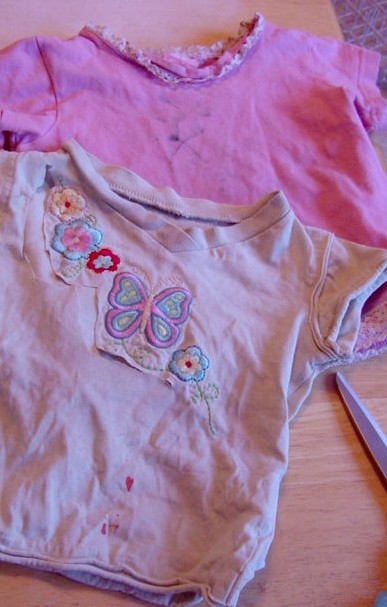
Presto, new shirt!
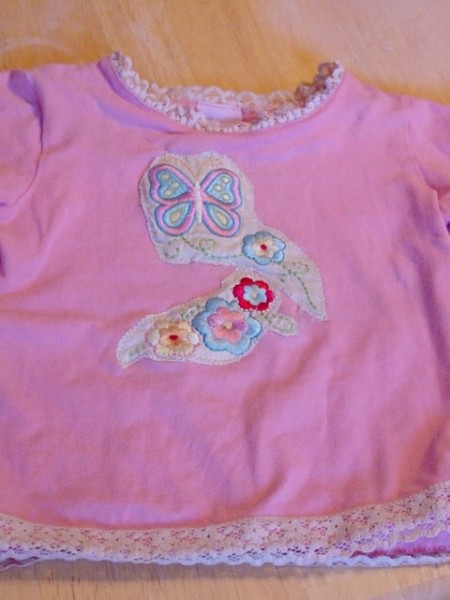
By Kirsten from Logan, UT
This page contains the following solutions.
I just bought a black sweater and the label's white threads were showing through at the neck line. I have short hair, so it was truly bugging me. I grabbed my permanent black marker and brushed over the exposed threads.
As the queen of mending, here's another sneaky tip. If there are discolorations, such as bleach spots on your clothing, you can "mend" them by trying to fill in the bleached spot with various coloring methods.
I have a white snap front sweatshirt that the white paint wore off of the snaps and made the sweatshirt look shabby. I grabbed my witeout that you use for paper and applied a coat. It covered beautifully and now my sweatshirt looks new again
Use the ribbed part of socks as replacement cuffs on jackets, rather than purchasing new ones from the fabric store. By Syd
Those selections of various colored threads you can get with mending kits are very handy. More often than not, using the right color of thread will help to make your mending blend into the background.
I have found that iron-on patches can be very useful for mending and they come in all sorts of colors. Always round the corners of the iron-on patch, so they won't peel off.
My husband works in an office environment and wears long-sleeved shirts every day. When the cuffs start getting frayed, but the rest of the shirt is still fine I make a short-sleeved shirt by cutting off the bottom part of the sleeve and hemming it up on my sewing machine. By Betty
Repairing Clothing from Thrift Shops. Often clothes at thrift shops end up there just because they need some tweaking. Got a lovely pair of GAP capris - but there as a knot of sorts where the stretchy material of the waistband met the front seam.
Here are the questions asked by community members. Read on to see the answers provided by the ThriftyFun community.
I have a denim jacket that has that shiny copper looking stitching. How do I take the shine off so it doesn't glow so much?
By Andrea
You cant change the properties of the thread. You can rip it out and redo. You could also stitch carefully over it with another thread to give it a different look
I have a shirt with long sheer sleeves with a run in it, like stocking material; how do I repair it? The seamstress said it can not be sewn. Should I use clear nail polish to prevent tearing?
By Cindy
Clear fingernail polish will leave a shiny mark and will be hard. I was a tailor for many years - your seamstress is correct in saying that it can't be sewn, but if it's in a suitable spot perhaps an applique or braid can be sewn over the run and then be matched on the other sleeve.
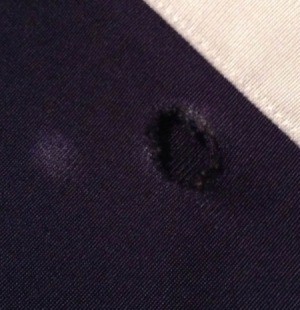 How do you repair holes in nylon sweatpants? My son has a dime-sized hole in a couple pairs of Under Armour sweatpants. I really don't want to throw them since they're expensive, but I'd like to find a way to patch them. I'm guessing traditional patches will melt the material with the heat. Any suggestions?
By mkb
If I wished to patch these, I would sew a patch on with my sewing machine. You need a small piece of the same or very similar fabric, in the same color. Pin it to the inside of the pants, and sew around the edge, then back and forth.
I had a spot on a white lace dress. I scrubbed the spot with bleach and the spot came out, but now I have a bigger yellow spot. The dress is white so I tried washing the whole thing in bleach, but it didn't help. Any suggestions?
By Nancy
I would recommend washing the garment to remove residual bleach. Perhaps more than once. Then try an overnight soak in Oxy Clean.
I was cleaning my tub out and I was using bleach. I spayed it and it got on my green shirt and now I have yellow bleach stains on my shirt. How do I get them out? Please help me solve this.
By Meara
Bleach doesn't come out. It strips out the color. You can either die it, or splatter more on it to change the look.
How can I fix a snag and tiny hole in new polyester scarf? It is a little stronger than silk material. Thank you.
By flower51
Use "Fray No More" or "Fray Check". You can get it anywhere that sells sewing or quilting supplies. Useful for a lot of things.
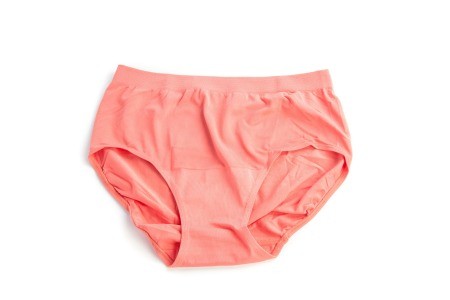
When pricy underwear that is glued together comes apart, it may need to be returned to the store, sewn or glued again with a clothing adhesive.
This is a page about tips for mending clothing. You don't have to be an experienced seamstress to mend your clothing.