Home |  Index |  Submit Request |  Share Photos |  Share Tips |  Active Topics |  New Feedback  |  Contact Us  |  Search
 User Login:  Username:    Password:      Forgot It?  | Register

 Popular Topics
 - Beauty
 - Budget and Finance
 - Christmas *
 - Cleaning
 - Consumer Advice
 - Craft Projects
 - Craft Tips
 - Food Tips
 - Garage Sales
 - Gardening
 - Gifts
 - Green Living
 - Home Improvement
 - Organizing
 - Parenting
 - Parties
 - Pest Control
 - Pets
 - Product Reviews
 - Recipes
 - Repair
 - Thanksgiving
 - Weddings for Less

More Topics

Google Search:

Web thriftyfun.com

About:
RSS Feed
About Us
Media
Advertising
Contact Us
Privacy Statement
Disclaimer

Money Saving Refrigerator Tips

By Fisher Swanson
1x1
Date: 02/02/2001 Topics: Gardening | Home Improvement > Conservation  
1x1
1x1
Post Feedback! | Email Friend | Print | Get Responses | Bookmark | del.icio.us | Link | Rate: Thumbs Up Thumbs Down
Money Saving Refrigerator Tips
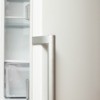
One of the most costly appliances to run in your household is the refrigerator. It's also one of the most neglected appliances in many households. I have compiled some tips to help cut down how much energy you have to use to keep food cool.

Maintenance is Key:

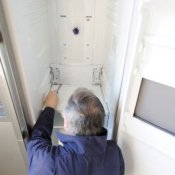
Since your refrigerator, is on, using electricity 24 hours a day, maintenance is very important. Keep the seals on the door clean and check for cracks. You can do this easily with a sponge and a little elbow grease. If you have cracked seals you should consider replacing them.

Clean the condenser coils at the back or bottom of your refrigerator at least once a year. You can use a vacuum to remove dust and debris from the coils and then gently wipe them with a rag. Also, be sure to defrost manual-defrost freezers when the frost is more than 1/4 inch thick.

Old and Inefficient:

If you have a refrigerator from the early 70's or before, it probably costs you more than 3 times as much to operate than a refrigerator you would buy today. You may want to consider upgrading to a newer refrigerator. It may not sound like a good way to save money, but a newer refrigerator uses much less energy, tends to have more features and uses a more environmentally friendly method to cool.

If you are buying a new refrigerator, look for the Energy Star Label. Energy Star is a collaboration between the U.S. Department of Energy, the U.S. Environmental Protection Agency and many companies which is designed to prevent pollution by helping consumers buy products that use less energy. You can find more information at: http://www.energystar.gov/about.html

Energy Cost Vs. Grocery Savings:

There is an ongoing debate on whether the additional storage that a second refrigerator offers is worth the expense. If you have your old refrigerator out in the garage with a case of soda pop in it (many people I know do), the answer is no. Especially if it's an older fridge that uses more energy. You are spending more to cool your soda pop than your food inside in your primary fridge. So while it seems like a frugal use of your old fridge, it could be costing your $150.00 or more a year to run it.

Running Tips:

Don't set your refrigerator's temperature too low. The colder it gets the more it costs to run. Set the refrigerator's temperature to between 38 and 42 degrees Fahrenheit (3 to 6 degrees Celcius) and your freezer to between 0 and 5 degrees Fahrenheit (-17 to -15 degrees Celcius).

Leave room around your food in the fridge. Try to leave an inch clear around the inner walls of the fridge. This will allow air to flow around the food. Food does retain cold better than air, so don't worry about filling your fridge, but leave room for air to circulate.

In your freezer, you don't need to leave room for air, it's best to pack food close together. In fact, if you have extra space in your freezer you can put water bottles to fill unused space and help retain cold.

Try to avoid staring in the fridge for long periods of time and don't leave the door open while you do something else. The tough part is getting children or teenagers to do this. The more the door is opened, the more energy your refrigerator will use.

Lastly, try to avoid putting warm leftovers in your refrigerator. Let them cool to room temperature and then put them in.

I hope you can make use of some or all of these tips to cut down your refrigerator's energy use. It's an appliance you can not live without, yet
it's often neglected. Just remember this... The more you maintain your fridge, the more cool air it will retain!
About The Author:
Fisher Swanson is a Contributing Editor at ThriftyFun.com. If you have comments about this article, send them to fisher@thriftyfun.com (Copyright (C) ThriftyFun.com 2000-2001)
Jump to Feedback | Post feedback
Related Links:
Previous: What can I do with my bent nails? ThriftyFun Next: Anti-Fog for Windows
1x1
 Feedback
1x1
1x1
1x1
1x1
 Sponsors
1x1
1x1

Post by ceichler (3) | (02/08/2001)
Contact
In winter put the leftovers out on a window sill or the terrace (well packaged of course) for a few hours to cool. They will cool faster than at room temperature, and they will be cooler when they get into the fridge.

Defrost in the fridge! It will use the cold of the freezer to keep the fridge from using energy. Another advantage is that the defrosted goods are kept at a temperature that will keep them from going bad (as opposed to defrosting in roomtemperature).


| (02/05/2001)
A good way to keep your refrigerator seals pliable and sealing good is to put a light coating of petroleum jelly on them. - D. H.


| (02/04/2001)
Your right, you shouldn't let leftvovers sit out. But there is nothing wrong with letting your leftovers cool before you put them in the fridge. You should put them in a sealed container immediately, though.


Post by gizmo81795 (26) | (02/04/2001)
Contact
In response to "try to avoid putting warm leftovers in your refrigerator. Let them cool to room temperature and then put them in.", while this hint would help to keep energy costs down, it is a bad idea. Bacteria grows on food left out at room temperature and can cause salmonella and other types of food poisoning.
It is best to put leftovers into the refrigerator immediately after the meal is finished to avoid this.


Post by katkitkat (12) | (02/03/2001)
Contact
Thanks for all the good advice! We in California need all the energy savings tips you can offer!


1x1

Post Feedback:
Login using the form on the top of the page to post feedback if you have registered with ThriftyFun. If you have not yet registered, click here. It's FREE!. If you are not registered you can post feedback as a guest below. Please don't use your email address for your name because spam robots can dredge it from our site. Please do not post your feedback more than ONCE. We need to approve all guest feedback and it may take from minutes to hours for that to happen.
(1x1 graphic )
Your Name

Subject

Feedback

text tool text tool text tool text tool

Image Upload: Add an image to your post! Click the "Browse" button below and select an image from your hard drive. Please only select gifs or jpegs. If you have any problems, just email the image to images@thriftyfun.com


If you want to post your email address for responses from readers, obscure it in some way like put spaces between the name and @ sign and service address with (remove spaces) behind it or name (at) server (dot) com . This is for your protection from those creepy Robots.

(1x1 graphic )

© 1997-2008ThriftyFun.com - Design by Cumuli Design
Disclaimer: ThriftyFun.com cannot accept any responsibility for any injury or damage that you may cause to yourself, others, or property when following any advice given on this site. Read the full disclaimer. If you find any information on ThriftyFun.com or in our newsletters that is either erroneous and/or potentially harmful to others, please Contact Us, immediately.