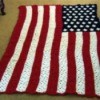
I am the owner of a Yahoo craft group and help to lead a local community craft group in Frankfort, Kentucky. In our area group and on our web site, we always try to help each other make projects become a little more enjoyable to make.
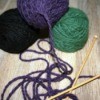
I discovered many of my group's members were having the same troubles crafting hand-made yarn projects. Those who are visually impaired and even some of our seniors find that it is very difficult to see where to place the next stitch while using black and other darker colored yarns. One day, I took on the task to try and find a remedy.
I eventually discovered that if a crafter places a white towel or pillow case under the project being worked, the white shows through the small holes previously made, thus making it easy to see where those next stitches go.
Another problem faced was similar, the difficulty seeing where the stitches go while using thick yarns to knit or crochet. I found that if I use a second strand of lighter weight yarn in a contrasting color, along side the thick fluffy yarn strand, the light fingering weight yarn becomes a guide to where I need to place the next stitch.
Overcoming frustrating obstacles like those mentioned, makes all the difference between a work in progress (WIP) and a completed hand crafted project, made with pride and satisfaction.
Add your voice! Click below to comment. ThriftyFun is powered by your wisdom!
This 79 yeat old knitter/crocheter thanks you . Wonder why I never thought of it myself; I use a sheet of white paper to help me thread a needle!
Those are very good suggestions. Using the white in back of a sewing machine needle also works. I just use a piece of white paper. It helps tremendously.
Another great idea! And if you don't have a towel, you might have a white trash bag to use.
Another handy tip to share is what happens when your yarn project stretches.
Work under the brightest lamp you can get. I always thought those Ott Lights were bunk but I am rethinking that opinion.
Add your voice! Click below to comment. ThriftyFun is powered by your wisdom!