| Botanical Name: |
| Borago officinalis |
| Common names: |
| Borage |
| Description: |
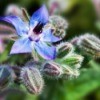
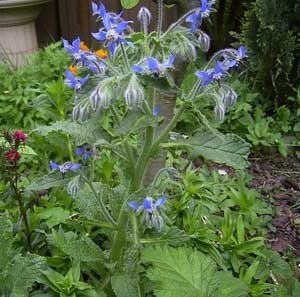
| Borage is loved by bees and gardeners alike for its bright blue, star-like flowers with prominent black anthers and light-catching, silvery-haired foliage. Plants may have white or pink flowers on occasion. |
| Life Cycle: |
| hardy annual |
| Exposure: |
| full sun or partial shade |
| Cultivation: |
| Borage will do well in any type of garden soil, but its long taproots keeps it from transplanting well or growing well in containers. Plants are annuals, but readily self-seed once they become established. Sow seeds in the mid or late spring for use in the summer, and again in mid summer to keep replacement plants coming. In mild areas, sow in the fall for early spring and summer blooms. |
| Propagation: |
| seeds, self-sowing |
| Parts Used: |
| flowers and leaves; the entire herb has a cucumber-like fragrance |
| Harvesting and Storage: |
| Gather leaves and flowers when plants are just beginning to flower. Collect them early in the afternoon when the sun has dried the morning dew. Discard any leaves and flowers that are torn or damaged. |
| Medicinal Uses: |
| (leaves and flowers) used as a diuretic, relaxant, inhalant for chest colds and works to aid in milk production for breast-feeding. Borage is also rich in nutrients like calcium and potassium. |
| Culinary Uses: |
| (leaves and flowers) soups, garnishes; fruit punch, cocktails, |
| Other Uses: |
| skin lotion |
| Notes: |
| Because of the presence of nitrate and potash, Borage will emit tiny sparks with a slight explosive sound when burned. |
About The Author: Ellen Brown is an environmental writer and photographer and the owner of Sustainable Media, an environmental media company that specializes in helping businesses and organizations promote eco-friendly products and services. Contact her on the web at http://www.sustainable-media.com
Add your voice! Click below to comment. ThriftyFun is powered by your wisdom!