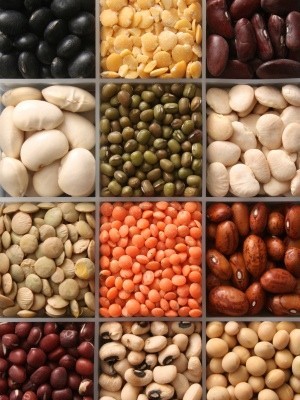
 Most people love a great chili or baked beans, but most people don't know how to identify the beans in any dish. Beans are a great way to stretch your food budget and can feed a crowd.
They are a great source of protein and when teamed with rice or other grains, meat, or cheese they make a complete protein. Beans are full of good carbohydrates along with being a great source for iron and calcium. With fiber galore, beans aid the digestion process. Beans are great for people who suffer from osteoporosis or anemia and because they slow the rise in blood sugar after a meal they are a good choice for diabetics. Beans are also high in antioxidants. This article is going to give you lots of good information on beans and what the different kinds are.
Cooking Time: 3/4 to 1 hour
Anasazi: These beans are small kidney shaped purple and white beans in the same family as pinto beans. These heirloom beans are sweet, fast-cooking, and reputed to cause less flatulence than other bean varieties. They're great for making refried beans.
Cooking time: 2 hours
Black: These beans are small ovals with deep black skins they have a dark cream to gray flesh and have a mild sweet texture and taste. They are some times called Turtle beans. These beans are a staple of Latin American and Caribbean cuisine, where they're used to make side dishes, soups, bean dips, and salads. They have a strong, earthy flavor, so they're often combined with strong spices.
Cooking Time: 1 to 1 1/2 hours
Black-Eye: These beans are kidney shaped and they have a white skin with a small black eye and have a flavor all their own. These are used in Southern cooking and African cooking. They are also called cowpeas or black eyed peas. These small beans cook quickly and require no presoaking.
Cooking Time: 1/2 to 1 hour
Cannellini These are large white beans, about 1/2" long, with a firm texture and skin and a nut-like flavor. They are also know as White Kidney beans and can be used just like kidney beans. Cannellini beans are used in Italian dishes but are also great in bean salads or soups.
Equivalents: 1 cup dried beans yields 2 1/2 cups cooked beans
Cooking time: 1 hour
Cranberry: These beans are usually white or cream in color with deep red or cranberry marks that are distributed in different patterns on the bean that disappear on cooking. The flavor of this bean has a nut like taste that is comparable to a chestnut. These are use in Italian, Spanish and Portuguese food.
Equivalents: 1 pound beans = 2 cups dried beans = 4-5 cups cooked beans.
Cooking Time: 3/4 to 1 hour
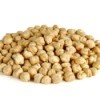
Garbanzo: These beans are beige to pale yellow but also can be green, red or brown. Garbanzo beans have a delicious nutlike taste and a texture that is buttery, yet somewhat starchy and pasty. They are also called chickpeas and are used in Middle Eastern, Indian dishes like hummus, falafels and curries.
Equivalents: 1 pound beans = 2 cups dried beans = 4-5 cups cooked beans.
Cooking Time: 1 to 1 1/2 hours
Great Northern: These beans are a flat, kidney-shaped, medium-sized bean, that is white in color. They have a mild flavor that is delicate which takes on the flavors of other foods which they are cooked. They are used in French cooking in cassoulet, in soups and stews and are the beans used in Boston baked beans.
Equivalents: 1 pound beans = 2 cups dried beans = 4-5 cups cooked beans.
Cooking Time: 3/4 to 1 hour
Kidney (Light Red): These beans are large and kidney-shaped. They have a full bodied flavor which is robust and a soft texture. These beans are popular in Caribbean cuisine and often paired with rice.
Equivalents: 1 pound beans = 2 cups dried beans = 4-5 cups cooked beans.
Cooking Time: 1 to 1/2 hours
Kidney (Dark Red): These beans are large, kidney-shaped, deep reddish-brown in color. They have a robust full bodied taste with a soft texture. They are used in chili and 3 bean salad and are the beans used in red beans and rice.
Equivalents: 1 pound beans = 2 cups dried beans = 4-5 cups cooked beans.
Cooking Time: 1 1/2 to 2 hours
Lima (Baby): These beans are flat shaped and creamy white in color and have a rich buttery flavor. They are used in southern cooking where they are a mainstay and in soups, stews and casseroles or can be cooked as a side dish cooked with herbs and spices.
Cooking Time: 1 hour
Lima (Large) : These beans have a flat shape and are ivory color in color. They have a smooth and creamy sweet taste. They are also called Butter beans in the south. They are a good substitute for potatoes or rice; excellent in soups, casseroles.
Equivalents: 1 pound beans = 2 cups dried beans = 4-5 cups cooked beans.
Cooking Time: 1 to 1 1/2 hours
Navy: These beans are small white ovals. They have a mild flavor and a powdery texture. They are also called pea beans and are used in pork and beans and baked beans but are most famous used in soups like Senate Navy bean soup.
Equivalents: 1 pound beans = 2 cups dried beans = 4-5 cups cooked beans.
Cooking Time: 1 1/2 to 2 hours
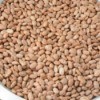
Pink: These beans are small, pale-pink and turn reddish brown when cooked. They have a rich and meaty flavor and a slightly powdery texture. They are a relative of the kidney bean and are used in southwestern chili and any where a small bean is desired.
Equivalents: 1 pound beans = 2 cups dried beans = 4-5 cups cooked beans.
Cooking Time: 1 hour
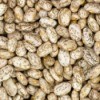
Pinto: These beans are medium ovals that have mottled beige and brown coloring that turn brown when cooked. These beans are used in Mexican cooking and can also be used to make pork and beans and refried beans.
Equivalents: 1 pound beans = 2 cups dried beans = 4-5 cups cooked beans.
Cooking Time: 1 1/2 to 2 hours
Small Red: These beans are dark red in color and they are similar to red kidney but smaller. They also have a flavor similar to red kidney beans. These beans are also called Mexican red beans. They hold both there shape and firmness when cooked. They are used in soups and salads and chili and creole dishes.
Equivalents: 1 pound beans = 2 cups dried beans = 4-5 cups cooked beans.
Cooking Time: 1 to 1 1/2 hours
This article can be printed out and put in a notebook for future reference. Hope you enjoy this article and I hope this helps you the next time you are in the store staring at all the different beans. Also try your health food or natural food stores they can some more unusual beans for you to try.
This page contains the following solutions.
Bulk beans are so much cheaper than buying canned beans, it always takes a little planning though, and in the past I'd always forget. Not anymore, I have a big yogurt container boldly marked "BEANS" that I keep filled with soaking beans in the refrigerator all the time.
Beans, beans, the frugal fruit, the more you eat them, the more you save money! Actually beans are a legume but there is no question that they are a frugal staple in any diet.
This tip is so simple, yet it has saved me many dollars and much time.
As a southern gal, I must have pinto beans every now and again cooked by me and not from a can. Since I got old and my hands became arthritic, it was difficult to rinse the beans and lift the slow cooker or large bean pot to pour off the water used for washing.
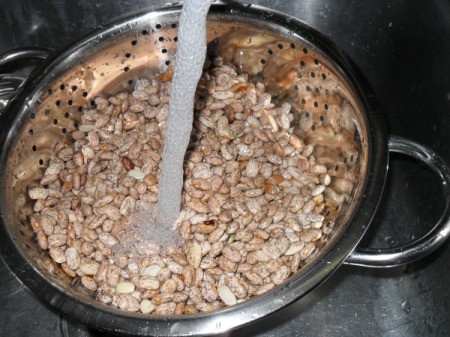
Always clean and soak your legumes overnight. The next morning rinse, add water and bring to a rapid boil for 5 minutes then lower the heat to medium and let it cook. It cooks well. Don't add salt while it is boiling, because its delays the cooking process.
Cut the cooking time way down on dried beans by soaking overnight, then freezing them in usable quantities. Then cook them by boiling them until soft. The freezing breaks down some of the cell fibers allowing them to cook more quickly.
Meat is a delicacy in our house. It's better for our budget. This is how I make my weekly pot of beans. The recipe is vegetarian, but still comes out thick and gooey.
Here are the questions asked by community members. Read on to see the answers provided by the ThriftyFun community.
Instead of using the crock pot to cook beans, can I use the "Little Dipper?"
The Little Dipper is a warmer, it is good for warming and low heating. Unless your beans are pre cooked, this warmer will not cook them from raw state. A average crock pot takes hours for cooking dried or fresh beans.
I do not think it would be a good idea as it really is just a 'warmer'.
This container does not have a dial or gauge and heats to only one low temperature.
Here is a comment from their website.
"Little Dipper Warmer portable slow cooker gently heats dips and sauces to warm temperatures."
It can also be used to warm chocolate.
Litle dippers are not a cooker at all but were made to warm up food or keep food warm. They were not designed to cook beans in and would not work at all. You will either need to cook the beans in a crockpot or on the stove first then you can move them to the little dipper to keep them warm when serving them.
What, in people's experience, is the best/easiest way to cook dry bulk beans so that they are actually soft? I'm trying to release dependence on canned goods because of the cost, but I get mixed results at best and it always seems to take for ages.
Thanks in advance.
As you transition from using canned beans to preparing dry beans, youll need to make some adjustments in your cooking style. While cooking dry beans takes more time than opening a can and pouring beans into a pot, much of the time is actually hands-free time. I have found that soaking the beans overnight, draining them and putting them in a pot to cook for 45 minutes or more is the best way to achieve soft beans. The precise cooking time varies and may take as much as an hour to an hour and 15 minutes. It will take approximately 8 hours to cook them in a slow cooker. When the skin on the beans splits and curls, youll know the beans are done. You can let the beans cool then put some in freezer bags for later use. Grabbing a bag from the freezer is almost as convenient as opening a can.
Can I pre-soak dried beans and then can them for later use? It takes so long to soak beans but I like to make chili often. I'm looking for a way to speed things up a bit and I think this might do it
yes you can pre soak beans.I have cooked them and froze them for a quick meal for chilli.
Worked good.
I've also heard of dehydrating beans. It's quicker to reconstitute the dehydrated beans than to soak the dried beans. Check it out! Good Luck :)
What I do I saw in the Mennonite cookbook. Soak beans overnight and in the morning, drain them and place in canning jars, add boiling water, the lids, and the pressure can them. Do not fill way up to the top, as the beans will swell more as they cook in the canner. I have done several different kinds and now have beans whenever I need them without preservatives and salt. also saving the landfill of tins.
I never soak the beans. My mother told me a faster way. Put them in a pot with hot water and boil hard for about 20-30 minutes, adding water as needed, with the lid off. After that, add enough hot water to the pot, bring to a boil, put lid on. Cook about 2 - 2 1/2 hours. Much easier that soaking, and better flavor.
What I do when I go grocery shopping and buy dry beans. Once home the beans go to the freezer to stay until I am ready to use them. Then when ready I put the water on to boil. Once boiling I put in the frozen beans. It navy beans are done in less then a hour and the brown beans in 2 hours.
I soak mine overnight covered in a large bowl of water. Or you could soak all day and put in a crockpot or cook on stove.
I've done them according to my canning book. It says to: Cover beans with cold water and let stand 12-18 hours in cool place. Boil 30 minutes. Pack hot beans into jars leaving 1" headspace (cover with water if needed). Adjust caps and process pints 75 minutes under 10 pounds of pressure, quarts 90 minutes under 10 pounds of pressure. When I did mine, I canned pinto beans, navy beans, kidney beans, and white beans at the same time. Now I have them ready to go whenever I need them, which is so convenient. I also made a huge pot of bean soup and canned it at the same time.
I don't bother with the presoak, because I seldom plan that far ahead. But to quickly have dry beans available, I put them in a pot with cold water, bring to a boil. I let them boil only 5 minutes, then turn off the stove and let them sit covered for an hour. In that hour, I prepare whatever I am going to use them in. At the end of the hour (and 15 minutes or so it took to bring them to a boil) the beans are soft and ready to add to your chili.
I wash and sort the beans, cover them with water and bring to a rolling boil for 2 full minutes. Remove from heat and let them sit in the water for 1 hour. Drain and add fresh water to an inch above the beans and cook until tender.
For the reasons you stated, I have started buying dehydrated dried beans from Harmony House Foods. They have a variety of dehydrated dried beans that cook in an average of 30 minutes without pre-soaking.
I make a lot of soups that call for beans, all different kinds. It gets quite expensive to use the canned beans. I have tried dried beans and have never been able to get them to the consistency of the canned type. I have soaked them overnight and then cooked them. They seem to stay hard or fall apart. Does anyone have the secret for cooking dry beans?
By Rose Smith from Malvern, PA
I've had the very same problem with attempting to cook dried beans. I soaked them over night and then the next day cooked them in my pressure cooker. And they were still tough. So I decided to go back to using the canned beans.
Sorry I don't have a solution.
Try soaking overnight in a crockpot. In the morning, rinse beans and add lots of fresh (boiling) water. Cook them all day (on low); they should be "just right". If you're at home while the beans are cooking, you can cook on "high"; I prefer to cook on "low" when I'm away, since that temperature doesn't overcook items.
I've even skipped the soaking part, cooking on "high" for 4-5 hours; this might work, too, though the soaking is recommended, and it tends to reduce the "gas effect". I've heard that adding a bit of baking soda reduces gas, too. Good luck.
What is expensive about canned beans? You can get them on sale all the time. If your recipe does not call for a full can just put the remainder in a baggy and freeze it until the next time.
I wash them then soak in fresh water over night. Then the next morning I drain them and put fresh water to cover and bake in the oven in a roaster at 350 degrees for about 1 1/2 - 2 hours. Check them often adding water as needed. You can put ham with them if you want but I just cook them plain because I use them in different recipes.
Then when cool I put them in 3 cup containers and freeze them. Works perfect for me. They are just like the canned ones and I don't put salt in them either where canned beans have salt. Hope this is a help for everyone and works well for you as well.
I quit soaking my beans. I wash them and put them in the slow cooker and I've never had problems with this remaining hard or falling apart. One thing I have heard; after they start cooking and you need to add water, do NOT add cold water. That makes them fall apart. So make sure any additional water you add is HOT.
I have the same problem with trying to get my beans soft. I read on several on-line forums that the problem could be my hard city water - I get a lot of lime build-up inside my pots, so I know there are a lot of minerals in the water. The recommendation is to filter your water or buy spring or distilled water. I haven't tried it yet, but plan to try it the next time I cook dry beans.
I too vote for the crock method. I rinse mine, don't bother to presoak, and like you, if I am going to use in a diff recipe, I don't season them, just put into small freezer strength zip bags, and freeze. If it will be for a meal, then I put in the chopped onion, celery, seasonings, etc.
Cook on low for about 6 hours.
I always cook mine in the crock pot overnight, with a ham hock, and enough water to last all night, but if I get up in the night, I will check the water level. I cook them on high.
My mother always told us never add salt until the beans get soft. Otherwise it takes for ever the beans to get done, and most of the time they stay hard. Also the older the beans the longer it take for them to get done.
As TXBetty said use hot water when adding water. It also cuts the cooking time.
I just starting cooking beans in the crock-pot. So much easier and the beans seem to hold their shape better.
I've been using them for years, but it seems lately, I can't get the beans to the right texture. I've been doing the quick soak method. Should I try the overnight method? Any other suggestions?
I've seen some recipes where you use the crockpot when you make a bean soup. It calls for overnight soak and then cooking the beans with all the ingredients. I always thought that you needed to cook the beans separately until they were done and then add to the recipe. I make a lot of recipes with beans. Thanks!
By mindy from Terrebonne, OR
How to Cook Dried Beans in a Crockpot Slow Cooker
Use a slow cooker that's at least 3 1/2 quart size to cook 2 cups of dried beans. You can increase the amount of beans for a larger size cooker.
Caution about red kidney beans:
Red kidney beans contain a natural toxin which may not be destroyed if your slow cooker doesn't reach a high enough temperature. To be safe, red kidney beans should be pre-soaked, drained, and then boiled in fresh water for 10 minutes before cooking in the slow cooker.
Presoaked Beans:
Pick over the dry beans and discard any broken or shriveled looking ones. Put 2 cups dried beans into the slow cooker crock and soak overnight in cold water, enough to cover by several inches. The next day, drain the beans and discard the cooking water. Put soaked beans back into the slow cooker and add enough water to cover beans by 2 inches. Turn cooker to HIGH and cook beans until they're tender and cooked through, about 3-4 hours for soaked beans. (You can also cook the soaked beans on low, which would take about twice as long.) Drain beans. (You can save the cooking water if desired, but I usually don't because this liquid will have the undigestible carbs that make beans cause gas.) Whether pre-soaked or unsoaked, 2 cups of dried beans will make about 6 cups of cooked beans. Beans can be frozen in a plastic container with a tight-fitting lid for several months until you're ready to use them.
Unsoaked Beans:
Pick over the dry beans and discard any broken or shriveled looking ones. Put beans into the slow cooker and add enough water to cover beans by 2 inches. Turn cooker to HIGH and cook beans until they're tender and cooked through, about 5-6 hours for unsoaked beans. (You can also cook the unsoaked beans on low, which would take about twice as long.) Drain beans. (You can save the cooking water if desired, but I usually don't because this liquid will have the undigestible carbs that make beans cause gas.) Whether pre-soaked or unsoaked, 2 cups of dried beans will make about 6 cups of cooked beans. Beans can be frozen in a plastic container with a tight-fitting lid for several months until you're ready to use them.
I read in a hummus recipe that the only way to get the chickpeas the right texture is to add baking soda to the soak water. I haven't tried it so I can't say how well it works, but it may be worth a google search.
Can I remove salt from a pot of cooked dry beans?
By Mavie
Do you treat split dried pinto beans the same as you would regular pinto beans?
By Judy N
This page is about cooking dried beans in a slow cooker. Crockpot cooking will help create a tender pot of beans.