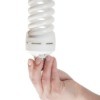
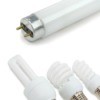
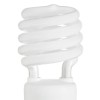
Swapping 16 incandescent bulbs for compact fluorescent light bulbs (CFL) saves emissions equivalent to taking a car off the road for a year. Source: EnergyStar.gov
This is something we can all do, plus it saves us money on utility bills. If you replace just one out of four of your light bulbs with fluorescents, you can save about 50% on your lighting bill.
Add your voice! Click below to comment. ThriftyFun is powered by your wisdom!
the 50% savings in the light bill is over a ten year span.Also as the CFL have mercury in them and should be disposed of properly, not in the household trash
In the interest of safety, I am posting this article that came to me just yesterday. It is certainly worth investigating.
NewsTarget Insider Alert (www.NewsTarget.com)
--------------------------------------------------------------------------------
Dear readers,
As consumers rush to adopt energy efficient lighting through the use of Compact Fluorescent Lamps, no one is telling them the truth about the dangerous levels of mercury in these lights. A single fluorescent light contains enough mercury to contaminate 6,000 gallons of fresh water. If you break one in your home, you'll release mercury vapor and require a hazardous materials cleanup that can cost you $2,000 or more. The mercury in fluorescent lights is poisoning landfills and underground water reservoirs all across the country, and the more people keep buying these mercury-containing lights, the more toxic the environment will get.
Today's feature story tells the shocking truth about what consumers aren't being told: There's mercury in compact fluorescent lights, and mercury is one of the most neurotoxic substances known to modern science. Simply breaking a single fluorescent light in your home can expose you and your family to dangerously high levels of this heavy metal that has been linked to autism, Alzheimer's disease, birth defects, learning disabilities, behavioral disorders and accelerated neurological degeneration.
Read today's story for the full scoop. (See below.)
FULL DISCLOSURE DISCLAIMER: Out of frustration over all the mercury found in fluorescent lights (plus the enormous waste of energy from using incandescent lights), I recently founded www.ecoleds.com/
Environment: Compact fluorescent light bulbs contaminate
We've got some of them & I am thinking More & More that this falls under the heading of No Good Deed goes Unpunished . We have Cats.We love them but they are destructive . I am trying to decide how to deal with this . Maybe only use them in bathroom sink lights Hopefully Out of Reach of my Darlings . I bought them & the package is open I don't think I can return them .
Our town has an annual Hazardous Waste disposal day .
One place I think I'll always have a flourescent is over my kitchen sink unless somebody makes an incandescent or LED in an 18 inch long tube that will also shine through the window & help light my yard at night .
yes, theres mercury in those cfl bulbs. but theres more mercury in an old thermometer or the fillings in your teeth. heres a list i copied off another site.
Compact Fluorescent Bulb
5 milligrams
Watch Battery
25 milligrams
Dental Amalgams
500 milligrams
Home Thermometer
500 milligrams 2 grams
Float Switches in Sump Pumps
2 grams
Tilt Thermostat
3 grams
Electrical Tilt Switches and Relays
3.5 grams
To my recollection, I read research that indicates hazard to our vision when using JUST flourescent lighting. I was interested in it because each time I shopped in a large store with flourescent lighting I got both massive Migraines, but also "auras" until I left the store. I got to where I was asking the employees if this ever happened to them, and found about 1 in 4 said that it indeed did, but they didn't know what caused it. So, I made a mental note NOT to go with flourescent lighting although I have the SAME bulbs in my laundry area that have lasted over twenty years, used daily, and not blown out. I also read that unless a person pays for the
I believe the health issue is more important to me than the potential savings from irritating flourescent
bulbs, although I can tolerate them in my laundry and pantry closets. We times get even harder, I'll be moving outside. lol God bless you. : )
Only the 100 watt incandescent bulbs are going away at the end of the year. We will still be able to buy other wattages for a few more years. I don't care for CFLs at all.
We have an outdoor Nativity Scene from years gone by that the uses regular bulbs. We tried the newer ones and they wouldn't fit. We went to the store and bought about 10 packages of the regular bulbs, so that when a replacement is needed, we will have it. I think these will last us a very long time. We do use the newer bulbs all over the house.
Add your voice! Click below to comment. ThriftyFun is powered by your wisdom!