Myrrhis odorata
Sweet Cicely, Garden Myrrh
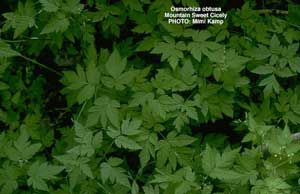
One of the first plants to arrive with spring growth, and the last to leave in the fall, Sweet Cicely is a wonderful addition to any flower garden. This herb grows tall and wide (3 feet x 3feet). It has attractive, bright green, fern-like leaves and umbel-like clusters of small that appear in early to mid summer. When the petals fade, large, attractive seed heads with claw-like brown seeds are left behind to add interest to the garden or dried arrangements. Sweet Cicely gives off a scent similar to licorice or aniseed that attracts bees.
hardy perennial
partial shade
Sow seeds in the fall in a partially shaded area. Sweet Cicely prefers cool, moist, fertile soil, and tends to grow poorly in warm, humid climates. Plants are somewhat slow to germinate, but once established will readily reseed themselves, and due their mature size, are best planted in the back of the garden. Move extra seedlings to a permanent location in the spring. Cut plants back by two thirds for cuttings during the growing season and protect plants from winter cold with mulch. Despite its size, Sweet Cicely also grows well in containers.
division and seeds
leaves, roots, and seeds
Harvest anytime for use. Oils are at their most concentrated when plants are budding.
mild laxative; Sweet Cicely is currently being studied for use as an artificial sweetener for diabetics.
Leaves: teas, salads, fruit salads, fruit drinks, soups, stews, dressings; Roots: peeled, boiled and eaten like a vegetable; Seeds: salads, fruits salads, pies and tarts, ice cream.
attracts bees and hummingbirds; posies, potpourri and wreaths; furniture polish; candle-making
Add your voice! Click below to comment. ThriftyFun is powered by your wisdom!