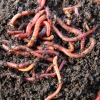
Has anyone in a climate like mine had any luck collecting red worms in the wild? I have read that a manure pile is a good place to look. But it is getting colder. Will they have dived for the center of the earth by now? I would love to have some little worms to nurture over winter, and to feed my kitchen scraps to. We're down to one chicken, and she's so overfed I don't know how she manages.
Hardiness Zone: 4b
Coreen Hart from Rupert, ID
Coreen,
Red worms like to hang out just beneath the surface of the soil and you're right about manure piles, they love them. It sounds like your one overfed chicken may be able to help you with that. Lay a board over some of her droppings for a few days and you'll increase the chances of finding worms. Red worms are most active in temperatures ranging between 55ºF and 72ºF so they really thrive indoors. Worms like the cool moist conditions of fall and spring, but as temperatures start to cool off they go deeper into the soil. As long as the soil isn't frozen you should still be able to find some without having to dig too deep. In fact, if the worms are given ample time to adapt to falling temperatures, even in frozen soil, worms can sometimes be found curled up in little air pockets just inches below the soil's surface. Once they are exposed to warmer temperatures, the worms will slowly wake up from hibernating and resume their activities.
Ellen
About The Author: Ellen Brown is our Green Living and Gardening Expert. Click here to ask Ellen a question! Ellen Brown is an environmental writer and photographer and the owner of Sustainable Media, an environmental media company that specializes in helping businesses and organizations promote eco-friendly products and services. Contact her on the web at http://www.sustainable-media.com
Add your voice! Click below to answer. ThriftyFun is powered by your wisdom!