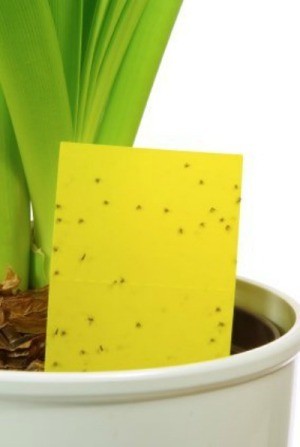
 If your houseplants have been given all the food, water, and sun they need and they still seem to lack vigor, you may want to inspect them closely for insect pests. Insects and mites can appear on houseplants at any time of the year and they are not always easy to see. They often arrive on recently purchased plants or on plants that have been received as gifts. Fortunately, most houseplant pests can be easily treated with a solution of soap and water, rubbing alcohol, or with sticky traps.
They will attack all types of indoor (and outdoor) plants, but seem especially fond of ornamental peppers, hibiscus, chrysanthemums, and herbs. They stunt plants' growth and leave them looking distorted by sucking sap from their stems and leaves.
Attack aphids with a wash of warm, soapy water followed by a clear rinse as recommended for spider mites. Successive generations may hatch, so be prepared to re-treat the plant to achieve final victory.
Like many sap-sucking insects, as they feed they excrete a sticky honeydew that detracts from the appearance of the plant and invites other problems. Although the winged-adults are the stage most commonly seen, it's the immature nymph stage that causes the most injuries to plants.
To interrupt the life-cycle, use yellow sticky cards stuck into the soil to trap the adults. These are available at most garden centers, or you can make your own using bright yellow paper smeared with petroleum jelly. On small plants, adults can also be extracted using a hand-held vacuum.
To get rid of them, dab each bug with a cotton swab dipped in rubbing alcohol. (Avoid touching the plant's leaves with alcohol as it may cause burns.) Afterwards, rinse the leaves with tepid, un-softened water.
Be persistent in your efforts to eradicate them. This pest has a track record of winning when gardeners give up too easily!
Heavily infested plants should be tossed out as they are difficult to control in large numbers. If you are lucky enough to notice a mite problem before your plant has sustained significant damage, take it outside, lay it on its side, and blast the undersides of the leaves with a spray from the hose.
If temperatures make taking the plant outside impossible, fill a pan with lukewarm water and mild dish soap. Cover the top of the pot with aluminum foil to hold in the dirt, then turn the plant over and swish the foliage through the suds. Rinse well with clear water.
Several weekly baths may be necessary to get rid of these guys completely. Spider mites prefer a dry environment, so mist foliage daily to discourage resettlement.
One way to suppress their numbers is to remove any decaying plant matter from around the base of the plant and let the surface of the soil dry out between watering. Adult gnats can be trapped with yellow sticky cards.
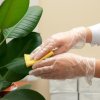
No wash or water spray will dislodge these small barnacles, and their hard protective armor can be difficult to penetrate with alcohol. One of the most effective ways to remove them is to dislodge them using a soft toothbrush or wet cloth.
This page contains the following solutions.
I have many household plants throughout my home. I used indoor soil for these plants and didn't think there would be any flying insects. My friend introduced me to these yellow sticky traps (she actually gave me a handful).
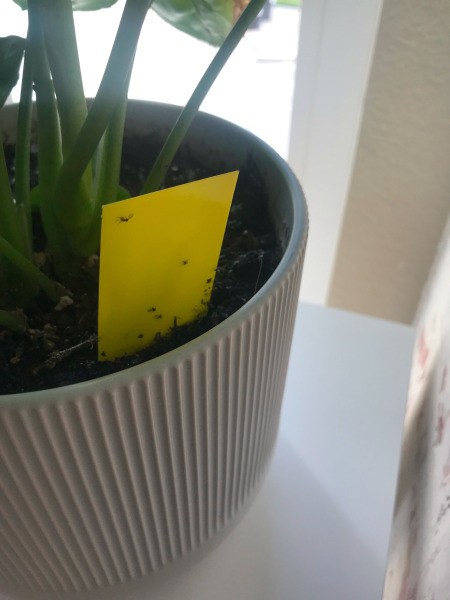
To get rid of any kind of bugs on house plants use regular dish soap and warm water. Spray on leaves and the top of soil 1-3 times per week and you will be bug free. It also leaves the foliage looking dust free and happy!
Here are the questions asked by community members. Read on to see the answers provided by the ThriftyFun community.
The bugs are tiny, about 1/32 inch or even smaller, and resemble a speck of dirt until you see them move. They do not fly that I have seen, only crawl around. They seem to prefer spider plants and do not care for African violets or my mini rose bush at all. But I have seem them on my prayer plants and my pothos.
Can you please tell me the best way to get rid of these awful things? I really do not want to lose all of my beautiful plants.
Mommyrabbit
A: Mommyrabbit, vIt sounds like you're describing an infestation of aphids-especially if you're seeing a honeydew or sticky mold-type of substance on the leaves. Here some strategies for getting rid of them:
Physically Remove Them: Dislodge them with a blast of water from your kitchen sink sprayer or garden hose or try sucking them up with a hand-held vacuum.
Dry Them Out: Gently apply rubbing alcohol to leaves using a cotton ball or spray leaves with a mixture containing a few drops of Ivory dish soap and 1 quart of water.
Smother Them: Mix few drops of cooking oil in with Ivory dish soap and water and apply to leaves with a spray bottle.
Keep in mind that anything you apply to the leaves of your plants (organic or commercial) can burn the leaves and kill off beneficial insects. To minimize this, rinse the leaves with water a few house after application. Don't forget to treat the underside of your plant's leaves-a favorite spot for Aphids to hide-out and multiply.
You may have aphids. They are probably the most common insect that infests plants -- both indoor and outdoor plants. You might want to try something like Safer Insecticidal Soap. There are other versions of the same thing, but they are made by different companies. This is probably the least toxic way to go and I would try this first. Otherwise, another common thing that is used (and it's frequently used in greenhouses,) is a product called Malathion. The problem with that is that the smell is horrendous, and unless you are in a well ventilated area, it can be really overwhelming. I don't think that it has any toxicity, but the smell (at least as far as I am concerned,) is really bothersome. Look at the leaves of your plant, and look at the underside. You might want to remove a few leaves (perhaps a leave from a few of your plants,) to take to a gardening center or greenhouse to show them. Once someone sees exactly what the bugs are doing, they may have a better idea as to the exact type of insect, and can suggest the proper remedy accordingly. It sounds like you have a serious problem, so I would take action ASAP. The longer you wait, the more serious the problem is going to get. You may also want to try to separate your plants. If they are together, part of your problem may be that once a plant is diseased, some diseases can spread to other plants. If you have any plants that aren't in bad shape, I would move them into a different room, and be sure that they are as far away from the diseased plants as possible. Sometimes, a solution of 1 part dish soap to about 5 parts of water in a spray bottle can be helpful. It sometimes works to drown insects, but if you are dealing with a disease, you need some remedy for the disease itself.
The bugs don't hop or fly, or appear to have wings. They just walk.
Get a spray bottle and put some original Dawn dishsoap in it Not much Fill the rest with water If it bubbles that's Ok IF not that is Ok also. Spray your plants daily until you see no more bugs IF they return just repeat application.
I have also heard of tobacco water used to kill the buggers as well.
Soak a little tobacco in some water over night and in the morning put the water in a spray bottle and spray away the bugs.
If they're not aphids, they sound like spider mite, especially if they're making the leaves a bit mottled or brown. In my experience aphids don't tend to go for spider plants, whereas red spider mite does.
Sounds like thrips to me. I am still battling them. Spraying them doesn't seem to work but a systemic insecticide is making progress. You have to be very diligent as they are prolific and come back with a vengence.
I was wondering what I can use on my plants for pests? I've tried dish soap and water, but the bugs are still there. The bugs are very small and appear to be white colored. Help please all my house plants are dying.
Hardiness Zone: 8a
By Miranda from Clearlake, WA
Spray them with hot pepper sauce, good luck.
Filla spray bottle with 1 part rubbing alcohol to 3 parts water, that should kill them. Sounds like spider mites to me.
Take pot and plant outside. Remove from dirt. Wash plant and roots off, and repot in new pot and dirt.
I keep checking and use a wet toothbrush to brush the white away. Works well if vigilant!
I've had this plant for over a year and a half and through a cross continental move without any issues. All of a sudden, after repotting for the first time, all of its leaves are turning yellow and falling off. Even the green leaves are curling. This makes me so sad. I've tried moving it to different parts of the apartment, watering and not watering, and even pouring on coffee grounds as it supposedly likes the acid.
Today I was inspecting it and noticed some white bugs in the dirt! Initially I was thinking a spider mite, but they don't usually just hang out below ground, right?Thank you in advance for any help! Things are getting dire over here :(
By Ashley
I think you should first take a cutting of your Pothos and put it in a glass recipient filled with water where it will grow roots just in case you can't save the mother plant. If your plant's problem appeared suddenly and spread quickly with many leaves turning yellow and falling off it has to be overwatering as a parasite problem would not be so spectacular.
So if your plant is not recovering take it out of its pot, get rid of all the soil until all the roots are free of any soil then repot it in the most basic soil and do not water it, the soil you buy in the shop is moist enough. Repot in the evening so that the plant is not in full activity and do not put it in full light until after a day or two and of course without direct sun always behind a curtain.
Do not water the plant untill you can strongly press your finger on the soil and none of it stays stuck to you finger. Repotting is a stress for a plant so it is not the good time to give it a fertilizer. I have stopped putting coffee ground in the soil of my plants and prefer to give them a little bit of light tea once a month. I had a very bad experience with coffee ground nearly killing a 20 years old plant with it.
When I decided to quickly change its soil I discovered the coffee ground all gluey, stinking and so soaked that the roots were actually drowning so I don't use coffee ground anymore. Coffee ground is very slow to degrades and to start providing the plant with azote in the meantime I am not sure it is a real benefit for the plant. If you want to make yourself an opinion about the benefit of the adding of coffee ground to the soil make a test with three pots of tomatoes put 50% coffee ground 50% soil in one of the pot, put 25% coffee ground 75 % soil in the second pot and 100% soil in the third pot, watch them grow and compare. Pothos are strong plants so i think you will save it but a plant is quick to regress and very slow to recover. Hope this helps!
Taking care of our garden is very important. It keeps our plantation healthy and blooming. Caring must also include pests prevention techniques.
I have the issue of a sticky substance on my indoor ficus and other house plants (scales). I have tried some remedies which don't work.
Can you recommend a product or oil to try? The local garden store was not much help. Thanks!Dab them with an alcohol soaked cotton swab
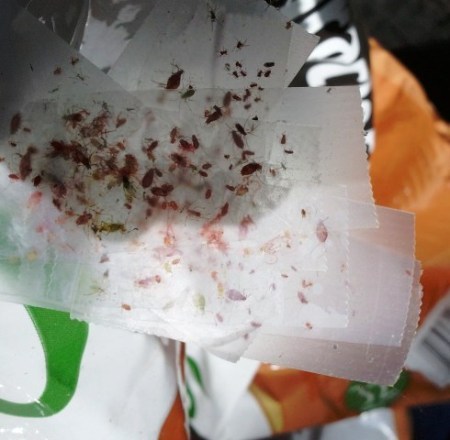
A natural solution for a small bug infestation on your houseplants is to remove them using tape. No pesticides necessarily needed. This page is about how you can use tape to remove bugs from plants.