Parenting > General Parenting > Family FinancesApril 06, 2011
Pin It

Teaching Your Children About Money

contest winner icon
I remember when I was little, I absolutely LOVED to play dress-up. What's more, I loved to use my mom's clothes. While I was talking with Mom yesterday, we touched on that topic and on a very funny memory, and I thought that you might like to know about it.

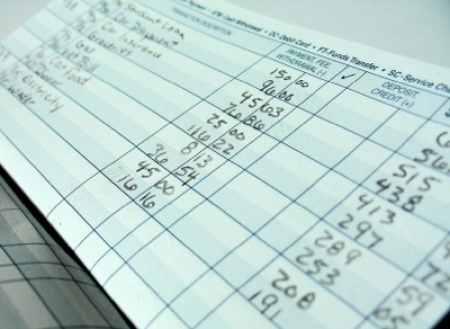
One day while I played dress-up, I had decided that I needed to go to the "store", so wearing one of Mom's white tee shirts, a scarf, and my mom's tennis shoes, I grabbed her purse and proceeded to put my play food in a little basket. I ended up dropping the purse, and since it was my mom's, it was fairly full and several things fell out. I started to pick them up and found mom's checkbook.

When I grabbed it, I saw that in the checkbook mom had a register just like the one that she used to teach me to add and subtract, so I asked her what it was for. I knew that she already knew how to add and subtract, so I didn't see why she had one. So she told me that she used it to pay bills. Then I asked the question that all parents seem to dread: Why? "Well", she said, "because we used the services the company offered and we had to pay them for it." Being confused, I asked why again.

Seeing that I wasn't going to let the topic go, mom sat me down at the table and went through her checkbook with me. She showed me what her paycheck was, then she went down the list: Electric Company so that we could turn on the lights, watch TV., and have the air conditioner in the summer; Gas Company so that we could cook our food and heat the house in the winter; House and Car payments, plus insurance; Gas for the car; Doctor bill; etc; etc. I remember getting scared at that point because I didn't know if mom made enough to cover everything. So she showed me her math and explained that not every bill was due to be paid at the same time, so I was less scared.

Then I asked her what I could do to help, which surprised her greatly. So she explained that if I and my brother would turn off lights and the TV when we didn't need them or weren't using them, it would save money. She also explained that to save money was why we only used the AC (a window unit) to cool the living room and bedrooms, and why we wore sweaters in the winter to help us stay warm. Then with a big hug and kiss, she sent me back to my room to finish cleaning the mess I had made while she started to make supper. After I was done and went to help her, I made sure to turn off the light! ;)


So the lessons I learned from my mom?

  • Fake/old unused checks and registers are great toys for kids and can help them learn math and writing skills. Just make sure you cover any addresses or account numbers if using real/old checks.

  • Kids love to learn, which is why they asked the dreaded question: Why? Heaven knows how often I have wanted to pull out my hair and all I've done is baby-sit.

  • Kids learn better when their lessons are applied to their lives. When a child asks why he/she can't have something, explain the whole reason, and don't just say, "Because I said no." At the very least, tell them you will explain it better when you get home then keep your word.

  • Kids love to help. Whether it is planting and growing a garden, or fixing and repainting a piece of furniture, helping is how they learn and develop skills. And they love to learn how things are connected to each other, like how one plant can produce enough fruit that have seeds in them, to make more plants. And how saving seeds to plant next year saves money as well as produces yummy food.

  • Kids are smart, much smarter then many people give them credit for. While some might think it is a bad idea to expose kids to money matters early, as it applies to their household, so long as they are reassured that their needs are being met, they then learn which things are truly "needs" and which are "want-to-haves". Encourage the child to express themselves and their feelings and thoughts while talking about such things.

  • Kids are creative and can come up with some really good ideas to help the household when given the chance and really listened too. I remember asking my mom if we could turn off the AC at night and open windows during the summer when it was cooler out, so we tried it and it worked pretty well.

  • And last but not least: It takes a household and everyone living in it to work together, if anything is to work at all.

Source: Personal experience, and reminiscing with my mom.

By Krystal from Newton, IA

Feedback

Read feedback for this post below.

By
04/09/2011

Wonderful memories and a veritable fountain of wisdom! Thanks.

By
04/09/2011

My mom used to get me to come grocery shopping with her, and only place things in the cart that were on the list. When I got older I used this same method shopping for her, and can remember once why this was so important, I had to only use the money on the check she sent me with, and how embarrassing it was to put something back due to me adding to the grocery list! I still shop this way.

By
04/08/2011

Well written, Krystal.

By
04/06/2011

We got our daughter the Berenstain Bears Dollars and Sense book. Probably when she was in pre-K or kindergarten. If I remember correctly, the kids would blow through their allowance in the first day, and never have enough for more than some candy or cheap little toys. So Mama Bear dug out some checkbooks with old information on them (like when you change banks), and showed them how it worked. The parents kept the money, and when the kids wanted some cash, they had to write a check and keep track of the check register. I think the little sister saved up enough money for a doll (but I could be wrong!). Inside the book, it has several blank fake checks for kids to play with.

We're very much into personal finance and teaching our daughter. We have Bank of Daddy. He got her a little money box, and she makes deposits. He showed her where he tracks it on the computer. If she wants some of her money, she has to go to Bank of Daddy and talk to him to get some money out. At the end of each month, she earns interest. TWELVE PERCENT. We showed her one of our "high interest" accounts that has over $20K in in and how little we earn! I don't remember the rate anymore, because they keep lowering it. :-) So we're trying to encourage her to save, but she has access if she wants/needs it.

Thanks for sharing your memory with us -- I enjoyed reading it!

Related

Archived Discussions

Below you can read previous posts and comments about this topic. The discussions on this page has been archived 1 time. Select a discussion and read the feedback here.

(Archived Apr 06, 2011)Teaching Your Children About Money

Tip: Teaching Your Children About Money

This is for those with kids in the 'tween years.

My daughter couldn't understand why daddy's pay while it sounded like a lot when you said the total, really wasn't.

Say the total is $300. 'Well, MOM! that Jesse McCartney CD is only 16 dollars!' she may say.

This is what I did:

I got out the Monopoly money, made $300 in 50's 20s and 10s. and one 100.

I told her the weekly expenses, groceries, gas, water bill, electric bill etc. I told her to give me the amount for each bill, taking away from the $300 she had.

When I got done, the amount that remained was considerably less. I said, 'Now, the rest is for your lunch money, and things we don't figure for. I explained that incidentals almost always come up, and what was left had to last until next pay day.

She was at the age at that time (14) to understand what the point I was trying to make. She did not like it, but she understood it.

Seeing is believing. Just telling them sometimes just isn't enough, but SHOWING them often pops that light bulb of understanding.

By Kris

Feedback:

RE: Teaching Your Children About Money

This tip came from a parent who is a financial planner.

She gives her two sons, ages 6 and 8, $4 a week as an allowance. They each have three piggy banks. One dollar goes into the bank marked "Saving," one dollar goes into the bank marked "Charity," and the other two dollars go into the "Spending" bank. The boys may do whatever they like with their money in their individual spending bank. When the "Saving" bank has accumulated $10, she takes them to the bank to deposit the money into their college account. Every Sunday, the boys empty the "Charity" bank to bring to church. On occasion, they bring it to the animal shelter instead.

This was a simple, yet powerful way to teach children how to budget their money. We develop good money habits at a very young age.

One could also increase the allowance to $5, putting the extra $1 into a bank marked "Government" representing the taxes taken out of a paycheck. (04/07/2005)

By Meari

RE: Teaching Your Children About Money

DO I LOOK LIKE A BANK? TEACHING KIDS ABOUT MONEY

"Mom, all the guys are going to the go-cart track and bowling on Saturday. Can I go? And can we invite Josh, too? Pleeeeeeze?"

Money doesn't grow on trees. It magically appears in your wallet. At least, that's what some kids seem to think.

Kansas City parent Tiffany Chapman and her husband, Merv, don't just hand over the cash. "We might have the money," she says, "but rather than just give it to our kids (Megann, 14; A.J., 13; and Sam, 10), we ask them to come up with half the amount, then we'll give them the rest. That lets us know whether they want to sacrifice their own money. If they don't want to sacrifice, why should we?"

Good idea, echoes Matt Schoenfeld, executive director of Heartland Financial Counseling in Countryside, Kansas. Schoenfeld warns that young people also often misunderstand basic credit principles. "They see that little card as an unlimited source of money instead of a loan," he says.

Schoenfeld encourages parents to start early in teaching their children about money. "The principles are the same regardless of age; it's just the way you package them," he notes. "For instance, with ages four to seven, you might use the typical piggybank idea, but as they get older, you'll move into a savings account. Then they hit the teens, and you can introduce things like mutual funds so they can get a broader spectrum of ways to save."

The key is to explain financial concepts simply. Some ideas:

  • Play money-oriented board games, like Monopoly or Life.

  • Compare good debt (buying a house, getting an education, starting a business) and bad debt (credit cards, purchasing something that loses value).

  • Reveal the magic of compounding interest. "When you first plant an apple tree, you don't have many apples," Schoenfeld says. "But 20 years later, the amount of fruit on the branches is unbelievable."

  • Take children shopping. "Tell them, `you have this much, and you can buy three things.' That opens up discussions about spending choices."
A hands-on person, Chapman gives her children an up-close look at monthly expenses. "I let them see the checkbook and watch me pay bills," she says. "They write the checks, and I sign them."

Borrowing from the concept of employee savings plans, Chapman also matches the amount her kids accrue in jars, dollar for dollar. She cautions them against spontaneous purchases, saying, "Let's hold off. If you still feel like you want it next week, we can come back.

"We tell our kids not to get into debt, because what you want now, you'll have to pay for later, and later you'll want something else that you won't be able to get, because you're still paying for the other thing." (04/07/2005)

By Meari

RE: Teaching Your Children About Money

GET THEM HOOKED ON SAVINGS

We opened them a checking account specifically for kids at our bank that paid about a nickel of interest each year. That just wouldn't do. I discussed it with my husband, and we decided that we would pay them 10% interest on each dollar saved, so the kids could really watch their money grow. Combined with the fact that we charge them interest for loaning them money beyond their normal allowance, they can see the difference in saving $1 (which automatically becomes $1.10) versus spending a dollar they don't have (they owe $1.10). (04/07/2005)

By Meari

Post Feedback

Your thoughts are welcomed and appreciated. Enter your feedback here!

Feedback:

Image Upload:

Add an image to your post! Click the "Browse" button above and select an image from your hard drive. Please only select gifs or jpegs. If you have any problems, please contact us.


facebook like arrowLike ThriftyFun on Facebook

Browse Topics

Over 80,000 tips, recipes, questions & crafts.

Ask a Question

Submit a question to the TF community.

Subscribe to ThriftyFun Newsletters!

Email: