
Solanum melongena var. esculentum
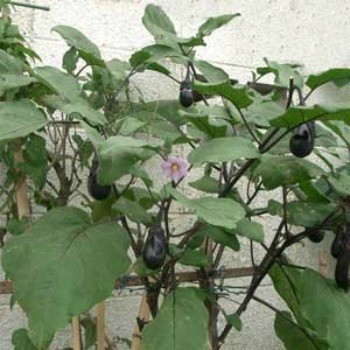
Eggplants are related to tomatoes and potatoes. They are technically not a vegetable, but a fruit-specifically a berry. Eggplants grow on bushes and are from 2 to 12 inches long and dark purple to white in color.
Eggplants need a long growing season with warm temperature and warm soil. Seeds should be started indoors at least 6 to 8 weeks prior to your last frost date, or sown outdoors when soil temperatures reach 60ºF and air temperatures stay at 70ºF.
full sun
well-drained, nutrient-rich soil with a pH of 6.7 to 7.2.
Eggplants are somewhat drought tolerant and should not be over watered. Keep soil evenly moist, but not wet. Water regularly when flowers appear and while fruit is developing.
Plants are heavy feeders and appreciate occasional, light applications of manure, compost tea or fish fertilizer throughout the growing season. If starting with soil heavy in nutrients, fertilize sparingly. Plants can become top heavy so provide supports as necessary.
Harvest fruit when their skins turn glossy. Plants taste best when harvested at 1/3 of their mature size. Frequent harvesting will keep plants productive. Eggplants can be refrigerated for up to 2 weeks.
A wide variety of insects find eggplants very appealing, and transplants should be treated with an organic insecticide before planting.
The key to growing eggplants successfully is warm soil and warm temperatures.
Add your voice! Click below to comment. ThriftyFun is powered by your wisdom!