|
Using a Chimney Balloon (Chimney Pillow) |
|
|
|
Q: Has anyone used a Chimney Balloon (Chimney Pillow) to stop a draft from a fireplace? My brick fireplace is not being used - only on special occasions - and I want to prevent the outside (cooler) air from entering home when the flue is closed.
Mrsjean from USA
A: Mrsjean,
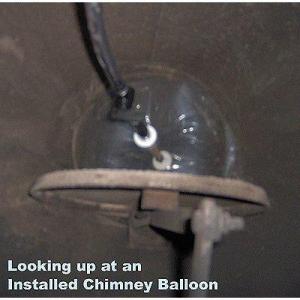
Chimney balloons (pillows) are a simple, yet effective, way to stop heat (or cool AC air) from going up your chimney. Fireplace flues are made from metal, and over time repeated heating and cooling can cause the metal to warp or break, creating a channel for hot or cold air loss. First manufactured in England, inflatable chimney balloons are designed to fit beneath your fireplace flue during periods of non-use. They are made from several layers of durable plastic and can be removed easily and reused hundreds of times. Should you forget to remove the balloon before making a fire, the balloon will automatically deflate within seconds of coming into contact with heat. Some manufacturers claim that the average household can save over $200 per year in heating bills, and up to $500 if your chimney has a severely warped or missing flue. Chimney balloons can be purchased from online retailers or from fireplace stores for between $40-$80 dollars depending on the size of your fireplace.
About The Author: Ellen Brown is our Green Living and Gardening Expert. Click here to ask Ellen a question! Ellen Brown is an environmental writer and photographer and the owner of Sustainable Media, an environmental media company that specializes in helping businesses and organizations promote eco-friendly products and services. Contact her on the web at http://www.sustainable-media.com
|
|
|
|
|
|
|
 |
|
RE: Using a Chimney Balloon (Chimney Pillow)
|
Post By Mark Tyrol (Guest Post)
(11/29/2007)
|
 |
How To Reduce Your Heating Bills This Winter
Imagine leaving a window open all winter long -- the heat loss, cold drafts and wasted energy! If your home has a folding attic stair, a whole house fan or AC Return, a fireplace or a clothes dryer, that may be just what is occurring in your home every day.
These often overlooked sources of heat loss and air leakage can cause heat to pour out and the cold outside air to rush in -- costing you higher heating bills.
Air leaks are the largest source of heating and cooling loss in the home. Air leaks occur through the small cracks around doors, windows, pipes, etc. Most homeowners are well aware of the benefits caulk and weatherstripping provide to minimize heat loss and cold drafts.
But what can you do about the four largest"holes"in your home -- the folding attic stair, the whole house fan or AC return, the fireplace, and the clothes dryer? Here are some tips and techniques that can easily, quickly and inexpensively seal and insulate these holes.
Attic Stairs
When attic stairs are installed, a large hole (approximately 10 square feet) is created in your ceiling. The ceiling and insulation that were there have to be removed, leaving only a thin, unsealed, sheet of plywood.
Your attic space is ventilated directly to the outdoors. In the winter, the attic space can be very cold, and in the summer it can be very hot. And what is separating your conditioned house from your unconditioned attic? That thin sheet of plywood.
Often a gap can be observed around the perimeter of the door. Try this yourself: at night, turn on the attic light and shut the attic stairway door -- do you see any light coming through? These are gaps add up to a large opening where your heated/cooled air leaks out 24 hours a day. This is like leaving a window open all year round.
An easy, low-cost solution to this problem is to add an attic stair cover. An attic stair cover provides an air seal, reducing the air leaks. Add the desired amount of insulation over the cover to restore the insulation removed from the ceiling.
Whole House Fans and AC Returns
Much like attic stairs above, when whole house fans are installed, a large hole (up to 16 square feet or larger) is created in your ceiling. The ceiling and insulation that were there have to be removed, leaving only leaky ceiling shutter between the house and the outdoors.
An easy, low-cost solution to this problem is to add a whole house fan cover. Installed from the attic side, the whole house fan cover is invisible. Cover the fan to reduce heating and air-conditioning loss, remove it when use of the fan is desired.
If attic access is inconvenient, or for AC returns, a ceiling shutter cover is another option for reducing heat loss through the ceiling shutter and AC return. Made from R-8, textured, thin, white flexible insulation, and installed from the house side over the ceiling shutter with Velcro, a whole house fan shutter cover is easily installed and removed.
Fireplaces
Sixty-five percent, or approximately 100 million homes, in North America are constructed with wood or gas burning fireplaces. Unfortunately there are negative side effects that the fireplace brings to a home especially during the winter home-heating season. Fireplaces are energy losers.
Researchers have studied this to determine the amount of heat loss through a fireplace, and the results are amazing. One research study showed that an open damper on an unused fireplace in a well-insulated house can raise overall heating-energy consumption by 30 percent.
A recent study showed that for many consumers, their heating bills may be more than $500 higher per winter due to the air leakage and wasted energy caused by fireplaces.
Why does a home with a fireplace have higher heating bills? Hot air rises. Your heated air leaks out any exit it can find, and when warm heated air is drawn out of your home, cold outside air is drawn in to make up for it. The fireplace is like a giant straw sucking the heated air from your house.
An easy, low-cost solution to this problem is to add a fireplace draftstopper. Available from Battic Door, a company known for their energy conservation products, a fireplace draftstopper is an inflatable pillow that seals the damper, eliminating any air leaks. The pillow is removed whenever the fireplace is used, then reinserted after.
Clothes Dryer Exhaust Ducts
In many homes, the room with the clothes dryer is the coldest room in the house. Your clothes dryer is connected to an exhaust duct that is open to the outdoors. In the winter, cold air leaks in through the duct, through your dryer and into your house.
Dryer vents use a sheet-metal flapper to try to reduce this air leakage. This is very primitive technology that does not provide a positive seal to stop the air leakage. Compounding the problem is that over time, lint clogs the flapper valve causing it to stay open.
An easy, low-cost solution to this problem is to add a dryer vent seal. This will reduce unwanted air infiltration, and keep out pests, bees and rodents as well. The vent will remain closed unless the dryer is in use. When the dryer is in use, a floating shuttle rises to allow warm air, lint and moisture to escape.
If your home has a folding attic stair, a whole house fan, an AC return, a fireplace, and/or a clothes dryer, you can easily, quickly and inexpensively seal and insulate these holes. At Battic Door Energy Conservation Products, we have developed solutions to these and other energy-conservation related issues.
Mark D. Tyrol is a Professional Engineer specializing in cause and origin of construction defects. He developed several residential energy conservation products including an attic stair cover and a fireplace draftstopper. To learn more visit www.batticdoor.com

Report Spam or Abuse
RE: Using a Chimney Balloon (Chimney Pillow)
I dont know about the black one-size fits all chimney plug type. It seems to me that the clear Chimney Balloon that is made to fit the size of your fireplace flue would be a tighter fit. I bought a clear chimney balloon after seeing a thing in my newspaper about it. I did have to measure the damper opening to know what size to buy, but it did seal very tightly when i installed it. The black version looked way too big for my fireplace.

Report Spam or Abuse
Fireplace plug
|
Post By fireplace plug (Guest Post)
(01/29/2006)
|
 |
Another product is the Fireplace Plug. This inflatable plug goes below the damper, very quick, easy, and clean. Easy to remove when you want to have a fire. One size fits all too! Available on-line or at select ACE Hardware stores. thanks, mark www.batticdoor.com
Report Spam or Abuse
RE: Using a Chimney Balloon (Chimney Pillow)
|
Post By Judy (Guest Post)
(01/29/2006)
|
 |
We have 2 fireplaces in our house. One on the main floor opens on 2 opposite sides to the living room and eating area. One in the basement is open on 3 sides. We currently have not very air tight glass doors on them. The house is insulated for electric heat and very air tight. when we have a fire in one of the fireplaces we get smoke back into the house through the one not in use. Would a chimney pillow help to stop the smoke from coming back in? Thank you.
Report Spam or Abuse
RE: Using a Chimney Balloon (Chimney Pillow)
The Fireplace Plug seals the fireplace with an inflatable pillow that is installed below the damper. Quick, clean, and easy to use. Stops your heat and AC from seeping out through the chimney 24/7! Costs about $55.00 - available by mail order from http://www.batticdoor.com or tel. 508.320.9082.
Report Spam or Abuse
RE: Using a Chimney Balloon (Chimney Pillow)
When we moved into an apartment with a smallish, metal fireplace, I immediately sewed a circle of fabric over several layers of an old cutter quilt to make a plug. The damper is so wobbly, it doesn't really close. I sewed an length of cord onto it so I can pull it out easily if ever we want to use it. (Not likely as we live in southern Arizona.)
No money spent; no heat and cooling lost.
Report Spam or Abuse
RE: Using a Chimney Balloon (Chimney Pillow)
|
Post By Mikit (Guest Post)
(12/12/2005)
|
 |
My neighbor bought a chimney balloon (chimney plug) online out of some place in wisconsin and told me how it worked. We live in a cookie cutter house neighborhood so I tried one the same size as his. I have had it in since october and it did make a difference. The livingroom isnt cold by the fireplace like it use to be.
Report Spam or Abuse
RE: Using a Chimney Balloon (Chimney Pillow)
|
Post By HurryupandWait (Guest Post)
(12/08/2005)
|
 |
I cant see any reason not to try it. According to the website it will melt if you light a fire under it by accident. So you wouldnt fill your home with smoke. But you would be out a $40 Chimney Balloon. It looks like it is an insulator for the damper. What harm can that do?
Report Spam or Abuse
RE: Using a Chimney Balloon (Chimney Pillow)
Thank you kcsak! I'm ordering three!
Jennifer Alexandria, VA
Report Spam or Abuse
RE: Using a Chimney Balloon (Chimney Pillow)
|
Post By kcsak (Guest Post)
(11/30/2005)
|
 |
I have heard about the Chimney Balloon from another one of my online newsletters. http://www.chimneyballoon.us/chimneyballoon.html Might be worth the energy savings alone.

Report Spam or Abuse
RE: Using a Chimney Balloon (Chimney Pillow)
|
Post By minymont (Guest Post)
(11/29/2005)
|
 |
Think it would be safer for you to get professional help, to many things COULD happen.
Report Spam or Abuse
|
|
 |
|
| Login using the form on the top of the page to post feedback if you have registered with ThriftyFun. If you have not yet registered, click here. It's FREE!. If you are not registered you can post feedback as a guest below. Please don't use your email address for your name because spam robots can dredge it from our site. Please do not post your feedback more than ONCE. We need to approve all guest feedback and it may take from minutes to hours for that to happen. |
 |
|
|
|
 |
|
|