It's difficult to imagine that one cup of coffee can make a huge impact on the environment. However, it can. Especially if the beans used to make that cup of coffee are Fair Trade, Shade Grown and Organic.
Seventy percent of the world's coffee is still produced by small family farmers. In fact, over 25 million farmers and families depend on coffee for their livelihood worldwide The production, trade and retail sales of coffee, however, has become almost entirely controlled by a small number of large corporations. These large corporations have encouraged freer trade by promising third-world governments that looser trade regulations will expand world markets and increase their worker's wages and benefits.
At least in the case of coffee, this has not been the case. Instead, the race by large corporations to capture the global coffee market has resulted in the corporations cutting worker's wages and benefits and funneling profits out of the coffee producing country rather than investing locally.
Growing coffee is backbreaking work. Many of the world's coffee farmers are used to living in poor conditions with little or no access to health care, and few educational opportunities for their children. While North Americans pay from anywhere from $4-$11 for a pound of conventional coffee, growers of that same coffee are paid as little as $.25 per pound. Coffee that has been certified Fair Trade, however, establishes a minimum fair price for the coffee farmer. The farmer is guaranteed at least $1.26 per lb. Coffee importers also provide a minimum amount of credit to farmers against future sales.
When you buy Fair Trade Certified coffee, you are ensuring a viable market and greater economic stability to the farmers and families growing your coffee. By cutting out the intermediary, profits go directly to the growers and producers. Families see greater economic opportunities, have access to better health care and can afford to send their children to school-maybe even high school and college-rather than needing them to help in the field.
Shade grown coffee is bird-friendly coffee. Many of the songbirds in our backyards migrate to and from Latin America. Coffee is a shade-loving shrub. The mid-level forests that most traditionally grown coffee still grows in provide feed and rest stops for migrating birds. The debris from these canopied forests also provides the coffee shrubs with rich organic compost and protects the soil from erosion.
In order to compete with the global market, many debt-ridden countries have resorted to "technifying" their coffee production by converting these forests to full-sun plantations in an effort to produce higher yields. This deforestation has reduced migrating songbird populations by as much as 25% and created an absence of natural predators, forcing the farmers to resort to pesticides to control pests and disease.
When the coffee you buy has been shade grown, you are protecting migrating bird habitat and encouraging traditional methods of coffee growing that are less damaging to the environment.
Organic coffee is produced without using synthetic pesticides-pesticides that damage not only the health of farmers and consumers, but have lasting negative impacts on the environment. As a general rule most shade-grown coffee is organic, and often times, organic coffee is shade-grown. Still, this isn't always the case so it's important to read labels carefully.
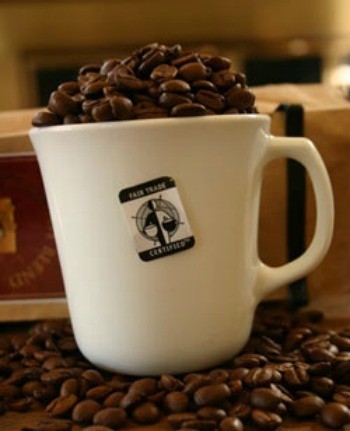
Fair Trade Logo: Fair Trade coffee sports the black and white Fair Trade Federation (FTF) logo. The license to use the Fair Trade logo is granted for use on coffee only after the coffee passes a rigorous set of environmental and fair worker rights criteria set forth by the FTF.
Shade Grown Logo: Not all shade grown (bird-friendly) logos are created equal. Currently, two "bird-friendly" logos make their certification criteria available to the public. One is ECO-OK, now known as "sustainable coffee certified" by the Rainforest Alliance. The other is a bird-friendly logo certified by the Smithsonian Migratory Bird Center.
Organic Logo: For coffee that is certified organic, look for the USDA Organic logo.
About The Author: Ellen Brown is an environmental writer and photographer and the owner of Sustainable Media, an environmental media company that specializes in helping businesses and organizations promote eco-friendly products and services. Contact her on the web at http://www.sustainable-media.com
Add your voice! Click below to comment. ThriftyFun is powered by your wisdom!
Protecting the basic rights of farmers is an issue I also care about deeply. While the Fair Trade Federation establishes a minimum wage for farmers, does it also enforce a minimum wage for hired field workers? And is this wage a living wage? One cooperative I have purchased coffee from is Equal Exchange. Although they are not Fair Trade Federation certified, they are members of the Fair For Life organization. The organization establishes higher wages for farmers and promote better working conditions and higher environmental standards.
All coffee and cocoa sold by Equal Exchange is organic. While the system isn't perfect, buying Fair Trade and Fair For Life certified products is a definite step forward in the right direction. And while fair trade coffee is more expensive than conventional coffee, we should factor in another cost in terms of human suffering and environmental degradation. If you are able to afford replacing even just one conventional product with a more fair and sustainable substitute, please do so. The difference you can make is worth more than the price tag alone!
Is there a certain brand to look for? Is Fair Trade Coffee sold in grocery stores? I have never heard of this before. Thank you for bringing it to our attention.....Lynda
Starbucks is one of the best coffees. Can anyone tell me what others are?
Add your voice! Click below to comment. ThriftyFun is powered by your wisdom!