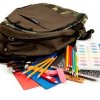
We asked our readers how they save money on their school clothes and supply shopping. Here are the answers.
Believe it or not, my 3 girls love to shop at our local Goodwill store for their school clothes. Large named department stores in our area donate their excess clothing to the Goodwill and my girls always get clothes with the department store tags still on them for "nothing"! This way they get twice as much for theirmoney! They save money shopping at Goodwill and what we can't find at Goodwill, they have the extra money left to go buy it elsewhere! We've also found those "gently worn" clothes aren't so bad either! You just have to really check things over!
As far as school supplies go, I have 1 daughter in high school, 1 in middle school and 1 in grade school. Needless to say, their supplies aren't the same. I shop at Costco, also known as Sam's Club in some areas, and buy all their supplies in bulk! They last through the year and everybody gets what they need cheaply!
Julie from Olympia, WA
This time last year (back-to-school time) Walgreen's had many school supplies featured in its monthly Rebate Club. I got glue, washable markers, scissors, and filler paper for free! My children were only 3 and 1 at the time, but I figured it's nottoo early to stockpile. I'll bet other national chains like Eckerd's run the same offers. Remember to save the receipt and return for rebate by the deadline.
Stephanie
As a mom of 7 kids, getting ready for school is a major project. Watch for mailers from stores like Wal-Mart and Target. We save up for the opening of school because this is when the supplies are the cheapest! Wal-Mart has a sale every year that has 96 count boxes of Crayola crayons for $5. This is a major savings. We always buy extra for gift giving and for use during the year.
Back packs are necessary. If you can talk your kids into the more sturdy ones they do tend to last the full year. If your kids are in high school, the best thing is to wait until you get your packet from school and to some degree the first day because every class will have their own set of needs. A good zipper notebook and basic needs (i.e. paper, separators, etc.) Also a great tip is that you should have a supply box at home with scissors, crayons, glue, stapler, colored pencils, markers, etc. that the kids can only use for homework. This cuts down on opening things and buying things when they are not necessary.
Connie
I keep an eye on sales for things like this and bought sturdy backpacks for my youngest, twins who will be entering kindergarten in the fall. (sniff, sniff)
Kids R Us was having a 50% off clearance sale last spring. My boys decided they really liked these Star Wars backpacks. Normal retail for them was $15.99. They were on normal clearance for $3.00, and with the special sale I was able to buy them for $1.50 each! Brand new! I never would have known about this sale if I wasn't on their mailing list. These sort of sales have saved me a bundle on clothes, shoes and other goodies.
Nancy
Before buying a backpack, you may want to check with your local school district to see if they are allowed. The high schools in our area no longer allow backpacks (due to security).
Mary D
I agree with Nancy about buying sturdy backpacks. I bought one from LL Bean (catalog) when my son started Kindergarten. LL Bean even puts the child's initials on it and it has a big silver reflection patch for safety. This backpack is still going strong and my son is going into 6th grade this September. Also, my son drags and throws this thing around. In addition, he attended a local summer camp, and used the backpack for 6 summers! LL Bean will even repair it if something should break (I never had to use this service). This backpack cost a little bit more than average, but it sure is worth it. They come in all sizes and colors. Bean also carries lunch boxes.
Raine
Add your voice! Click below to comment. ThriftyFun is powered by your wisdom!
Thank Goodness my children are past school shopping stage but IF I had it to do over again I'd have went shopping with one child at a time.Can you imaging how much easier that would have been??? Set aside the amount you've alloted for that child and take them out on DAY with Mom.You could devote all your attention to trying on clothes without trying to STRETCH yourself between two clothing departments!! By the end of the day you're nerves are SHOT!!
As a teacher, one of my money saving tips is to encourage your children to use their supplies from last year. Scissors, sets of pencil crayons, oil pastels, geometry sets, boxes of crayons, pencil sharpeners, binders, duo-tangs, and such things should certainly last more than one year. My three sons were not wasteful with their things, and were able to take the same items from the previous year many years in a row, and in fact, many things were handed down. There is ABSOLUTELY NO NEED to buy a whole new set of stuff every year.
Add your voice! Click below to comment. ThriftyFun is powered by your wisdom!