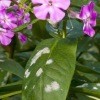
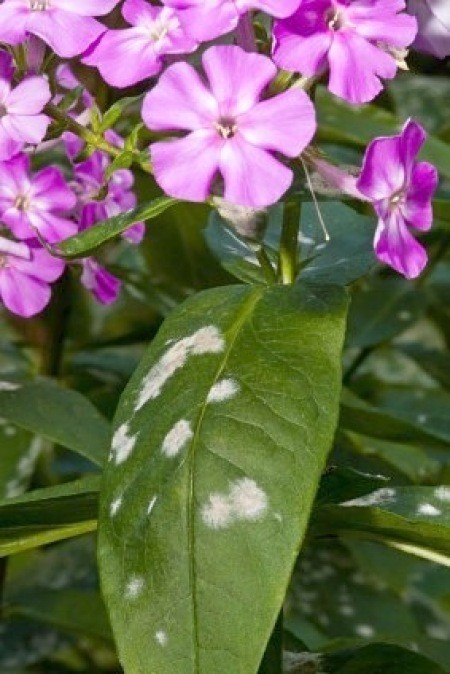
If you garden long enough, sooner or later you'll find yourself dealing with powdery mildew problems. This common fungal disease can affect virtually all types of plants. Fortunately, other than slowing down growth, reducing yields, and looking terrible, it rarely kills affected plants. Here are some ways to tackle the problem organically.
If your plants have a white to grayish powdery coating on the upper surfaces of the leaves, the problem is most likely powdery mildew. Once a plant's leaf surface becomes covered with patches of mildew, its ability to produce food (photosynthesis) is reduced and it becomes weak. Leaves are often shed prematurely, and in severe cases the plant may fail to produce fruit.
There are many types of powdery mildew, all of which spread by microscopic spores. These spores can live for years in leaf debris or in the soil, and are carried to plants by wind, insects, and splashing water. Conditions that favor the spread and growth of powdery mildew include a lack of air circulation around plants (especially in the shade), dry weather, and temperatures between 60 and 80 degrees F.
Baking Soda: This homemade remedy is easy and inexpensive to make, and very effective at preventing powdery mildew. Mix together 3 tablespoons of baking soda (sodium bicarbonate), 1 tablespoon of Murphy's Oil Soap (or light horticultural oil) and 1 gallon of water.
Spray a fresh batch of the mixture on the tops and bottoms of leaves every 7 to 10 days. Because oil combined with the heat of the sun can damage plant tissues, it's wise to test the solution on a few leaves before using it in large quantities.
Water: This low-tech approach must be done consistently to work effectively. Unlike indoor mildew, powdery mildew hates water and spreads readily on dry leaves. The spore plugs must embed themselves in leaf tissue to grow, which they can't do on slippery, wet leaves.
Spray down the leaves with the garden hose daily. Make sure you do this early enough in the day so that leaves dry out before evening, otherwise you'll be swapping one fungal disease for another.
Compost Tea: When used as a foliar spray, compost tea has both insecticidal and fungicidal properties. Place a gallon of well-aged compost in a 5-gallon bucket and fill it with water. Stir well and let sit in a warm place for 3 days.
After three days, siphon off the liquid tea by filtering the mixture though a burlap sack. Pour the tea into a hand held sprayer and apply to leaves in the evening.
Remove affected leaves and discard severely affected plants. Use a plastic bag to carry the plant debris out of the garden. Spores can live for years waiting for the right growth conditions, so either burn the waste or discard it in the trash. Don't compost it!
About The Author: Ellen Brown is an environmental writer and photographer and the owner of Sustainable Media, an environmental media company that specializes in helping businesses and organizations promote eco-friendly products and services.
Add your voice! Click below to comment. ThriftyFun is powered by your wisdom!
Thanks for the great info. Powdery mildew is an enemy I fight with every growing season. From flowers, to vines, to vegetables.
God Bless
Trish in CT
Try powdered milk. Mix the dry milk with water-put in a spray bottle and spray away. Works very well to rid powdery mildew.
Add your voice! Click below to comment. ThriftyFun is powered by your wisdom!