Ellen's article is great. Thanks for the good ideas. I'm curious about using foliar fertilizers for supplementing new cuttings. I didn't see mention of worm casting tea. Would one add the molasses to that for the bubbling method, and what are the appropriate ratios of castings to water for both brewing and spraying?
Also, can blackberry leaves be used to make a fertilizer? We have tons of it here and it's quite invasive. I've always wanted to find a use for them.
Last, your web contact was unclear to me. Perhaps a link to your contact page?
Thank you,
Benjamin
Hardiness Zone: 8b
By Tranquility from Portland, OR
Add your voice! Click below to answer. ThriftyFun is powered by your wisdom!
I had once heard that there was a household item that you could sprinkle around your pepper plants that would help green peppers grow in our garden. Has anybody heard of this?
Hardiness Zone: 5a
By Terri Basten from Green Bay, WI
My father, who has been gone for many years, raised me to plant my peppers on an open book of matches. They like the sulfur and it seems to be just the right amount. I've tried them without it and have been very disappointed.
Peppers also need to be planted very close together, it helps with the pollination process. That is a must. Find a farmer and ask for poo. You do not need a lot for a garden, but a little each year has a huge effect and your garden will build up as time goes on. You can also water peppers with one teaspoon of Epsom salt to a gallon of water when you plant them. This helps also. But my largest success is with the matches (06/05/2009)
By Cheecky
I read years ago to plant them with a "handful" of table salt in the bottom of the hole. I don't do it, but then my peppers never make very many peppers. (06/05/2009)
By Judi
Use Epsom salts, it's great on peppers. It really makes them grow. (06/13/2009)
By Kathy
 |
Tammy from Fort McCoy, FL
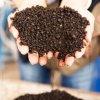
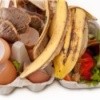
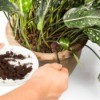
Several useful household items (especially food waste) can be made into fertilizers or soil amendments. Ideally, anything you add to the soil around your plants should be composted first. This accomplishes two things. It prevents the waste from depleting nitrogen from the soil around your plants while it breaks down, and allows plenty of time for the nutrients contained in the waste to be converted into a form your plants can use.
About The Author: Ellen Brown is an environmental writer and photographer and the owner of Sustainable Media, an environmental media company that specializes in helping businesses and organizations promote eco-friendly products and services. Contact her on the web at http://www.sustainable-media.com
I keep a coffee can lined with a plastic shopping bag under the sink. In it, I put all veggie and fruit peelings, tea bags, coffee grounds, eggshells (crushed). When it gets full, I take it outside and put it into a pile of leaves that I have crushed up. I periodically turn it to let oxygen into the (now, compost) pile. This is great for any garden. You can put in grass clippings, too. Anything plant related that isn't poisonous and nothing meat as it attracts animals and nasty bacteria. Hope this helps you out. (07/21/2008)
By MiraY
Homemade fertilizer is compost.
What to Compost
Material Carbon/Nitrogen Info:
You can also add garden soil to your compost. A layer of soil will help to mask any odours, and micro-organisms in the soil will accelerate the composting process.
Do not compost meat, bones or fish scraps (they will attract pests), perennial weeds (they can be spread with the compost) or diseased plants. Do not not include pet manures in compost that will be used on food crops. Banana peels, peach peels and orange rinds may contain pesticide residue, and should be kept out of the compost. Black walnut leaves should not be composted. Sawdust may be added to the compost, but should be mixed or scattered thinly to avoid clumping. Be sure sawdust is clean, with no machine oil or chain oil residues from cutting equipment.
For kitchen wastes, keep a large plastic container with a lid and a handle under the sink. Chop up any large chunks before you toss them in. When the container is full, then empty it into the compost pile. This reduces the number of trips you'll have to make.
You can google making compost for more information
(07/21/2008)
By Harry
Urine diluted with water makes a good fertilizer. It's high in urea and nitrogen. Sounds gross, but if you make sure to apply it to the soil, there's no problem. (07/22/2008)
By Nance
Don't be tempted to use dog or cat feces. They carry parasites that can infect humans. Nobody wants a case of heartworm. (07/23/2008)
If you are using coffee grounds, don't use the "flavored" stuff. It has a lot of artificial stuff in it that bugs really seem to love. (07/23/2008)
By Dena Roberts
Not sure if you own an aquarium or not, but The Green Gardenista has a clever recommendation: using the nitrogen-rich water from your freshwater fish tank when you are cleaning out the tank.
Here's more from her about this idea if you're interested:
http://www.greengardenista.com/blog/recycling/recycling-idea-use-freshwater-aquarium-tank-water-as-fertilizer (08/26/2008)
By Chris
Dish water is super. It fed our rhubarb so generously that we had rhubarb for canning, fresh use, and giving away in the second year. (10/03/2008)
By Coreen Hart