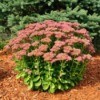
For beginning gardeners, the plant world can seem fraught with confusing, and often hard to pronounce, terminology. Fortunately, and I think most plants would agree with me, it isn't necessary to commit a large number of gardening terms to memory in order to successfully grow something. That said, your chances of growing plants successfully increase when you know a little something about their life cycle. Here's what you need to understand about ìperennials.î
Advertisement
What Exactly Is A Perennial?
Perennials are those plants that spring up in the garden faithfully year after year by way of roots, rhizomes, bulbs, corms, or tubers. They live for at least three or more growing seasons. This means that trees and shrubs are technically perennials. Growing perennials requires a bit of patience, because when grown from seed they take about three years to really get going in the garden. As the saying goes, the first year they sleep (put their energy into becoming established), the second they creep (this is usually when they flower for the first time), and the third they leap (really take off and grow large enough to divide).
Examples of perennials include bleeding heart, purple coneflower (echinacea), aster, irises, tulips, peonies, and hosta.
Types of Perennials
Tender perennials: This term is refers to perennials that do not normally survive severe winters. In colder climates, these perennials are usually classified with annuals as bedding plants because they need to be replanted every year or taken indoors. Examples include lantana, coleus, and geranium.
Advertisement
Woody perennials: Plants that form a persistent woody stem, including shrubs, trees, and some vines. Woody perennials usually stop growing during winter and drought.
Herbaceous Perennials: Perennials that don't form a persistent woody stem. These perennials die back to the ground each year in winter and return again in the spring. Examples include hostas, delphiniums, and irises.
Evergreen Perennials: Perennials that keep their leaves over winter, or still appear green once the snow melts.
Short-lived perennials: Some perennials seem to do well only for a few years before they start to decline. New plants need to be purchased every few years or started from seed to prevent gaps. Examples include some types of lupines and columbine.
The Low Maintenance Myth
Many gardeners dream of a maintenance-free garden filled with nothing but masses and waves of colorful perennial flowers. Unfortunately, most will never realize this dream, because having a maintenance-free perennial garden is a myth. A garden filled with perennials can require just as much maintenance, sometimes more, than a garden of annuals. To look their best, plants in perennial gardens need to be protected from insects and disease, fed and watered, weeded and sometimes deadheaded, and many need to be divided every 3-5 years to prevent over-crowding.
Advertisement
Pros and Cons of Growing
Advantages Of Growing Perennials:
Come back every season, getting bigger and better each year, and can be divided and transplanted once firmly established.
Unlike annuals, perennials only have to be planted once so they are considered a one time investment. In the long run, this saves both time and money. As some gardeners put it, perennials are a long-term investment whereas annuals are a yearly expense.
Perennials provide a succession of color throughout the growing season. Instead of the single burst of color you get with annuals, perennials bloom and die back at different times and provide an ever-changing landscape.
As a whole, there are probably more different types of perennial species to choose from than different types of annuals.
Disadvantages of Growing Perennials:
Advertisement
With perennials, the soil preparation is more extensive and there is a higher initial cost than with annuals.
Perennials usuallay only flower for 1-2 weeks. This requires more planning on the part of the gardener if they want to see a continuous show of color all season long.
Most perennials need to be divided every 3-5 years to prevent them from getting crowded.
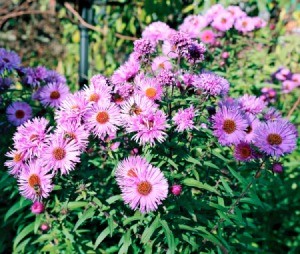 For beginning gardeners, the plant world can seem fraught with confusing, and often hard to pronounce, terminology. Fortunately, and I think most plants would agree with me, it isn't necessary to commit a large number of gardening terms to memory in order to successfully grow something. That said, your chances of growing plants successfully increase when you know a little something about their life cycle. Here's what you need to understand about ìperennials.î