ThriftyFun Logo
Home   Find   Ask   Share   Answer   Join   Index   Login  
 
 User Login:  Username:    Password:      Forgot It?  | Join ThriftyFun!

 - Beauty
 - Budget and Finance
 - Cleaning
 - Consumer Advice
 - Craft Projects
 - Craft Tips
 - Food Tips
 - Garage Sales
 - Gardening
 - Gifts
 - Green Living
 - Home Improvement
 - Organizing
 - Parenting
 - Parties
 - Pest Control
 - Pets
 - Product Reviews
 - Recipes
 - Repair
 - Weddings for Less

RSS Feed
About Us
Media
Advertising
Contact Us
Privacy Statement
Disclaimer

Recycled Paper Pots

1x1
Date: 08/11/2009 Topics: Gardening > Creative Planters | Readers Request > Gardening  
1x1
Post Feedback | Get Responses | Bookmark | Link | Print | Print (With Feedback) | Rate: Thumbs Up Thumbs Down | Bookmark and Share
Does anyone have any ideas on making your own peat pots? I have decided to experiment, but would like to know if someone already has the solution.

Hardiness Zone: 7a

By Lavenda from Jackson, NJ

(1x1 graphic )
Previous: Looking for a Thin Pizza Crust Recipe ThriftyFun Next: Puppy is Aggressive When Playing
(1x1 graphic )
1x1
1x1
 Feedback
1x1
1x1
1x1

By Juanita S. (51) Contact
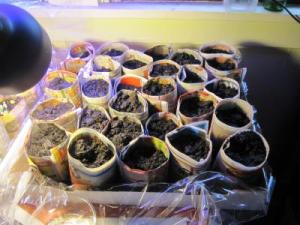
For as far back as I can remember my mother & I have used the pressed paper-type egg cartons to start seedlings for our gardens. You may pay just a tad more for eggs in the paper cartons, but in the long run you save because those little peat pots can get expensive if you need a lot! The paper egg cartons keep you from over watering your seeds & drainage for the young plants before you have planted them in the garden. Just fill the paper egg cartons with garden soil about early to mid-February (we live in Oklahoma), plant the seeds, put them in some type of under liner to catch drips (I use cut down cardboard boxes with plastic in the bottoms), put in a sunny location (window or sun porch) or use sun lamps, & care for & water them as needed until ready for planting in late March or early April.

When ready for planting, take a pair of scissors or clippers & cut the individual egg/plant holders apart & plant the whole thing (starter plant & individual paper egg holder) in the garden. Since the egg cartons are paper, they have already started to deteriorate by planting time & deteriorate faster once planted in the ground. You can do the same thing with the styrofoam egg cartons, but you have to poke a hole in the bottoms of the styrofoam egg holders with a toothpick for drainage and of course you can't plant the little styrofoam holders in the ground because their deterioration time is so slow - so you have to take the plants out of the egg containers before planting in the garden & throw them away anyway. You're not saving anything from going into the landfill. Truthfully, the paper egg holders are lots better because you give back.

Posted on 08/20/2009 | Report Spam or Abuse

By Marcia S (50) Profile Contact
You can save your toilet paper rolls to fill with soil and ad a seed in them I put them in a pan with strait sides, I did it and it worked great much better then Pete pots.

Posted on 08/18/2009 | Report Spam or Abuse

1x1
1x1
 View Archives:
1x1
1x1

This pages has been archived 1 time. You can view older posts and feedback below.

  • Request: Recycled Paper Pots (08/11/2009)
    This is in response to the post about making recyclable plantable paper. I have been thinking about taking that idea a step farther and making little flower pots from recycled paper with seeds in them. Do you think they would still sprout if the whole pot was planted? Also, any ideas about an eco-friendly additive that would help them keep shape?

1x1
1x1
 Post Feedback:
1x1
1x1
1x1

Login using the form on the top of the page to post feedback (if you are a registered user). If you have not yet registered, click here to do so. It's FREE!.

1x1
(1x1 graphic )

1x1
 Archives:
1x1
1x1

Request: Recycled Paper Pots

Archived on 08/11/2009

This is in response to the post about making recyclable plantable paper. I have been thinking about taking that idea a step farther and making little flower pots from recycled paper with seeds in them. Do you think they would still sprout if the whole pot was planted? Also, any ideas about an eco-friendly additive that would help them keep shape?

Hope someone can help!

Manijeh from Portland, OR

Feedback:

RE: Recycled Paper Pots

Yes you can! When I had a garden, I would plant my seeds in little paper cups holding potting soil. I would then place them in empty egg cartons (not the plastic or foam ones) and when my seedlings were big enough to move to the garden, I would carefully cut the egg carton and plant each seedling in it's egg "cup" separately wherever I needed it. Just puncture several small holes in the bottom. As the seedling grows, the cup will disappear (and so will the paper cup) into the soil as mulch; in the meantime protecting the seedling. I had nearly 100% success with this method. I hope you have the same. (08/01/2008)

By sheilamay

RE: Recycled Paper Pots

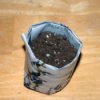
Finally, News You Can Really Use. A daily newspaper can be turned into dozens of customized, seed-starting pots. If you don't have a newspaper laying around the house, grab one from the office break room, stop by a coffee shop right before close, or look for free weeklies in the entry way of local restaurants and grocery stores. Avoid using newspaper printed with colored inks. Black and white ink is usually derived from soy-based products , which are better for the environment (and your seedlings). Brown paper shopping bags will also work well for this project.

Directions:

1. Gather your materials: a small jar, can, or juice glass to roll newspaper around; a pair of scissors, tape, and newspaper. (Note: baby food jars, and 5.5 oz cans of tomato paste work great for this)

2. Open a single sheet of the newspaper (two facing pages). Fold the newspaper in half (from top to bottom), and then fold it in half again. When you're finished, this should give you a pot that is approximately 4 layers thick and 3 1/2" inches deep (far better for growing seedlings than the often recommended egg carton). If you want to customize the pot's size and thickness, you will need to cut the newspaper into the appropriate sized strips. Cut each strip as long as a full-sized page is across, and almost as wide as the small jar, juice glass, or can you are using. The width of the strips (size of the pot) that you will need depends on how long your seedlings remain in the pot before transplanting them. Seeds that take a longer time to mature (6 weeks or more) will need bigger pots. When deciding on the thickness of the pot, keep in mind that walls made up of more 4 or more layers will hold up better to frequent watering.

3. Place the jar (or can) on the newspaper so that a small amount of extra newspaper sticks out beyond the bottom. After you roll the newspaper around the jar to make the sides of the pot, this extra paper will be folded under to serve as the pot's bottom.

4. Roll the newspaper up snugly around the jar. You want it to be secure, but make sure it is not wrapped so tightly that you cannot slide the jar out. Secure it with a piece of tape.

5. Fold the excess newspaper under the jar to make the bottom. Stand the jar upright and use a hard surface to squish the bottom firmly into place. Secure it with a piece of tape.

6. Slide the jar out of the newspaper. Viola! Now you have a biodegradable seed pot. Repeat the procedure for as many pots as you need.

Tips: Once you have filled your pots with soil and planted your seeds, it's a good idea to place the pots side by side in a large, waterproof tray (a cardboard flat lined with a garbage bag works well). Keep an eye on moisture levels. The newspaper will provide for some natural drainage, but thick pots will drain more slowly.

When seedlings are ready to transplant, either unroll the pots to gently remove seedlings or, carefully remove the tape and plop the entire pot directly into the ground. Because the newspaper is biodegradable, it will break down in the soil relatively quickly once it is surrounded by dirt and moisture. Again, keep an eye on moisture levels. If the pot was still in relatively good shape when you put it in the ground, it may act like a wick and soak up surrounding moisture.

Toilet Paper or Paper Towel Rolls:

Another genius idea and almost ready-made! When using toilet paper rolls for this, remember that cardboard is thicker than newspaper. It will hold up better to frequent watering, but break down more slowly once it is in the soil. As an alternative to planting the pot, simply cut the roll down the middle to free the seedlings for transplanting or tip it upside down and slide them out.

Directions: Cut 1/2" to 1" strips around one end of each roll, fold the strips under and secure with a piece of tape. You are done! Paper towel rolls can be cut down to make multiple seed pots. Set a covered basket in the bathroom to collect the rolls.

As for the simplest way to start seeds indoors, once you have your starter pots, fill them to within 1 inch of the top with a commercially available seed starting mix (it's a good idea to dampen the mix with water before filling your pots with it). This type of mix is not like regular potting soil or topsoil, which is considered too heavy for starting seeds indoors. Instead, seed-starting mix usually contains a mixture of peat moss and vermiculite (sometimes sand, lime, or plant food is mixed in). In general, the finer the seeds, the lighter the growing medium needs to be to get them started.

Place 2 to 3 seeds per pot, cover them with a thin layer of mix and water thoroughly. (If necessary, use a hand-held spray bottle to avoid washing away the seeds). In general, keep the growing medium moist, but not wet. Some seeds need to be under bright light to germinate. Others prefer to germinate in darkness and then be moved to bright light in order to grow. It all depends on what seeds you're trying to germinate. Usually the seed packets themselves will tell you everything you need to know. Just about all seeds need temperatures of at least 65 to 70 F to germinate indoors. Once seedlings germinate and develop a true set of leaves (usually the second set of leaves to develop) thin pots to one to two plants per pot. (Use a scissors to remove the weaker plants to avoid disturbing the roots of the remaining plants). (08/01/2008)

By Pat

RE: Recycled Paper Pots

Awhile back the following link was on ThriftyFun.com. These boxes can be made out of newspaper and in different sizes for different size plantings. When folded they are 2-4 layers thick but flexible enough that you could make 2 or 3 the same size and put them inside each other if you wanted a thicker container. http://www.origami-club.com/en/newspaper/garbagebin/index.htm (08/03/2008)

By Bette

Report Spam or Abuse

© 1997-2009 ThriftyFun.com - Design by Cumuli Design
Disclaimer: ThriftyFun.com cannot accept any responsibility for any injury or damage that you may cause to yourself, others, or property when following any advice given on this site. Read the full disclaimer. If you find any information on ThriftyFun.com or in our newsletters that is either erroneous and/or potentially harmful to others, please Contact Us, immediately.