Mentha
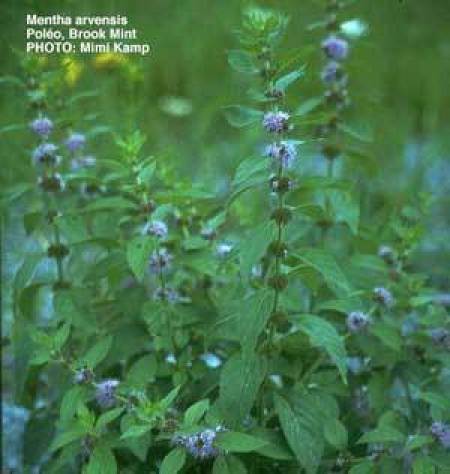
Common mints in the garden include spearmint and crinkled-leafed spearmint, peppermint, apple mint, and pennyroyal (which is toxic and cannot be eaten).
Except for pennyroyal, mint grows on upright stems to a height of 1-2 feet high, has aromatic leaves and sends up spikes of small, pink to purple flowers that bloom in the late summer. Pennyroyal, with its small pointed leaves and cluster of pink flowers, creeps along on slender roots and makes a good ground cover. If left unchecked, all mints spread rapidly throughout the garden by way of runners.
hardy perennials
full sun to partial shade
Mint prefers moist, fertile soil and strong afternoon sun. All varieties are considered invasive and should be carefully controlled by growing in pots or employing underground plastic barriers to keep runners from spreading. Mint can be grown in baskets, containers or in outdoor beds. Start plants from cuttings rooted in water or by division. Set transplants in pots buried flush with the soil or in beds spaced 9 to 12 inches apart. Mint growing outdoors should be cut back to 6 inches in the fall and mulched over winter.
dependent upon type-division, cuttings, runners, or seeds
leaves
Mint leaves can be cut and used fresh as needed or dried or frozen. Store leaves in sealed containers until used.
antiseptic; appetite stimulant; digestive aid; preventative dentistry; relaxation; nasal decongestant; breath freshener
soap; skin care; garlands; insect repellant; scented candles; laundry rinse; hanging baskets, garden beds, and borders
Add your voice! Click below to comment. ThriftyFun is powered by your wisdom!

I GROW MINT IN A LARGE CONTAINER AT THE ENTRANCE OF MY DECK; WHEN IT RAINS, THE AROMA OF LEMON MINT PERMEATES THE ENTRANCE OF THE DECK, BACK PORCH AND IS SO REFRESHING. I ALSO HAVE ACCESS TO IT FROM MY KITCHEN AND I USE IT FOR RECIPES, ICED TEA, HOT TEA AND OTHER USES.
I grow a variety called "chocolate mint" that I suppose got its name from the uses it is put to (it is probably put into candy). I use it for mint tea--it hardly tastes the same as spearmint, not hardly as much of a bite (though I like that) but for people who don't like mint at all, this is the type for you. Makes great mint tea, and gives your yard a pleasant scent.
I have heard that mint tea (cold OR hot) is good for an upset stomach and aids digestion.
PMZ
YIKES, mint, I love it, but it can take over the world! It took over my lovely herb garden and I YANKED it out for years and it just kept coming back! I threw it out into the field behind my house and that tenacious plant rooted itself back there!
I have been told that mint can deter rodents - does anyone know this to be true?
I am growing mint at the moment from seed, nothing has happened so far, it's only been about 2 weeks though? Any advice on growing it from seed?
Also how much mint comes from 1 seed? If any seedlings do come up, how many should I plant per pot and which size pot would be best?
Sorry, I'm a total novice at the moment!
Add your voice! Click below to comment. ThriftyFun is powered by your wisdom!