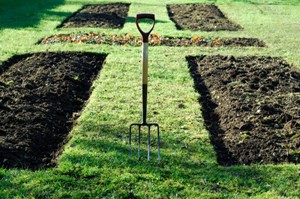
If you garden in an area with poor soil fertility and drainage, you're probably familiar with the advantages of planting in raised beds. Less familiar, however, may be the concept of sunken beds - beds dug down to sit slightly below the soil surface.
For gardeners in arid climates, sunken beds offer several advantages to raised beds and ground level beds. They are designed to capture maximum rainfall and retain moisture, so they dry out less quickly, keep roots cooler, and lessen the need for irrigation. Below grade walls also cast a small amount of shade, which gives garden plants a slight reprieve from scorching summer temperatures.
Unfortunately, not all arid garden sites are good candidates for sunken beds - for example areas prone to frequent flash floods. As many gardeners in the southwest can attest, desert soil can also be hard to excavate - sometimes literally as hard as a rock. The usual culprit is caliche, a hardened deposit consisting of calcium carbonate. Also referred to as deadpan, caliche beds can form impermeable cement-like layers in the soil that prevent water from draining, roots from developing, and cause soil to skyrocket to the alkaline end of the pH scale.
If you decide your garden site is a good candidate for digging sunken beds, you will prepare them the same way you would any other new planting site. First you'll need to dig down at least 24 to 30 inches deep, screen out any existing caliche, and fill the beds back up with a mixture of soil and compost. This ensures the soil will have sufficient drainage, and that plant roots have sufficient amounts of organic matter and adequate space to grow.
Mulching reduces the stress of plants growing in dry soils by slowing down the rate of evaporation. Add a thick layer (3 to 5 inches) of organic mulch around plants as they emerge to keep soil cool and help retain moisture. Using straw or compost will also add extra organic nutrients to the soil. Native plants (those naturally adapted to dry conditions) should not be smothered in mulch.
About The Author: Ellen Brown is an environmental writer and photographer and the owner of Sustainable Media, an environmental media company that specializes in helping businesses and organizations promote eco-friendly products and services.
Add your voice! Click below to comment. ThriftyFun is powered by your wisdom!
Add your voice! Click below to comment. ThriftyFun is powered by your wisdom!