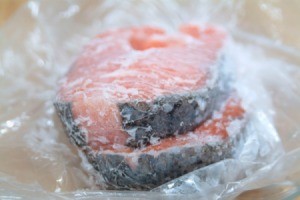
Put the fish in cold water and use quite a lot of salt. It works fine. Rinse the fish good. I've fixed it this way for close to 50 years and I've had no complaints.
Your safest bets are the cold-water method, or allow it to thaw in your refrigerator.
If you need it to be thawed quickly, use the professional method: place the fish into a container, such as a bowl, that will allow the fish to be covered completely, by water. Place the container in your sink, and adjust your faucet to a slow trickle of cool water.
Allow the water to run into the container for an hour or more. The moving water will thaw the fish faster, but will still be safe, as it will maintain a temperature above freezing, but within safe limits to prevent food poisoning.
You can speed things up even more, if you use warm water, but be sure to use the fish immediately, as soon as it's thawed out! Food poisoning can be a serious health threat, especially in the elderly, and in young children.
First of all, when you buy fish at the store, ask if it has been previously frozen and is now thawed. If it has, do not freeze it again as the flavor and texture will not be good.
If you buy fish that has been previously frozen and is now thawed, cook it that night. If you buy fresh fish that has not been frozen you can freeze it in a zip lock bag filled with water leaving space at the top for expansion. Seal the bag, put in a bowl so that the bag does not sink into the freezer shelf as it freezes.
When you are ready to cook it, put it in a pan of cold water on the counter. Allowing it to thaw in cold water. The water keeps the temperature of the fish at a safe level. Once thawed, put in refrigerator until ready to cook
Thaw fish by putting it in a sealed container in the refrigerator for a day. However, I don't even bother thawing frozen fish, unless I want to batter and fry it. The Canadian Cooking Method for fish works just as well for fresh, thawed, or frozen fish. It goes like this:
1. Any variety of fish;
2. Any method of cooking;
3. 10 minutes per inch of thickness at the widest part of the fresh fish, or
4. 20 minutes per inch at the widest part of the frozen fish,
5. at 450 Fahrenheit.
Deep-fried crappie, boiled cod, broiled haddock, baked salmon, halibut stew... doesn't matter. Any fish, any method of cooking, this will work. I promise you, it never fails, and you can quote James Beard on this one.
Source: James Beard's New Fish Cookery.
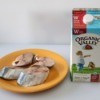
I thaw fish in a shallow bowl of milk. The milk will get the fishy smell out. Or just water will also do.
ThriftyFun is one of the longest running frugal living communities on the Internet. These are archives of older discussions.