I am looking for a way to remove the discoloration on plastic head light covers on a 1998 Chrysler van. It is ruff looking and stops a lot of the light from coming through from the head light. The light has become very opaque and not crystal clear like it was when it was new. The build up is more to the top of the light cover.
Add your voice! Click below to answer. ThriftyFun is powered by your wisdom!
Here are a couple of ideas I am trying for my 1992 Dodge Caravan:
1. Using Soft Soap cleanser on them. This could do it without scratching the plastic.
2. You could replace them from a junk yard. They can WAY LESS expensive compared to buying them new.
Sincerely,
Karen in IN
I know this is going to sound crazy but it works. I found this online on a tip page. Take a can of spray like Pam or any kind of cooking spray and spray it onto the light covers. Wipe with a soft cloth. It really works...my husband tried it on his old Crown Vic and it let more light from the headlights come out.
I replied with this idea on another person's thread-- I wash cars at Infiniti on weekends, and they have a spray degreaser that works wonders. I used it on my 92 Saturn's windows, wheels and on the headlight covers. They all look awesome now.
just wanted to let u know- cerama bryte glass cook top cleaner made my headlights look brand new and its cheap just takes some elbow grease
Pam works as will any oil; clean motor oil or vegetable oil. Better still, use paste wax. I keep a can of Johnson's floor wax for the plastic windows in my jeep soft top. Just be sure to start before the very fine (hairline) cracks and discoloration become too advanced. Then you need rubbing compound or the like. Filling the tiny cracks is what the oil or wax does. The cracks distribute the light in a random pattern and cause the cloudy look. Just polish well after application.
Pittman's Original One Step ALR worked for me, It took a few seconds on each side. Really easy to use, just wipe it on and the results were instant. My lights were really old and worn. Now they look great, I passed inspection and I can see much better at night.
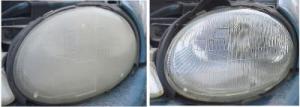
Two things not to do to plastic, Use an abrasive on it or Pam. If your headlights are already damaged, you don't have much to lose. If your headlights are relatively new you can do a lot of surface damage oven cleaners and abrasive cleaners.
Most stores still push abrasive cleaning kits. You can find non abrasive liquid products to remove headlight oxidation on ebay.
Plastic headlights damage very easily. What works on glass will destroy plastic.
Don't use any solution that involves abrasives, like rubbing compound and sandpaper.
My headlights were actually brown. They were like that when I bought the car. I was looking to replace them when a friend of mine bet me $20.00 he could make them look like new in less than five minutes.
I had not heard about Pittman 360ID. I thought the lens was beyond repair. Pittman's works and it works fast. It cost me twenty dollars to find out about Pittman's but I saved a few hundred dollars because now I don't have to replace the lens. The lens are crystal clear now, I would not have believed it if I had not seen it.
While it is true that abrasives will ruin plastic lenses they are already ruined anyway by the "sandblasting" you receive driving down the road on a daily basis.I use a combination of comet cleanser and water. It removes most (not all) but most of the oxidation and polish lightly with a little rain dance polish. The lenses clean up quite nicely and do not yellow.
They just get messed up again 3 or 4 months later and I just do them again...cheap. None of those so called kits do anything what so ever except take your money and then come up with every reason in the world not to refund it when you complain..."I mean really, you didn't follow the directions". The products don't work and that is all there is to it. People would not complain to sites like these if the products worked. The few pluses you see here are all written by the companies that make the products!
I use baby oil on a paper towel and buff til clear after washing the headlights well.
i was wondering lot's of stuff about how to clean car headlight .one is doing with that Colgate and toothbrush.seriously bro you thought it's teeth.no bro it's car headlight facing with unbearable dust and hazards with is deeply rushed.so fo that you need special treatment for that, recently I found few special products review you might check that here carkitsolution.com/
Add your voice! Click below to answer. ThriftyFun is powered by your wisdom!