Pomegranate plants (Punica granatum) are diverse in their growth habits. They can range from small shrubs to trees reaching 20-30 feet tall. Native to northern India and the Middle East, these fruiting plants are naturally adapted to growing in regions where winters are cool and summers are hot. In the United States, they are cold hardy to USDA Zone 7.
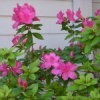
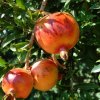
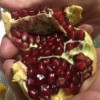
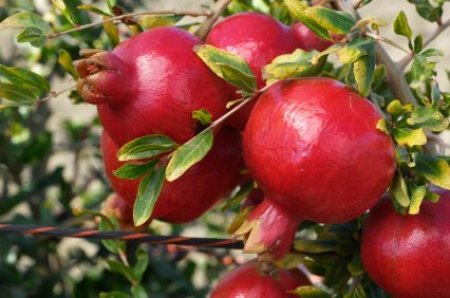
Pomegranate trees have narrow, glossy green leaves and produce scarlet red flowers that are attractive to hummingbirds. The bulbous fruits are up to 4 inches in diameter, and are covered in leathery yellow or red skins. The fruit contains several walled sections containing a generous amount of seeds 'from 200 to 1400 seeds in total. Each seed is surrounded by a small sac of juice which, when released, gives the pomegranate its sweet-tart flavor.
To produce fruits, pomegranate trees need dry weather and high temperatures (96ºF or more). Even without fruit, the tree's attractive flowers and fall color display make it worthy of growing. A good planting site will have a warm, sunny exposure and provide shelter from high winds. Pomegranate trees are not particularly fussy about soil type or pH levels. As long as the soil provides good drainage, a slightly acidic or slightly alkaline pH is acceptable.Many nursery-grown pomegranate plants are sold in 3 to 5-gallon pots. To plant one, dig the hole 3 to 4 times the diameter and 3 times as deep as the container the plant came in. Remove the plant from the container and place it in the hole so that the container is level with or slightly above the surrounding soil. Fill soil in around the tree roots and tamp slightly to remove air pockets and water in well. Several dwarf pomegranate species are also available that make good container plants.
Watering: Once established, pomegranates can tolerate long periods of drought. Even so, it's best to maintain a uniform level of soil moisture, especially after fruit set. Excessive water fluctuations during late summer while the fruit is maturing may result in cracks or splits in the fruit. After planting, mulch the site and keep it free of weeds. As seedlings, it's normal for pomegranate trees to undergo severe fruit drop during the first couple of years.
Fertilizing: Once the trees are planted and settled in (new growth appears), it's time to start a fertilizing regime. Apply a slow-release organic fertilizer formulated for fruit trees once each year in the spring. Rates can be difficult to determine, so start with a soil test and make adjustments each year according to the tree's response. Depending on soil fertility, mature trees may require from ½ to 1 pound of fertilizer per plant per year.
How you prune your pomegranate plant depends on what type of growth form you want the plant to take. If a tree-type form is desired, then prune the plant to a single trunk and continue to remove the basal shoots each year. If a shrub-type plant is preferred, select four to five main branches to develop a framework. For the first three years keep shortening the branches to encourage shoot development. Then continue to remove any crowded, crossing, or diseased branches throughout the life of the tree.
Pomegranate trees are self-pollinated, although cross-pollination by insects usually results in better yields. Propagation is usually through cuttings taken in winter (the preferred method), or by air layering.
Trees should start to bear fruit approximately 2 to 3 years after planting. Harvest the pomegranates when they turn yellow or red and produce a metallic sound when tapped. Pomegranates have a shelf life similar to apples and may be stored for several weeks at 39-43ºF.
Papershell: A round fruit, small to medium or large in size. The fruit is bright-red in color, with a thin rind, and a juicy, reddish-pink pulp that is sweet tasting and contains soft seeds. Heavy bearer.
Spanish Ruby: Round, small to medium or large; bright-red, with a thin rind and fleshy, rose-color. Has a sweet, aromatic pulp, and small to medium, fairly soft seeds. Considered medium in quality.
Wonderful: The fruit is very large and dark purple-red in color, and contains a juicy, winey, deep-red pulp and medium-hard seeds. Plant is vigorous and productive.
About The Author: Ellen Brown is an environmental writer and photographer and the owner of Sustainable Media, an environmental media company that specializes in helping businesses and organizations promote eco-friendly products and services. Contact her on the web at http://www.sustainable-media.com
Add your voice! Click below to comment. ThriftyFun is powered by your wisdom!
I have a Pomegranate bush. I have cut some branches off in late fall and I hope they take. I do prune mine back every year.
Add your voice! Click below to comment. ThriftyFun is powered by your wisdom!