Or, perhaps we should say, setting up a cage for ferrets, because they are generally happier in pairs.
The type of cage you select depends on how much time your ferret will be spending in it. If he'll be spending most of his time, like more than eight hours a day, in the cage, you want to give him as much space as possible. At minimum, you want a cage that is two feet high, deep, and wide. A smaller cage will serve if your ferret will only be cage-bound overnight.
Ferrets are active and inquisitive little guys, so you should provide some entertainment in the cage. Your ferret may like a hammock or some tubes and ramps, but he may also be really bored and just curl up and sleep. Allowing your ferret to roam as much as possible outside of the cage will ensure a happy ferret!
And don't be disappointed if your ferret ignores the fancy toys you bought him and chooses to wrestle an old sock instead. As long as his toys don't have small parts that can be swallowed, just about anything you currently own can become a ferret toy.
The cage will need two things: a sleeping area and a bathroom area. Provide a small basket or cardboard box for your ferret to sleep in, and pad it with an old sweatshirt sleeve or pants leg. Get a triangular corner litterbox to maximize free space', but be sure to change the litter "every day". Ferret waste can be very odoriferous. Use a quality litter, but try to avoid the kind that clumps, it tends to get stuck to your ferret's rump.
Your ferret set up will also need food and water. Any pet should have access to water all the time. A water bottle attaches easily to the side of the cage, but you can also offer a water bowl. Just like with rats, make sure the food and water bowls are heavy enough to "not" tip over.
As far as feeding goes, you can offer your ferret cat food like Iams or Science Diet, but don't give them dog food. Only actual ferret food or certain high-quality cat foods have enough of the proper nutrients for your ferret. You should think about offering a daily vitamin as well.

Add your voice! Click below to comment. ThriftyFun is powered by your wisdom!
Good Post. I agree that a ferret should not be cage bound all the time, they are high energy and need exercize. While I do have a cage I rarely use it. We let our ferrets roam free for the most part. And I would like to point out that bedding can be treated with preventive resperatory care liquid. Your ferrets won't even know it's there and it helps avoid infections and colds. But it's optional.
I would watch the cat food for protien content ferrets need a diet high in protein and most cat food has fiber and filler and some protein but not enough for healthy ferrets. Iams or science Diet would probably be fine though, as long as you supplement with vitamins. I prefer food formulated for ferrets only. Same goes for treats and vitamins. I do allow room for treats other than just ferret specific ones. For instance my ferrets love raisins so it's a nice treat every now and then.
I would love to read anything else you have to say about ferrets. Thumbs up.
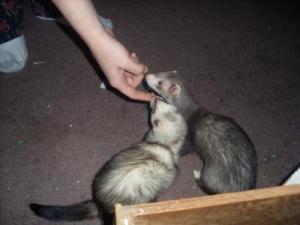
Ferrets should not eat sugary cereal, peanut butter, grains, corn, rice, carbohydrates, raisins, bananas, other fruits, vegetables, dairy products, chocolate, other sweets, or any food with sugar.
Ferrets should not eat sugary cereal, peanut butter, grains, corn, rice, carbohydrates, raisins, bananas, other fruits, vegetables, dairy products, chocolate, other sweets, or any food with sugar.
American Ferret Association: Frequently Asked Questions
www.ferret.org/read/faq.html
thanks that was very interesting-I love ferrets though Ive never owned one.maybe one day!x
Add your voice! Click below to comment. ThriftyFun is powered by your wisdom!