Recreation > Camping > TipsOctober 11, 2011
Pin It

Frugal Camping Tips

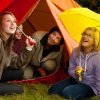
Girls roasting marshmallows over a campfire while camping.Camping can be an inexpensive and fun way to travel and spend time with family and friends. Here are some ways to minimize the costs and make it more enjoyable for all. This is a guide about frugal camping tips.

Solutions

Rate the best solutions below. Do you have a solution to share for this guide? Sharing a solution enters you in our weekly solution contest.

Take a Solar Yard Light Camping

If you are a camper, you have probably at one time or another experienced having a very dark campsite. I have a simple and inexpensive solution for you. Pack one of the solar yard lights to take with you camping.

You can purchase them for less than $4 and they give just enough light to make your campsite safe and easy to walk around after dark. If you have tent stakes and you are concerned about your family tripping over the tent ropes after dark, the solar lights are very safe to use as there are no electrical wires or extension cords to deal with.

Solar lights are weatherproof and using a couple around your campsite usually are not too invasive to your camping neighbors. They are very handy if you have small children who have to be taken to the restroom during the night in the campground. The solar lights give just enough light to take away the scare of coming and going from the campsite.

By Marsha from Greenville, NC

Was this solution helpful?
 

My Frugal Life: Scout Camping on a Shoestring Budget

My frugal life logo. When my son was younger, I was the Cubmaster for his pack. Most of the scouts had single moms. The whole family goes camping in Cubscouts, but money was an issue.

When we didn't have money, the boys slept in my backyard in the tents. For breakfast, they cooked for their family on stove inside, usually pancakes for a $1. The older scouts helped younger ones (6 years and up) to cook. They watched not to burn it, since this was mom's breakfast and their siblings would tease them if it burnt, especially sisters.

At the State Parks, you can stay for a dollar a night in primitive. Other campgrounds, such as K.O.A., charged $5 a night per scout. Some campgrounds offered free camping when scouts helped clean up the campground. Scouts collected and sold cans for camping fee money or odd jobs.

Each scout made a cup when starting Scouts, which was brought everywhere with them as their official cup. Each scout had a mesh dish bag (made from mesh fruit bag with drawstring on top) in which stored his mess kit or made their own, consisting of fork, spoon, knife, dish, pan, and pot. Each scout washed his dishes or didn't have clean ones to use at next meal. Bathroom and dishtowels were used instead of paper napkins, washing and line drying them. Sand was used to clean up the burnt pots. I saved old foam meat containers that I washed in the dishwasher to use as paper plates for the moms.

For drinks, we had Sun tea and Kool-aid. The Dutch oven was used for the big oven. The scouts made solar ovens by covering pizza boxes with aluminum foil or by folding a silver sun visor into an oven. The visors could also be used as a mat to sleep and sit on. Metal coffee cans were used as Hobo stoves. We would burn wood collected on garbage night for firewood. Metal knife and flint were used to start fire.

For sleeping, we lined the bottom of tent with newspaper if cold, and a pillow made by stuffing clothes in a pillowcase. We used sleeping bags or quilts to stay warm in winter and slept on mats in summer.

I am proud of all my little men and they still talk about those cheep fun camping trips their Cubmaster took them on.

By Southernbelleklb from Jefferson, LA

Do you have a frugal story to share with the ThriftyFun community? Submit your essay here: http://www.thriftyfun.com/post_myfrugallife.ldml

Was this solution helpful?
 

Rope Lights For Campsite Lighting

I've seen campers use solar lights to light their site after dark, but if you have one with trees, they may not recharge properly. My husband and I use rope lights. We drape them under the awning and down the poles, lay them on the ground around the perimeter of most of our site. If needed, we make a path from the RV to the water for walking to the boat after dark.

This gives us plenty of light and they are all connected and plugged in to a multi outlet unit, so we just flip one switch when we go in for the night. Some fellow campers that we know have started doing it as well.

By Sheila from Wrens, GA

Was this solution helpful?
 

Use Wet Wipes Instead Of Toilet Paper When Camping

We go camping in our travel trailer almost every weekend during the summer at a place where it is parked in a remote area with no water hook-ups. Since the holding tanks hold a limited amount of clean water that we carry up each weekend, we are unable to shower without running out before the weekend is over. :( We either wash in the lake if it is warm enough or have sponge baths if it is too cold. We also don't have a shower at our cottage, so when it the water is too cold to wash in the lake, we have sponge baths.

For that extra clean feeling after wiping with TP, we started using the cheapest brand of baby's wet wipes. We use one or two of them after "going" and tie them up into a small bag for the burnable garbage for the campfire (or woodstove at the cottage). This practice made me realize that it was cutting way down on our toilet paper use, so we started doing the same at home.

A handy tip for disposal: I buy produce at the grocery store, where they provide those small bags for your produce. After getting home and emptying the bags, I put them in a drawer beside the toilet. Then we place the used wet wipes into one, tie it up tight to eliminate odors, and toss it into the regular garbage pail.

By ann from northern Ontario, Canada

Was this solution helpful?
 

Tips For Car-Camping Or Backpacking

If you're like me, you're going camping/hiking with friends/family this summer (or wishing that you'd be able to). Here's a few tips for your summer car-camping and backpacking trips:

  • Organize your gear. We've all done it at one point or another. We've arrived at the first campsite, gone to set up camp and some vital piece of equipment has gone AWOL. What can we do to prevent this? Organize! This may mean dedicating an entire closet/shed to the storage and organization of camping/outdoor gear. When you've found a place to put all your stuff, begin by finding places for certain things to go. For example, put your mummy bags and sleeping pads somewhere flat (perhaps on top of the highest shelf, with nothing on top of them so that they can fluff). You can hang your packs on hooks on the wall, and stoves and fuel can be stored on the shelves along with the food and other miscellaneous items that make up your equipment list. Now all you have to do is take inventory. Learn from past camping/backpacking trips what types of gear/what items you've taken on each type of trip, and make separate gear checklists for car-camping/backpacking. Keep these lists on your computer for later printouts and hang them on the back of the door to your closet/shed for quick reference.
  • If you're going car-camping, bring another shelter other than your tent, such as a lightweight screenhouse or even just a tarp with a length of mosquito netting to stretch around the sides. It'll make evenings and mornings much more pleasant by keeping the bugs at bay.
  • If you have the choice, camp on the top of a small hill. In some areas, this is the only way to camp due to the hosts of mosquitoes that flock to any bared human skin. The breeze in such a place will keep the bugs to a minimum. But be wary of thunderstorms; lightning is a dangerous part of creation and if you're on a flat area or on a mountaintop or ridgeline, try to camp on the side of the hill or under a large expanse of trees to minimize lightning hazards. Beware of the way the land lies, it may mean the difference between a comfortable stay and a miserable night; if there's rain it may flood through your tent.
  • This one's a dandy to remember, Roll the edges of your groundcloth UP and UNDER the floor of your tent unless you want the slightest drizzle to soak you and yours. This applies to ANY tent-camping scenario, but is especially noteworthy in a remote area when backpacking due to the higher risk of hypothermia (yes, deaths by hypothermia happen in the summertime too).
  • Bring extra propane (for car-camping), or white-gas/butane (for backpacking). It's a pain in the arse to have to make a five or ten-mile trip outside of the camping area to be able to find a place that stocks propane canisters or tanks. Besides, that isn't what camping is about, it's more about being able to go to the woods and stay there without needing to go back to civilization for a few days. Ditto for the camp store. Unless you really need something, it's best to just stay away from such places (if you're in a public campground). It just detracts from the whole sylvan experience.
  • Bring extra batteries. Nothing's worse than having to complete some task in the dark with no type of illumination other than a lighter because you forgot to change the batteries in your headlamp/lantern/flashlight before you left home. If you're backpacking, you won't really need it so much (since, in my experience at least, you'll be too tired to want to stay up at night anyway), but if you're car-camping, it's likely that you'll have some extra energy and will want to read or work on something after dark.
  • If you're car camping, lock your food (and garbage) up in the car trunk at night to keep the critters out of it. It's pretty annoying to wake up to find an empty garbage bag hanging on a tree and the garbage all over the ground, or a previously-unfinished block of cheese or box of crackers from last night's cracker barrel nibbled on or scattered all over the picnic table. When you're backpacking, this is mandatory. Although you won't have your car in close enough proximity to your campsite to put your food there, you must keep all smellables (such as soap, deodorant, toothpaste, food, Gatorade mix, candy bars,--even stickers and duct tape on your water bottle or any clothing that's been doused in Kool-Aid) out of reach of your feral neighbors. And don't count on the local problem bear not bothering you. If you have a Snickers bar in your pack, he could and will. The tent is no place for edibles/smellables, even in the daytime. Animals can smell food on fabric for weeks after you've taken the smellables out of the tent. To solve this dilemma, simply take a heavyweight nylon sack and hoist it over a 12-foot or higher tree branch, securing the free end of the rope/cord by wrapping it around another tree. The mice may chew holes in the bag and take your crackers and granola, but it will be a passable bear deterrent in a pinch. Some state and national parks require backpackers to store food and smellables in a "bear-proof container" (usually made of strong but lightweight, cylindrical-shaped plastic), especially in areas above treeline. Do whatever you have to keep the critters out of the vittles. It'll save you a trip to the nearest town (or a hungry belly).
  • Bring PLENTY of water to start with, and bring it in containers that you can fill at a "primitive" water source (such as collapsible water jugs and a large water cooler). And don't forget to hydrate before each trip! For two or three days before, you should be drinking eight 8-oz. glasses of water per day, or two Nalgene bottles (about two quarts) in order to prepare yourself for the hot summer weather (or cold winter dryness). This is important for any outing but especially for backpacking trips.
  • Periodically update your first-aid supplies. This may sound unnecessary, redundant or silly, but medical supplies become outdated, go missing (blame it on the wood-elves), and just plain wear out. For instance, all sorts of pre-packed bandages, when folded and carried in a pack/bag for long periods of time, become unsterile due to their paper wrappers crinkling and tearing, letting in all sorts of dirt, filth and germs. Don't let this happen to your first-aid gear, it can mean the difference between life and death (and I'm not being melodramatic). And after you've updated your medical kit, you have to remember to BRING it along, or it won't do you any good! Put it into your gear closet (mentioned in the first tip).

That's all I can think of off the top of my head. Stay safe, and enjoy your time off work, folks! By PMZ from Houghton, NY

Was this solution helpful?
 

Frugal Camping Tips

A lot of these tips are for tent camping. They are inspired by some hints from an old Boy Scout site.
1. Channel lock pliers make good pot holders for cooling on a camp stove or over a fire.

2. Canning rings can be use to cook your eggs in for egg sandwiches. (Works well for English Muffins or Hamburger buns).

3. Plastic butter tubs make good storage containers for your camp kitchen.

4. A plastic bottle makes a good latrine for cold weather camping. Keep it just outside the tent flap.

5. Old shower curtains and old plastic covered tablecloths make great ground cloths.

6. Waterproof matches by dipping in melted paraffin, nail polish or shellac.

7. Make fire starters by filling paper condiment cups with saw dust and pouring paraffin into the cup.

8. Put matches in corrugated cardboard strips (about every other hole) and dip into paraffin for fire starters. Cut off what you need to start a fire.

9. Make a double boiler for melting paraffin from a 1 lb. coffee can and a 2 lb. coffee can. Pour some water in the 2 lb. can and put the paraffin in the 1 lb. can. Bend a coat hanger so it will support the 1 lb. coffee can off the bottom of the 2 lb. can.

10. A length of chain and a piece of coat hanger bent into an S-shape will allow you to hang your lantern from a tree limb.

11. Keep batteries in an appropriate size prescription bottle to insure that they cannot run themselves down by accident. Bring a nail file or emery board to clean the connections. This can extend battery life.

12. Prescription bottles make good match safes.

13. Prescription bottles or 35mm file containers make good storage places for small items.

14. Grills from old ovens or barbecues can be used for fire grills. Don't use refrigerator shelves as they will release toxic gasses when heated.

15. A frisbee will add support to paper plates when the plate is place inside the frisbee.

16. Make a camp washing machine from a five gallon bucket and a toilet plunger.

17. Cutting slivers off scrap lumber and heating in the oven to dry out the wood will produce some very dry tinder. Remember to store in plastic bags for your next trip. Save candle stubs for fire starters or to use as paraffin to make other fire starters.

18. Insulate your backpacking stove from the ground in cold weather with a 6" X 6" piece of plywood.

19. Cover the ice in a picnic cooler with foil to help it last longer. Keep water in your canteen cooler by wrapping the canteen in foil.

20. When handling evergreens or pine cones, they can remove the sticky sap from their hands easily if they use baking soda instead of soap to wash.

21. To prevent batteries from wearing down if a flashlight is accidently nudged on while you're traveling, put the flashlight batteries in backwards.

22. An empty plastic soda bottle, cut off to a convenient height, will work as a camp bowl. You may want to sandpaper the cut to smooth the edge.

23. To conserve rope, mark each length of rope with a distinctive color and make a rule that the rope is never cut.

24. Wrap a wet washcloth in a foil package and put it into your pack. You'll have a handy 'wet-wipe' for cleaning hands and face after a satisfying camp meal.

25. Foil provides good packaging material for a campers personal toilet articles.

Source: The original file for these low-cost equipment/ideas/fixes for Scouting and camping in general was originally found on a F-Net Scouting board and was reposted on Fidonet on Nov 11/92 by Steve Simmons. The file evidently originated with BSA Troop 886 in the USA.

Was this solution helpful?
 
Share Your Feedback: Once you try any of the above solutions, be sure to come back and give a "thumbs up" to the solution that worked the best for you. Do you have a better solution? Click "Share a Solution" above!

Questions

Here are questions related to this page. Click "Ask a Question" if you have a question to ask about this topic.

Camping Tips

I would love to hear other people's camping hints. Here are some of mine:

  • I save plastic bowls (margarine, cottage cheese, etc.) to use when camping. I keep plastic baggies to use, also great for leftovers.
  • I save foil pie pans to cover with foil to keep food hot.
  • I purchase cookware at yard sales and keep those items in a large tote to carry out to the picnic table.
  • I keep most of my condiments in a baggy so I usually have a variety of stuff.
  • I put clothing in a gallon size baggy with underwear, a shirt, and shorts. I then seal the bag as airtight as possible which saves space keeps clothes dry. It's also great for smaller kids going on vacation to fix a bag for each day (maybe two).

Hope these suggestions help others and maybe someone has thought up some more.

Have fun camping!


Most Recent Answer

By PookaRina 03/08/2010

When you plan to go camping, be sure you take the entire meal for the first night already cooked and prepackaged in foil packets, double-wrapped. It takes a lot of time just setting up camp, and if you have your meal already cooked and ready to warm up on the grill, you can devote all your time to the setting up and placement of the things you'll be using the next morning getting breakfast.

Bake a roast of beef or maybe a couple of chickens with carrots, celery, potatoes and onions, and when it's done, make individual packets of double-wrapped foil with some of everything already cut into bite-sized pieces. Keep them on ice, and when you're ready to eat, place them on the top rack of the grill, and allow them to warm, then fold back the foil and set it on a pie tin and supper is ready. Easy supper and easy clean-up as well. Many times, I'd butter an entire loaf of bread...and many times, it was eaten before we retired for the night. Camping makes everyone hungry, I think.

Plain pound cake is a staple of our camping expeditions. It's good with almost any kind of canned fruit, and will make a good breakfast snack any morning while you're waiting for eggs and grits to cook. If you like raisins, make the pound cake in loaf pans, adding raisins for a nice quick breakfast bread. Easy enough to slice and warm on foil too.

Someone else mentioned using fleece throws for bedding, and I second that and add that they are about the best thing we've found for wrapping around you when you come out of swimming as well. They dry much faster than towels do and are warmer, and they keep you from getting chilled.

Just one little safety tip I'd like to offer and that is to do a good survey of your campsite for anything like broken glass or things stuck into the ground which might trip you in the dark. Experience has been a great teacher.

This is also a safety tip, but actually, I used it to protect my sanity more than anything. I bought tank caps in white and painted a big Red X (using bright red nail polish) on the top of each of my 3 daughters' swimming caps. Anytime I couldn't count three caps, I stopped what I was doing right then until I knew they were safe.

Be sure to take along some card and board games for the rainy days which are sure to come if you're ever camping.

Instead of soda pop, I'd take cases of the small bottles of water, and a large canister of Crystal Lite Lemonade. The kids get a lot less sugar, and drink more water which is really what we want them to do anyway. You can even open a bottle of that water, save a bit of it, and add good dry milk to the bottle, shake it really well, and you have milk for their cereal and for drinking. If they insist on Chocolate milk, add some Nestle's Quick, and it comes in strawberry as well. There are few things as much fun as camping if you are prepared to do some resting along with the fun.

Instead of paper plates, I bought a dozen of the less expensive aluminum pie tins, and we ate from those same pans for years. Nothing tastes as good as hot baked beans eaten from a metal pan with a spoon while sitting around a fire. Kids love to "play" cowboys for most of their lives, believe it or not, and most men enjoy things which are simple too.

Save and take with you as many of the old wire clothes hangers as you can get. I can't tell you how many good uses you'll find for them. You can bend them into loops to hang from tree branches to hold towels, or grocery bags of food, or dirty clothes. They make great "clothes lines" for drying clothes too.

When we go camping, even the grandchildren love to pretend we are pioneers, and we all try to do as many things as we can without a lot of fuss or griping. The "Little House On the Prairie" books have been our source of pioneer information, and they are wonderful.

Our children are all grown now and the grandchildren are quickly getting there, but camping has always been the most pleasurable family experiences we've shared and have provided all of us with the happiest memories.

Go camping. Be safe and make sweet memories.

Julia in Boca Raton, FL

Related

facebook like arrowLike ThriftyFun on Facebook

Browse Topics

Over 80,000 tips, recipes, questions & crafts.

Ask a Question

Submit a question to the TF community.

Subscribe to ThriftyFun Newsletters!

Email: