How many times have you carefully planted a vegetable garden, only to have the fruits of your labor eaten by wildlife? The only real solution is to erect a fence that keeps the animals out. There are many types of fences to choose from. The ultimate decision comes down to budget, time, and what works best for your particular situation. Whatever you select, try to put up the fencing before animals discover your crops; once they find out how delicious your things taste, they are likely to return for another meal.
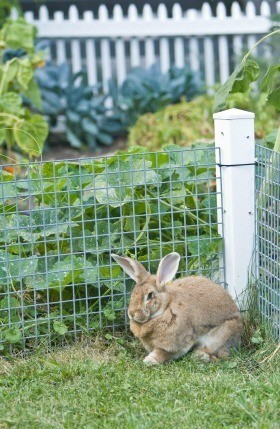
One of the best ways to keep midsized animals out of your vegetable garden (groundhogs, raccoons, skunks, and rabbits) is with 3-foot high chicken wire. Start by digging a trench 10- to 12 inches deep and lining it with wire mesh before setting in the posts. By burying the fence into the ground you will keep burrowing species from digging under the fence.
Another trick is to avoid stringing the fencing too tightly. Most animals are less likely to scale a floppy, unstable fence than a tight one. Sturdy 2 foot-high mesh may also work for animals like skunks and rabbits, but it's not tall enough to prevent animals from climbing over or burrowing under.
Chicken wire isn't suitable for keeping deer out of your garden, unless you nearly triple its height and erect a fence that is 8 to 12 feet tall'an expensive prospect that is both difficult to erect as well as to maintain.
Erecting a physical barrier to keep deer out of the vegetable garden often requires special tactics 'usually involving multiple fences, or fences that are very tall.
Double Fences: One relatively simple (and relatively inexpensive) method to try is to erect two 3 to 4 foot-high fences spaced three feet apart from one another. Deer have an aversion to jumping over a low fence when another fence is visible just on the other side. Any type of three foot tall fencing will work for this, but if you're using single strands of wire, each fence should be made up of at least 3 strings. The fence needs to be easily visible in order for this to work, so you may want to tie white rags along the length of the fence line to make it more defined.
Height: The most effective way to deter deer from your vegetable garden is to build a fence that is too high for them to jump over'for deer, a minimum height of 8 feet. Standard woven wire farm fencing comes 4 feet tall, so it can be stacked to create an 8-foot-high fence. This method isn't inexpensive and it takes a lot of time, but if you plan to invest a lot of time and effort into vegetable gardening, it will be worth it.
Electric fences are usually a last resort for vegetable gardeners, and often an effective one. A single string of wire (or multiple strings) can be used as a stand-alone barrier, or in combination with other types of fencing. A properly designed electric fence runs at a very low-voltage. When the current is turned on, the fencing gives a small shock that makes animals back off on contact. Birds can safely sit on the wire, because they are not in contact with the ground. The small shock will surprise any animal or human that touches it, but it will not seriously injure them. Once touched, however, the barrier becomes just as much psychological as it is physical. Because electric fencing is difficult to see and not all that strong, it's a good idea to tie white rags along the perimeter of the fence so that animals (and people) notice its presence rather than accidentally walking right through it.
Plants and debris that collect against the wire can drain the fence's power, so you will need to keep the area around it clean. You should also check the fence's charge periodically with a voltage tester to make sure it's working correctly. If you have young children or free-roaming pets, you may want to consider another type of fencing altogether.
About The Author: Ellen Brown is an environmental writer and photographer and the owner of Sustainable Media, an environmental media company that specializes in helping businesses and organizations promote eco-friendly products and services.
Add your voice! Click below to comment. ThriftyFun is powered by your wisdom!