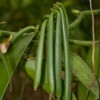
One of our members mentioned that she now considers her patio garden a Victory Garden. Victory gardens, also called war gardens or food gardens for defense, were vegetable, fruit, and herb gardens planted at private residences in the United States, Canada, and United Kingdom during World War I and World War II to reduce the pressure on the public food supply brought on by the war effort. In addition to indirectly aiding the war effort these gardens were also considered a civil "morale booster" - in that gardeners could feel empowered by their contribution of labor and rewarded by the produce grown. (Source: wikipedia)
What would you plant in your Victory Garden? Here are some ideas from the ThriftyFun community for edible landscaping and things you can grow in a small space that provide food you would normally have to buy? Start planning your spring garden today and post your own ideas below.
One year I planted lettuce around my flowers. You can not only pick and eat it but makes a real nice pretty border. You could also, which I plan on doing, is planting carrots in my terracotta pots. I know some have planted potatoes in tires, which could be painted to match your decor. I have not tried this yet. Mind you, we live upstairs in an apartment so there are ways to do this. You might be grateful, later, that you did. Beans can also be grown on poles staked in pots.
By JSRS443
My husband and I always can tomatoes every year. This year we have 110 jars and will do salsa this week. This isn't exactly a tip but it shows what can be done. I planted 2 packages of mixed flower seeds in my terrace garden and amongst the 'flowers' that came up were 8 huge carrots, 3 radishes, and several tomato plants! How they got in sealed flower packets, I don't know. But I do know the tomatoes lived and thrived amongst the flowers. They turned out to be Roma tomatoes, so we are going to make the salsa from free-bee plants! Try vegetables among your flowers. They add nice green color and edibles too.
I plant peas along the fence of my vegetable garden in spring and fall. Also you can plant the new container sized plants for peppers, squash, tomatoes, eggplant. Herbs, lettuce and spinach always go well in planter boxes. And you can mix edible flowers like nasturtiums and herbs, with edible crops. Tomatoes and herbs can be frozen (whole or sliced) for later processing just by rinsing and sticking in freezer bags.
By Britathrt
Here are a few of the varieties that work well in limited space (even containers).
Also keeping whatever you can growing into the fall and winter is good by protecting the plants so they produce longer. There is a good article online about stretching your gardening season (link below.)
I was fortunate enough to live in an apartment that was situated on about 5 acres of land. Every spring, they allowed us to have garden plots. We paid a fee to rent the space, but they supplied all of the tools and water. I planted everything from tomatoes to lettuce, broccoli, peppers, peas, herbs, flowers and more.
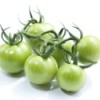
Victory gardens were designed to be a source of food for people during WWII. My husband and I now live in an apartment in Texas where we don't have the kind of space that I had in Iowa. We have a patio now. Another variety of tomatoes that works well in containers in Window Box Romas. Tiny Tom is another variety of cherry type tomatoes. Tomatoes like nitrogen rich fertilizers. The Indians used to fertilize their tomatoes with fish heads. Now it is possible to buy fish emulsion in garden supply stores.
Many herbs grow well in containers. Tomatoes do particularly well when planted with basil, nasturtiums and marigolds. Leaf lettuces probably do better in containers.
As for corn, I seriously doubt that corn would work in a container mainly because in order for it to work, you have to plant five parallel rows so that they can cross pollinate one another. That is, if you are wanting to grow sweet corn; seed corn (used for animal feed) shouldn't cross pollinate, and in order to prevent that from happening, the crop has to be detassled. Corn requires copious amounts of space, as do cucumbers, zucchini, pumpkins, melons and squash. They tend to spread and need space in which to spread.
Strawberries have been known to grow in containers, but they usually don't bear fruit until the second year.
Anyone today can plant a small garden in which they will receive so much more for their efforts, than just the veggies. They actually reconnect with the Earth with these gardens. To plant a seed, to nurture it and watch it grow. Even if you never get one tomato from your plant, you will see how much our Earth does for us each day.
My Garden? A few tomato and bell pepper plants along with about 6 large sunflowers, for the birds. I wish you all a learning time with our Earth. Plant on!
If it were just a small space that also had to look somewhat attractive, I'd probably focus on herbs and other things that are pricey in the supermarket and can also be preserved: basil, cilantro, lettuce and other fancy greens, hot peppers, maybe a tub of tomatoes for drying; and flowers for cutting, which feed the soul.
By Kathryn
I would plant foods that I could save the extras for the winter months and also would plant herbs wherever I could not plant other items.
I planted in a triangle of dirt the school gave me and in the middle of it was a small tree. I had one of my grand dads make me a teepee trellis over the tree. We planted 3 tomato plants, which have green tomatoes on it, 3 peppers, nasturtiums around under the tree. Also, radishes, green beans, zinnias, red morning glories growing up one teepee, sweet peas growing up the other two. If you plan, you can do a lot with so very little
Add your voice! Click below to comment. ThriftyFun is powered by your wisdom!
I guess I would plant food in every available space. What we couldn't use, our elderly or disabled friends would. If there was just a flower bed, the flowers would mostly have to go. There is nothing prettier than a border of parsley (did you know it makes good tea?) surrounding taller greens, tomato and pepper plants, or even potato plants. If I had room for only one tree, it would be an apple. I would choose a long-storing variety, so we could have fresh fruit in the winter. I would also make juice, pies and apple sauce. For the space it provides, one fruit tree gives bushels of food after just a few years. If I only had a pot in a sunny window, I would put whatever works for the climate. Here in Idaho, we've done well with green onions, chard and lettuce, although we have to be careful not to bring in a single aphic. I read about a man in Texas who had a huge hot pepper plant. He was giving away tons to his neighbors, and it was all from one pot! Using your noggin, you can really produce a lot of food in a little space.
I'm focusing on the very best tomatoes this year simply because of what George Washington Carver has said about how nutritious they are:
plantanswers.tamu.edu/
Also I ran across a man who's dad in Poland grew tomatoes and raised their family very well just from doing this in two small green houses. His ideas are just amazing and he swears he has THE answer on
how to grow them best. I have some great ideas on just how to expand on his ideas and perhaps improve on past experience?
I just hauled over 300 used bricks from a man who was ripped off by some fly-by-night bricklayer, and who was tossing them and starting over. I am nearly dead from the labor in trying to make a brick path
in my wild herb garden. It still needs a LOT of work, but the bricks were free. I might have to redo them since he says a huge pile of sand is free for the taking too, and he lives only two blocks from my house, so I might get some help and haul 10-12 buckets of sand back to put under my brick path.
My goal is also to raise Swiss Chard again, which is yummy, Malibar Spinach, Romain lettuce, Cilantro and Parsley for my house-bunny and Mexican dishes, Crooked neck and Zuccini Squash, Small cucumber,
short carrots, Basil, more Hyacinth Beans (I ate every last one and never got even slightly ill !), and I'm trying my hand at Sugar Baby small watermelon and Cantaloupe out of a bale of hay I found. All of my herbs are still doing great, and I hope to have more Okra (Southern favorite), and three colors of Peppers, if I'm lucky.
This is what I would have in a Victory Garden. I gave up beauty for practicality LONG ago, although I was rewarded, after spreading coffee grounds beneath my poodled 20 year old Boxwood, with the most unusual blooms/delightful fragrance I've ever smelled. They LOVE coffee grounds!!
I plan to plant veggies all through the beds and in the French planting style: closer together than recommended, and among flowers I have, French two color Marigolds, many varieties of dwarf Iris, and the blooming herbs of Society Garlic, Lemon Balm, and Comfrey.
I keep nuturing my apple tree but without LOTS of apples, wondering what I could do to increase the crop since the variety is so wonderful, just sparse? It's a dwarf tree and very healthy, but seems to drop blooms too easily. Anyone have ideas?
Remember that ordinary CLOVER is edible, should we NEED a Victory Garden. It tastes like lemons. Wild Wood Violets, Pansies, Roses and Nasturtiums are edible but require getting used to.
Good luck and God bless the USA here and abroad.
: )
Add your voice! Click below to comment. ThriftyFun is powered by your wisdom!