Here are the questions asked by community members. Read on to see the answers provided by the ThriftyFun community.
Hardiness Zone: 5a
Mike from Mercier Quebec, Canada
Don't give up yet. With a little detective work, you can figure this out. There are many possible answers to your question, so it's up to you to try to decide which of the following factors apply best to your situation:
Here are a few resources to help you determine exactly what the problem is.
Good luck!
Ellen
It's just nature's way of thinning the fruit out. All fruit trees do it. It enables the tree to put most of it's energy into the maturity of the remaining fruit, so they'll be bigger and better. Just make sure the tree gets plenty of water so it's not stressed.
Sounds to me like they aren't being pollinated and dropping off. Just like zuchs and summer squash do! Don't give up JUST YET!
Good heavens, you have a tree already bearing fruit and you want to cut it? Hard times are coming friend, figure out the problem and think of the tree as your health friend...
Thanks for all the good advise but I decided to cut down this trouble some tree this fall. It gave too much shade in the the place and it nearly poked my eye out when I tried to trim it. So this was it for me. Cutting it down I realised this plum tree was a hardest wood I ever cut in my life. (Maybe it was too wet?!) I used a gasoline chainsaw. Again thank you all.
I have a plum tree that I got from a friend. He now has bugs in his tree and does not know what to spray it with. He got it from a lady friend who called the plant a Texas Plum. Would you please tell me what to use before they get into my tree.
By John
In our county there is a guy in the city hall building that can advise you regarding all plants, bugs, pesticides, etc. I just can't think of what his office title is other than it starts with a C... I think. :(
Well there is a resource probably in your city or county government that knows what you need to know. He may have you bring a leaf to him to verify it really is a plum tree. OUR he may ask you to get one of the bugs from your friends tree so he can see it and advise you properly.
Okay, I was wrong and my dad just told me he is the Agricultural Agent for the county. Look yours up and talk to him. Ours is a pleasant chap who could talk your ear off. Good luck.
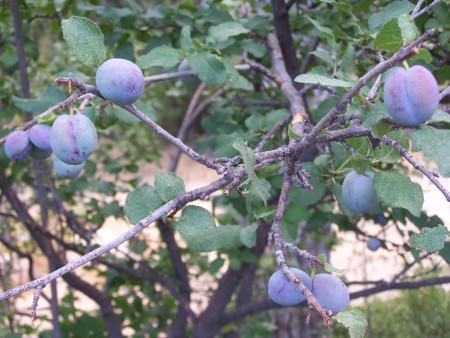
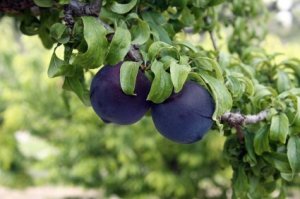
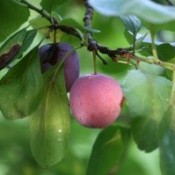
Check out these photos.
We took a little day trip to explore parts of Arizona we hadn't been to before. Near Yarnell, Arizona (an old mining town), I saw these plums growing on the side of the road. Imagine that! Plums near the Arizona desert!