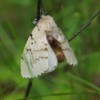
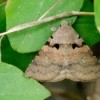
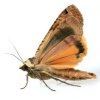
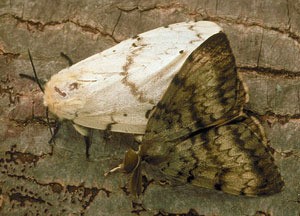
Gypsy Moths are usually only seen around mid-summer. The male moths are a grayish brown color and can fly. The female moths cannot fly, are larger in size and have a whitish color with black markings. Females lay egg masses on tree trunks, outdoor furniture and the sides of buildings, which appear as tan or buff-colored hairs. The larvae hatch in the spring. Gypsy Moth caterpillars are 2-inches long with tufts of brown and yellow hair extending from their sides.
Gypsy Moths feed on hundreds of species of trees, but prefer oaks and aspen.
Large outbreaks of gypsy moths can definitely defoliate and kill trees. Caterpillars generally feed at night and will migrate down trees during the day, sometimes abandoning one tree and eating their way through a path of plants on their way to another.
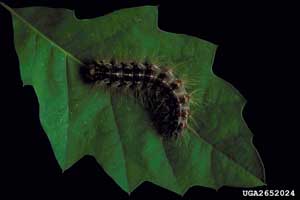 Gyspy Moth Larvae USDA APHIS PPQ Archives, USDA APHIS PPQ, |
Add your voice! Click below to comment. ThriftyFun is powered by your wisdom!