By Michelle
By Anna
By Mark Calvin
By pam munro
By Margie
Use discarded items you find as unique planters... tires, rims, boots, wicker chairs, hard hats or buckets.
Recycle your yard waste and veggie scraps to create your compost pile. Add coffee grinds, egg shells, veggie scraps, leaves, and yard waste into a pile and stir every week. It is great exercise and in one year you will have saved money for not paying a gym for a good work out and for not having to purchase fertilizer/top soil for your new plants.
Also when you buy fresh foods at the farmers market save your seeds. Dry them on wax paper then store them in an envelope an freeze till next year and plant. Some will grow and not produce fruit but have pretty blooms others will prosper and give lots of produce, so either way it is free plants and possibly free food! Hey, who doesn't like that idea! I have five kids, what do you expect!?
Visit your rural mill or seed store, not a Lowe's or a nursery but a dirt on the floor, bags of horse feed stacked to the ceiling, cat sleeping on the counter kind of mill. Place a wanted ad on their board and you will be surprised at how many local farmers have plants or seeds they are willing to share or sell for a reasonable price. We got several mature raspberry plants for $4.00 total, normally a start costs $5.00 each at Lowe's.
The best thing we ever did to save money was to go to a home and garden show and take lots of pictures of all the expensive things we were wanting. Then we went home and with mostly scrap wood, fencing, iron, and whatnots, we were able to spend less than $75 and created an enchanted patio space instead of hiring the work out and spending $2000. Now that kind of saving is worth forfeiting a Saturday and working up a little sweat.
By Hoffmann House Network
This page contains the following solutions.
Landscaping can take a huge chunk out of a household's budget, but an untidy yard can really pull the entire look and value of a home down.
A big landscaping project can be a budget buster, but with a little creative planning it doesn't have to be. Here are some tips for creating a beautiful landscape without breaking the bank.
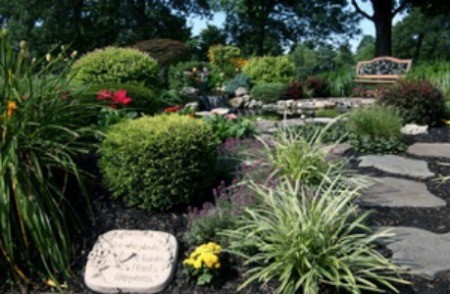
My family landscaped for many years and I want to give you some hints. Never plant a tree in front of your house as it makes the front yard look short.
Here are the questions asked by community members. Read on to see the answers provided by the ThriftyFun community.
Any ideas for low-cost, low-maintenance yard treatment for senior mobile home park residence? Wood chips are old and ugly. It must be affordable. We are two seniors, neither good at yard work. We are thinking pavers (for step-out at curb), artificial grass, river rock, and such, but have a pittance to spend, and because of physical limitations, will need to hire or borrow someone to get it done.
All ideas considered, including sources.Go around the neighborhood. Many people will share cuttings with you. Perennials will be your best bet, as they keep coming back.
I think you are on the right track with pavers and you also can get red bricks for cheap. Putting down pavers gives you a nice opportunity for a container garden on top of it. Find low maintenance plants for your containers and you can create a really nice natural space.
Planters and sometimes even plants can be found cheaply at garage sales.
Weed prevention is going to be important if you down rock. If you can't afford weed cloth, cardboard or newspaper can provide some protection.
Remove the chip, spray weeds with spot treatment only to existing bed with a lite herbicide to kill off unwanted weeds. Place garden weed cloth and cover the cloth with a nice mixture of #2 river rock. Now get some Large urns and fill them with potting soil and plants of choice. Preferably Perennials that come back year after year. In three weeks, lightly fertilize these plants as their roots should have taken to the new environment by then. Place the urns on the river rock beds as desired. This will provide you with an aesthetic look you can enjoy while maintaining a low maintenance garden for your enjoyment. When weeds start to appear in rock bed, spray the greenery with another dose of herbicide and in about 14 days, remove the dead foliage.
Old jeans work under rocks in small areas
Does anyone know where I can pick up free pavers or stone?