I have a partially shaded hill that leads down to the river. The soil is poor but grows weeds quite well. Does anyone have a suggestion on a maintenance free ground cover?
Hardiness Zone: 4b
D.M.
Hi D.M.,
Although I'm still a firm believer that grass is as good of a low maintenance ground cover as any (no weeding, just mowing), here are three good suggestions for ground covers. These will all work on shady slopes, but some amending of the soil will be necessary, or you can expect the weeds to take over once again.
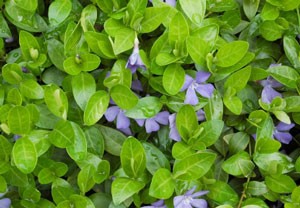
Periwinkle (Vinca minor): This is a beautiful ground cover with dark green foliage and blue, lavender, or white flowers. Periwinkle is supposed to grow where nothing else will. It is said to be tolerant of nutrient poor soil and dry conditions. I'm not sure who is responsible for making those claims, but if you hope to see any significant growth at all (and it's rather slow growing in the first place) your Periwinkle is going to need plenty of water. At least that has been my experience.
Lungwort (Pulmonaria): This is your best bet in terms of showy foliage. Depending on the species, Lungwort displays flowers in red, purple, white, or blue. The green foliage usually features silvery speckles, splotches, or white variegations. This ground cover grows from 8 to 12 inches tall and will fill in quickly (in just a few seasons) depending on how thickly you space the plants.
Woodland phlox (P. divaricata): I really love these. Variations of this species may even grow wild in your neighborhood. Woodland phlox colonize into thick masses of color. They have deep green foliage with lavender, blue or white flowers in spring. They blend very well with other woodland plants and grow from 12 to 15 inches tall.
Just my two cents, but you might also consider just letting the slope go native. With time and patience, native plants will eventually establish themselves in the area, or with the help of a local native plant nursery, you can help nature along a little faster. The taller plants and grasses will also do wonders to filter any run-off leading down to the river. Everyone wins-you, local wildlife, and water quality.
Good luck!
Ellen
About The Author: Ellen Brown is an environmental writer and photographer and the owner of Sustainable Media, an environmental media company that specializes in helping businesses and organizations promote eco-friendly products and services. Contact her on the web at http://www.sustainable-media.com
Add your voice! Click below to answer. ThriftyFun is powered by your wisdom!
Periwinkle sounds just perfect for your needs.
Try vinca. It's beautiful and will cover a lot of space in a short time.
Are you planning to remove the weeds first? It takes a long time for ground cover to squeeze out the weeds, and even then you will always have some grasses growing out of it somewhere! I have a ground cover called snow on the mountain that is trying to take over the world; maybe that would work for you. I also like Bugle Weed (I think the real name is Ajuga Reptans), it is a low ground cover that comes in a dark, ruby, red leaf, or there are green varieties.
Wild strawberries
I have areas that just won't grow grass! I have been thinking about adding some hostas along the foundation on that troubled side of the house and adding groundcover. I really love the periwinkle! Where does one get it....a nursery or is it wild? Thanks!
How about mondo grass or low growing juniper.
Mondo grass (monkey grass) spreads easily or you can divide it and plant the divisions. It likes sun or shade and just about thrives in any conditions. We use it on hilly banks where it's too dangerous to take a mower.
How about working with the native plants? Your local master gardeners might know of some. Otherwise, just choose your favorite weeds and sow grasses that you leave long and lovely.
Ajuga is great and can be used in sun or shade, it spreads well, and in spring, it gives you lovely spikes of blue flowers about 6 inches tall. If you plant Daffodils among the Ajuga, the yellow and blue flowers look gorgeous together. I also like crown vetch, which gives you little pink flowers for months, and it spreads like mad.
Add your voice! Click below to answer. ThriftyFun is powered by your wisdom!