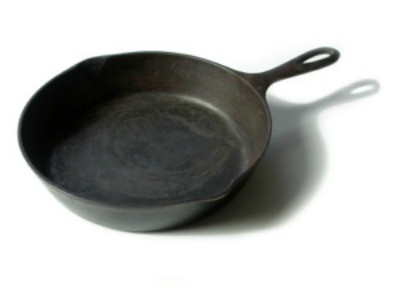
Easy, excellent nonstick way to clean and care for cast iron! For years I washed my cast iron skillet with water, thinking that was the only way to get off stuck-on egg. The shiny black surface (called 'seasoning') was constantly breaking down so that things would stick, and rust was always a danger. Then I stumbled on the easy, traditional way to clean it, and it keeps it so smooth and nonstick that getting stuck-on food off is no longer even an issue!
By the way, if you sniff your cast iron, and it smells metallic, the seasoning is in need of repair. If it is well seasoned, it will not smell that way, and will be shiny and black as coal. If the skillet is in seriously bad shape, you can put it through a self-cleaning cycle in the oven to burn it down to bare metal and start seasoning over from scratch, or you can just start treating it as I describe, and the seasoning will repair and become maintained over time.
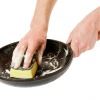
Here's what you do: after cooking, you remove whatever food scraps or liquid may remain, put about half a teaspoon (more for a big job) of regular table salt in, and scour it with an old rag. I cut up ratty holey socks and other ruined cloth and keep handy for things like this.
When the surface is clean and smooth, tip the dirty salt into the trash or sink, and then rub with a clean soft bit of cloth with a dab of shortening or grease until the surface is again shiny and black. Again, I keep a small square of clean soft cotton cloth in my shortening can, for this purpose, and reuse it. So long as the skillet was scoured clean with the salt, the shortening cloth stays clean enough to use many times before washing or replacing.
Hang skillet on the wall until next use (or store in the oven). By not washing or rinsing my skillet in water, and never using soap (or especially detergents) on it, the natural nonstick surface stays healthy and food never sticks.
The other trick is, you have to know what level of heat is best, and heat the skillet thoroughly before adding food. Eggs require a much gentler heat than things like bacon or other meats. Cooking eggs on high will glue them to the pan (and result in tough eggs).
So, watch the heat level for the type of food, heat the skillet 5 to 10 minutes before adding food, and keep the natural "seasoning" healthy by scouring with salt and oiling after each use, and cooking with cast iron will be a pleasure!
By cruncymamamaine from Maine
Add your voice! Click below to comment. ThriftyFun is powered by your wisdom!
All that and they add iron to your food too! I've been a cast iron pan-fan for years. Occasionally I'll use water to clean one, when I do I always dry it off on a low temp burner on the stove then rub a little oil or Crisco on it to prevent rust then stack them in the cupboard with a paper towel between each one. Just a tiny bit of care & they can't be beat!
I cannot cook without my iron pan. Sometimes it gets crusty on the outside. My children like small fires or roasting oysters in the back yard.
Thanks, great hints. I use my pan often and sometimes I find the pan is not seasoned completely. Thanks for the detailed instructions.
Thanks for the tips! I wouldn't recommend cleaning in a self-cleaning oven like I did. I had a twenty-five year old cast iron skillet that was a favorite. We bought it the week after we got married. The inside was perfect after all those years, but after the outside begins to get all crusty, I put in my self cleaning oven.
I tried the salt routine then rubbed down inside AND outside with canola oil. Then I put it in the oven at a low temperature for a couple hours. Food still stuck. Maybe it's the temp when I put the food in. My Mother all her life used cast iron and nothing ever stuck. She was cooking with a gas stove; mine is electric. I've wondered if that made a difference. I'd like to hear someone's comment on cooking foods containing tomatoes. I've heard that can cause problems.
Cooking with cast iron DOES add iron to our food. I use some cast iron ware that has been handed down for as long as four generations.
Hmmm. Well if you know campers or hunters they will put it on a fire for you. If I have to use any kind of soap, I use Dawn and dry with a papertowel. I always use a papertowel and rub oil on a low burn on top of the stove. Then when its a little smokey, I take it and rub it with oil again before I put it away in a cabinet. This is what seasoning is here in Louisiana. I never put any pots or anything on top of it when I store it.
I also never put my pots in the oven. I will put rolls or bread on it and put it on top of my gas grill and leave it open. I have never had any rust. If you don't have central ac, I would suggest when you store it for awhile that you put a unused sheet of bounce over it. This keeps any pest away.
I do like happy.now from Louisiana - I wash my 100 year old cast iron skillet in Dawn detergent, then dry it with paper towels. I then heat it up just a little & then smear the inside with a very thin coat of bacon grease, & set back on the low fire for about 30 minutes. After that I wait for it to cool down & wipe out any excess grease, & I store it in the cabinet upside down.
To the lady who is having trouble with her pan not seasoning correctly & you use canola oil & an electric stove - use bacon grease or lard instead. I have used both canola & veggie oil on my 2 skillets & used the skillets on both gas & electric stoves & found years ago that the canola & veggie oils do not season the pan well enough to keep foods from sticking in them... use bacon grease.
Instead of salt scouring, I use an old credit card to scrape any residue off the pan before oiling.
I love cast iron. Cooking bacon in it helps to keep it seasoned. However if you do wash you skillet season it with Crisco. Then heat it. In time the crisco seals any small pores in the iron and your skillet will stay nice for years and years.
I agree with seasoning with lard and all the other hints. I learned my lesson the hard way. My skillet is well over 100 years old. It was my dad's pride and joy. The only 2 things that the US Army was never allowed to ship was dad's skillet and mom's sewing machine. For Father's Day one year I decided to "clean" the skillet to get it shiny as a surprise. SOS, Comet and elbow grease earned me a lecture on how to season an iron skillet as well as practice in doing it. It took several years before the skillet was even close to what it had been (I erased a good 70 years of seasoning). I've bought several iron skillets at old timers fairs and reasoned them. They got tossed into a campfire and then seasoned. It does take a while to get a beautiful patina but definitely worth it.
I use an electric stove.
I only use cast iron pans. They work for everything. I have no problems with any thing sticking.
You can clean them with oven cleaner in and out then re season the inside, wipe the outside. Also you can use cooking spray.
Add your voice! Click below to comment. ThriftyFun is powered by your wisdom!