Here are the questions asked by community members. Read on to see the answers provided by the ThriftyFun community.
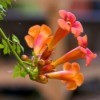
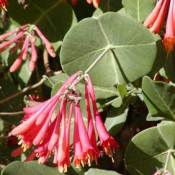
We have a very healthy honeysuckle that has an orange like color and lots of blooms, but no scent.
By Tom C
Some of the orange flowered varieties of honeysuckle are scentless. You must have one of those. They are very attractive to hummingbirds, however.
A thriving variegated honeysuckle vine suddenly became covered in ants. Within a couple of days the vine and flowers wilted and appeared about to die, as if poisoned. The root and about the first three feet of the vine appear untouched by the changes. Is this caused by aphids? Can the vine be saved, at least the part that still appears healthy? Recommendations? Sorry no photo.
By Donna Y.
Hello!
If the plant is covered with aphids treat it quickly with a pesticide. Ants can also signal a scale invasion. Take a look at the bark of the honeysuckle. What you believe to be a crusty bark can be hundreds of scales infesting your plant. Take a toothpick and try to push or rub off these "marks" if they drops off the wood easily it is a scale invasion. Use oily pesticide against the scales.
You should try to find out what type is your honeysucle as it needs to be pruned at the right time according to its type either after the flowering period in summer or before spring. But it can't be pruned in spring. Pruning now would make the plant produce new shoots from its base and if it is an aphid infection it would only provide new fresh food for the aphids. Honeysuckle vines are very resistant and it should be able to resist aphids or scale invasion so you should check its conditions (enough shade, enough water but well drained ect).
Hope this help !
Catherine
My honeysuckle produces well developed branches and green leaves, but no flowers?
By David P from Wolverton, Milton Keynes, UK
Last September I planted honeysuckle (dry looking) stems that I purchased from an internet gardening company. When should these make an appearance, and what will they look like so that I don't inadvertently recognize them as weeds? Thank you.
By Karolyn Oman
Honeysuckle plants are available in a variety of colors and configurations, from the traditional vine to plants that have been trained as small trees AKA grown as standards. These plants like sun, generally tolerate most soil types and may need a bit of fertilizer such as green tea if they seem a bit puny or sickly.
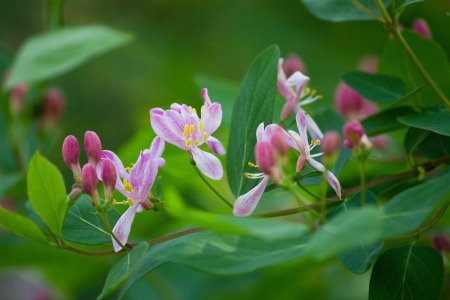
Honeysuckle can be either an arching shrub or a twining vine. This fragrant garden plant with its tubular flowers in shades of creamy white through yellow and reddish orange, has some medicinal properties and is also used in fragrances and lotions. This page contains honeysuckle photos.
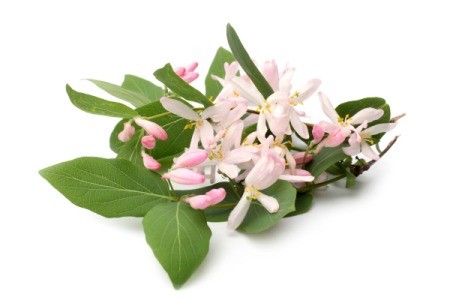
Several vining plants, such as honeysuckle and wisteria, are often trained to grow more like a small tree. This is a page about growing honeysuckle as tree.

Early fall side shoots on a honeysuckle bush are the result of an infestation by wooly aphids. This is a page about honeysuckle bush shoots.

ThriftyFun is one of the longest running frugal living communities on the Internet. These are archives of older discussions.
This is the second cape honeysuckle on the back wall. The birds love it's protection. And it is close to the water fall, where they drink and bathe.