This page contains the following solutions.
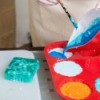
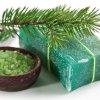
It's easy to make soap bars with soap crafter's melt and pour glycerin soap base that you can purchase at almost any craft store. You can use items like clean dry yogurt cups, juice boxes, cream cheese containers, etc. as the molds. Add your favorite essential oil, strength as desired, for scent too. One pound of glycerin base will yield about 5 bars of soap if you are pouring 3 ounces of melted glycerin base into each mold.
Of course, you'll want to place one of them out right away to use so don't bother wrapping that one ;-)
Source: Trial and error and a combination of recipes.
Editor's Note: A previous version of this post stated that these are "no lye soap bars." This is inaccurate because the initial soap base (and all soaps) were made initially with lye. The chemical reaction of sodium hydroxide (lye) and fat (saponification) creates the soap base and byproducts like glycerin. All the lye is converted into something else and is no longer dangerous to work with.
I make laundry soap for myself and both daughters-in-law. We all really like it and it is so easy. One batch makes 2 gallons of soap and this is how I do it.
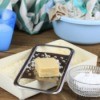
I grate 1/3 bar of Fels Naptha soap into some amount (like a gallon) of water on the stove with my cheese grater. You could probably use any bar soap, but I like Fels Naptha.
When the bar soap is all melted I add 1/2 cup of washing soda and 1/2 cup of borax. Stir that until it is dissolved. Pour in a 2 gallon bucket and add hot water from stove top until the bucket is filled. You will need some stirring room though. After you stir it, let it sit for 24 hours.
It will have a look of "chicken fat" on top. Stir that up really well and pour into jugs. Shake well each time and use 1/2 cup per load. I also use vinegar as my fabric softener, too. There is no static and the clothes are soft with a clean smell. Your soap will look like "egg drop soup" with the eggs whites in it. That is normal just shake bottle before use. I hope you like this, we sure do and it costs almost nothing to make.
Source: I Googled on the internet "homemade laundry soap" and I found this one.
By Rita from Bethany, MO
To find great soap recipes, simply go to the library and get some amazing books on the subject. You can also search Google using "melt and pour soap recipes" and find more recipes than you might ever need.
I have made some and they are amazing to keep and to give. This time I used the best book I have ever gotten. It's called "300 Handcrafted Soaps" by Marie Browning. The recipes are easy and fun.
By Sandi/Poor But Proud from Salem, OR
Here are the questions asked by community members. Read on to see the answers provided by the ThriftyFun community.
Does anyone know how to make cream soap without lye? Especially whipped soap that I have seen on freshwhipped.com.
Lye is not difficult to work with if you use your common sense and take precautions. Lye combines with oil to make a salt called soap. But I can understand that making soap using lye is not everyone's cup of tea. If you don't want to buy cream soap there is a way to make it without making it from scratch. I do not guarantee the quailty of it but here it is if you still want it.
1 1/2 shredded soap (please use soap and not detergent/beauty bars. look at the ingredients, it should say sodium palmite, sodium ...)
5 oz distilled water
1 tbsp glycerin
1 tbsp olive oil
I use one of those small crockpots, melt all ingredients in crock pot on low until all is liquid and melted. add a EO if you want to have fragrance. Beat until creamy and airy. Enjoy. HTH
Editor's Note: The shredded soap bars were previously made with lye but it has been converted.
There are "melt and pour" soaps at JoAnn Fabrics, Michael's, etc., you just portion it out, melt it in the microwave, add color and Essential Oils, pour in your molds and let it cool (you can speed it up in the freezer).
I enjoy the "old time" method of making soap with Lye and fats, it's like a science project and there are wonderful books out there that gives you all the portions, to make beautiful soap. Red Devil has been taken off the shelves, but you can find pure lye at Lowes. Make sure there is nothing else in the bottle but lye. If you are careful, there is nothing to fear with lye, I have yet to get burned. And, if you would happen to get some on you, use vinegar to neutralize it, just pour it over the skin that's been affected.
Any of you people saying soap can be made without lye are flat out wrong. Yes, there are natural plants and such out there that contain saponin, a soap-like substance, but they are NOT soap. Here is the definition from dictionary.com-
Soap (noun):
a substance used for washing and cleansing purposes, usually made by treating a fat with an alkali, as sodium or potassium hydroxide, and consisting chiefly of the sodium or potassium salts of the acids contained in the fat.
If you are scared to use lye for whatever reason, as other people have already stated, you can buy melt and pour soap from any craft store. Any of the good brands are made with (surprise) lye. The not so good products are made from synthetic detergents, and are classified as "syndet" bars. They are not soap, and they are not good for your skin at all.
Again, going back to natural saponin products, you can find things like soapnuts (soapberry tree) to do your laundry with, etc.
When you make lye-based soap, the final product does not actually contain lye. It's used to force a chemical reaction with the oils to trigger saponification- which is what makes soap. Another reference is wikipedia (look for soap) and it will detail the chemistry behind the process itself.
Solutions of baking soda and oils do not a soap product make. Sodium Bicarbonate (aka Baking Soda) does have cleansing properties of a sort (that's why it is contained is several toothpastes). It can also be used with sugar as a pesticide or to clean tarnish off of silver.
Anyway, my final thoughts would be to further research saponin plants on your own if you're looking for a non-lye soap-type product.
I am looking for hand soap recipes that do not require lye.
By EL from Phoenix, AZ
Hi! I have been making soap for many years now. Unfortunately you can not make handmade soap without lye. What you can do, is purchase what is called Melt & Pour soap which is usually a block of clear or white glycerin based soap that you melt in your microwave, add fragrance and color to it, then pour into moulds. If you want to make it from scratch, you will need the lye. Sorry! Good luck and hope you will get to making some :)
How about oatmeal soap?
www.life123.com/
There's a How-To after the main article on the page.
I found a website with tons of great information. Hope it helps you! www.teachsoap.com/
You can go to about.com and get recipes. Also sign up for their newsletters. You can chose the ones you want to receive. They send out lots of info on soaps. The ones you want are the melt and pour soaps. They don't require lye. You can find products needed online or at your fave crafts store. The oils can be found at health stores such as Nature's Outlet or GNC.
I was reading information about making soap products someone had posted on ThriftyFun. Is it possible to make nice soap i.e., glycerin without using lye? As I have never tried to make soap, I wondered if it there was a way to do this. Many thanks. Helen xx
By helen from U.K
Making Soap without using Lye.
One of the questions commonly asked during soap making discussion is "can I make soap without having to use lye". The answer is a simple YES and NO. NO your can't make soap from oils and fats without lye but YES you can make soap quite easily using melt and pour glycerine soap or soap noodles.
Lye is absolutely necessary to convert oils and fats to soap. During this process many companies extract the glycerine and resell it to crafters wanting to make what is called Melt and Pour soaps. Other companies take soap made with lye and shave it into noodles so that it can be melted or rebatched into soap bars by crafters. In other words crafters and hobbyists who want to safely make soap can simply skip the step where lye is used and still enjoy the soapmaking process. Another advantage to melt and pour soapmaking is that you get a more consistant product. There is less risk of creating a bad batch of soap. Purists would call this cheating but if you want to have fun making soap and do not want to deal with the dangers then it is just a smart choice.
Here are some basic instructions on making soap using either glycerine melt and pour soap base or soap noodles.
Step 1: Place the amount of soap base that you wish to process into a double boiler. A crock pot on low will also work. Melt the base covered over a low heat so that moisture does not escape and so that the soap base does not get too hot. Gently stir the glycerine soap base or soap noodles but try not to whip air into the mix. In other words stir as little as possible.
Step 2: Gently stir in your additives including colorant, herbs, fragrances, vitamins, cocoa butter, aloe vera, etc.. It is best to purchase these items from companies who make them for soap. Especially the colorants and fragrances. Add these items one at a time starting with colors, then moisturizers or vitamins and then finally fragrances. Stir gently.
TIP - when using solid additives like cocoa butter you will want to melt those separately and then pour them into your soap.
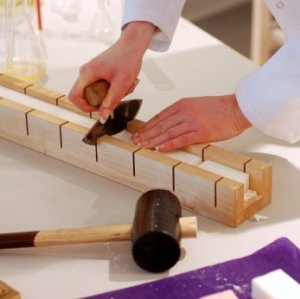
Step 3: Pour your mixture into molds. You can use just anything you wish as a mold as long as you can get the soap back out.
Step 4: After your soap has hardened unmold it. Your freshly made soap can be used immediately. good luck.
Making a lot of soap each week is a rewarding hobby that turned into a business for me. So yes, I make a lot of soap. The soap that I make requires lye in every batch.
I could make soap using melt and pour soap bases and not have to handle the lye. Why don't I do the melt and pour bases? Read the ingredients in those bases. There are very few melt and pour bases that do not contain some pretty nasty chemicals and additives.
Making my own goat milk soaps with a good recipe can make some great all natural soaps. In my natural soaps I include olive oil for moisturizing properties, coconut oil for the cleansing and nutrients, castor oil for great fluffy lather, shea butter for the moisturizing properties and nutrients, Tussah silk for that great feel in the bar of soap, Kaolin clay to help refine the skin and help to detoxify the skin, some bars have honey in them to feed the collagen in the skin, some bars have essential oils in them for the great benefits they bring to the soap, colorants and micas to make the soaps pretty so that people will visually enjoy the soaps.
Read the ingredients on the melt and pour bases available. Are they nice and pure? Remember, those melt and pour soaps also started with lye. The lye is now saponified into soap but it was there, just like in my hand crafted bars. Do you really want to put just any chemical on the largest organ (skin) of your body?
If you don't think that soap matters, try stepping on a clove of garlic with your bare heel. Notice how fast you taste garlic in your mouth? Way too fast to mess with any chemicals in your soaps.
ThriftyFun is one of the longest running frugal living communities on the Internet. These are archives of older discussions.
I would like to try making my own soap, but am a little concerned of any fumes given off when using lye since I have asthma. Is it necessary to use lye in soapmaking? Are there recipes out there for making soap without lye?
Terry Lynn from Toronto, Ontario
To make real soap you must use lye. But you can purchase the bars of melt and pour soap. You just melt it and add any additional ingredients and pour it into molds. The melt and pour comes in a variety of types including clear glycerin. Just do a google search for melt and pour for both the products and recipes. Good luck (10/27/2005)
By Klr2080
I haven't tried this one yet, but it is in my science book. I'm going to try it this week.
Prepare a soluction of baking soda by dissolving 5 grams in 10 milliters of water
Mix the baking soda solution with 20 grams of lard in bowl/pan.
Boil gently for 20 minutes. Stir constantly while mixture is boiling.
Let the mixture cool. Transfer to plastic bowl. Place in an ice water bath for 5-10 minutes. Stir. Make a saturated salt solution by dissolving 20 grams in 25 milliters of water. Add to the mixture. Stir.
Remove soap curdles by pouring through cheesecloth. Drain any liquid. Put soap into a dish to dry and harden.
(05/15/2006)
By cross_fire
I have been having a hard time finding a recipe for soap without lye, is it possible? f you have a recipe for soap without lye it would be MUCH appreciated!
Thank you!
Jenna from Spring, Texas
For soap, I believe you must have lye, unless you are making a glycerin type bar or the suggestions above. Cadia (08/22/2006)
By Laurie
My husband and I just bought the glycerin bars at Hobby Lobby to make our own soap. You can melt it in the microwave, add the soap colors and scents of your choice and pour in the molds. It was wonderful and quick to work with. The molds last forever and were under $2.50 ea. The dye and scents were inexpensive and last a long time. And a large bag of the glycerin soap was $9.99 for a 5lb bag and we have already made 12 bars and plenty of glycerin still left. A lot of fun and very easy. (08/23/2006)
By Susie Zoerner, Bay Minette, AL
You must have lye to make soap. Even glycerin soap has a certain level of lye. If you make the cold process soap outside or in a well ventilated area, you shouldn't have a problem with the fumes. I'm asthmatic and have been making soap for 5 years with no problems (but thats just my case). (08/27/2006)
By otakop
I tried using a mixture very similar to the one cross-fire-books describes from his science book, using fat, baking soda and salt. But instead of the fat, I used olive oil.
I started with a one pound box of baking soda, dumped into a two quart pan on the stove, added enough olive oil to dilute it, so it could come up to a boil, and then added about a cup of sea salt.
No, it did not saponify. But the following morning, when everything had cooled, I kneaded in enough oat flour to make a smooth paste. The mixture is wonderful to bathe with, soothing, deodorizing [with all that baking soda] and cleansing. But no, it is not soap. It will not rinse out of my hair. I'm tempted to put together an olive oil and lye mixture for shampoo.
Does anyone here have any experience with it?
info at thebestword dot net (09/01/2006)
By Genevieve Fosa
To make real soap, you have to have lye. If you want detergent, buy bars at the store and grate, add your own oils, herbs, or whatever and pour into pretty molds to set.
Glycerin soap is derived from the soap from lye. I am not positive how they remove the glycerin from the soap, but once the glycerin is removed, it is not luxurious.
There are a lot of soap sites you can look at for ideas and find out all the necessities to create soaps that are beautiful and very hard or very easy.
Thesoapgoat.com
http://www.soapcrafters.com/
http://www.dianesnaturally.com.au/methods.html
http://www.craftsfaironline.com/Soap.html
You will find a lot of recipes, links to other sites and answers to all of your questions.
Enjoy,
Tina (01/04/2007)
By Tina Brown
I found a book by Janita Morris, The Soap Maker. I found it at the library and her recipes don't call for Lye. They are all her own creations and recipes. Very simple. I haven't had a chance to do try the recipes, but I'm very excited about not using lye. (09/08/2007)
By kate
To make real soap, you must use lye, however, once the process is complete, the lye is no longer left in the soap. The lye is only needed the produce a chemical reaction that actually turns the oils into soap. Lye soap is very good for you, glycerin melt & pour soap is a good soap to use as well, it is also derived from the lye method. I would avoid using any soap that uses salt as salt is very drying to the hair and skin. (09/21/2007)
By Crazee Crafter
There are several recipes. Here is one:
Ingredients: Soapwort, oatmeal and fragrance of choice (vanilla extract, lemon juice, orange peel, etc-whatever you want the soap to smell like)
Recipe: cook the soapwort in water to extract the saponins. Boiling is not desirable, as saponins can be destroyed by excessive heat. When they come out, they should float on the water and they should be sudsy, so you'll recognize it.
Harvest the saponins, by scooping the suds out with a dipper or large spoon and place the suds into a container by themselves. You should eventually be able to tell how much you need. Trial and error will show the way.
Next, mix your flavoring/scent into the saponin/suds container.
Then add your oatmeal. Add water if the mix is too dry immediately. You could also use cornstarch or flour for this instead of oatmeal.
Finally, take the entire mixture and place it into molds, the size and shape you want your soap to be. you can leave these in the sun to dry or bake them overnight at low heat or, just set them in a warm, dry place, where children and pests can't get to them.
When these items are dry, you have soap.
Some people on here have said that "real" soap requires lye, but the only definition of soap is that it is a substance used for cleaning. Saponins might form the scientific definition, but lye is not a saponin, so it has no real value in soap and being caustic, it is probably best avoided. (10/25/2007)
By Stewart Forrester