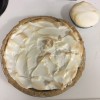
 My Mother had requests for her lemon pie constantly and now I share her secret!
Follow directions on pie filling. When you take the cooked filling off the heat add the butter and lemon juice, stir in and let cool. Pour into baked crust and top with meringue.
Directions for the meringue: Beat egg whites, vanilla and cream of tartar until soft peaks form in glass or metal bowl, add sugar two teaspoons at a time until all sugar is absorbed and stiff peaks stand up on a spoon. Spread on cooled pie filling making sure to seal all edges of the pie crust. Bake 12-15 minutes at 350 degrees F. Watch carefully burns easily.
By Ann Winberg from Loup City,NE
Check out these recipes.
Mix flour, salt and sugar in food processor fitted with steel blade. Scatter butter pieces over flour mixture, tossing to coat butter with a little of the flour.
Preheat oven to 350 degrees F. In medium bowl, beat egg yolks; stir in sweetened condensed milk, ReaLemon and rind. Pour into crust. Beat egg whites with cream of tartar until foamy.
This recipe is a favorite of my sister. Bring water to boiling point in saucepan. Thoroughly mix cornstarch, sugar, and salt. Add to boiling water, stirring constantly to prevent lumping.
Mix sugar, cornstarch and flour in top of double boiler. Add boiling water, stirring. Cook until slightly thick.
Beat egg whites, cream of tartar and salt together until stiff peaks form. Add sugar gradually and continue beating until very stiff.
Here are the questions asked by community members. Read on to see the answers provided by the ThriftyFun community.
When do you put the topping on a lemon meringue pie? While the lemon is hot or cold? Thank you.
By mel ferreira from Albany, CA

Original Recipe Yield 1 - 9 inch pie
Ingredients
1 cup white sugar 2 tablespoons all-purpose flour 3 tablespoons cornstarch 1/4 teaspoon salt 1 1/2 cups water 2 lemons, juiced and zested 2 tablespoons butter 4 egg yolks, beaten 1 (9 inch) pie crust, baked 4 egg whites 6 tablespoons white sugar
Directions
Preheat oven to 350 degrees F (175 degrees C).
To Make Lemon Filling: In a medium saucepan, whisk together 1 cup sugar, flour, cornstarch, and salt. Stir in water, lemon juice and lemon zest. Cook over medium-high heat, stirring frequently, until mixture comes to a boil. Stir in butter. Place egg yolks in a small bowl and gradually whisk in 1/2 cup of hot sugar mixture. Whisk egg yolk mixture back into remaining sugar mixture. Bring to a boil and continue to cook while stirring constantly until thick. Remove from heat. Pour filling into baked pastry shell.
To Make Meringue: In a large glass or metal bowl, whip egg whites until foamy. Add sugar gradually, and continue to whip until stiff peaks form. Spread meringue over pie, sealing the edges at the crust.
Make sure the meringue is spread so it touches the crust all the way around. The crust "grabs" it and stops it from shrinking.
Make mini, one serving, lemon meringue pies in a muffin pan. This is a page about mini lemon meringue pies.

ThriftyFun is one of the longest running frugal living communities on the Internet. These are archives of older discussions.
Grate peel from 1 lemon. Squeeze enough juice from lemons to equal 1/2 cup. In 1 qt. saucepan over medium low heat, heat sugar, margarine or butter, cornstarch, lemon peel and lemon juice until smooth and margarine or butter melts.
Can I get some easy lemon meringue pie recipes?
Mix sugar and flour. Add to boiling water slowly and boil until clear, stirring constantly. Add butter and gradually the yolks of eggs, beating lightly.
Preheat oven to 350 degrees F. To prepare filling, in top of a double boiler, whisk together egg yolks, eggs, sugar, lemon juice, and cornstarch.
Add sugar, cornstarch and water in saucepan. Stir until smooth. Cook over medium heat until bubbling. Reduce heat, cook additional 2 minutes.