Home |  Index |  Submit Request |  Share Photos |  Share Tips |  Active Topics |  New Feedback  |  Contact Us  |  Search
 User Login:  Username:    Password:      Forgot It?  | Register

 Popular Topics
 - Beauty
 - Budget and Finance
 - Christmas *
 - Cleaning
 - Consumer Advice
 - Craft Projects
 - Craft Tips
 - Food Tips
 - Garage Sales
 - Gardening
 - Gifts
 - Green Living
 - Home Improvement
 - Organizing
 - Parenting
 - Parties
 - Pest Control
 - Pets
 - Product Reviews
 - Recipes
 - Repair
 - Thanksgiving
 - Weddings for Less

More Topics

Google Search:

Web thriftyfun.com

About:
RSS Feed
About Us
Media
Advertising
Contact Us
Privacy Statement
Disclaimer

Building a Compost Pile

1x1
Date: 02/23/2006 Topics: Gardening > Composting | Readers Request > Gardening  
1x1
1x1
Post Feedback! | Email Friend | Print | Get Responses | Bookmark | del.icio.us | Link | Rate: Thumbs Up Thumbs Down
Q: I currently have a pile of compost and I would like to speed things up a bit by building a compost "system". What's a good composting strategy and what should I build? Any links, tips or ideas would be appreciated.

Deb in MI

Q: Does anyone have or know where I can get blueprints for making one's home composter? The store ones are very expensive.

Ralphed

A: Deb and Ralphed,

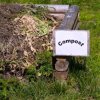
Woven wire animal fencing (like chicken wire), snow fencing, cement blocks, bricks or scrap lumber can all be used to enclose a compost pile.

The enclosure should measure at least 3' x 3' x 3' for efficient composting. For square shaped enclosure may need supports if you're using wire mesh fencing. You can use metal fence posts to anchor the corners or build 4 simple "picture frames" from 2 x 4s to attach the mesh fencing to. Hinge the frames together with door hinges and make a square box. It's not necessary to enclose the bottom.

A small round enclosure made of snow fence will need little or no support. If you use bricks or concrete blocks to build an enclosure, there is no need to use mortar, but you will need to leave enough space between the blocks to allow for adequate air movement.

If you use lumber for any part of the enclosure, you can expect to replace it every few years as decay sets in. Treated lumber may last longer, but it can also leech harmful chemicals into the soil and compost.

Still another idea is to use a 55-gallon barrel (drum) with a hinged lid. You'll need to drill or hammer several rows of _ inch air holes in the sides and bottom. The barrel should sit on concrete blocks to allow for air circulation.

For maximum efficiency, the compost pile needs to consist of the right carbon/nitrogen (brown to green) ratio (between 25:1 to 30:1). If your bin is not completely enclosed on the bottom, use the following recipe:

Bottom Layer (directly on soil): 2-3 inches of chopped brush

Second Layer (browns): 6 to 8 inch layer of leaves, straw, hay, sawdust or other brown.

Third Layer (greens): Add a layer of vegetable waste, grass clippings, etc.

Final Layer: Add a handful of commercial fertilizer or a 2 to 3 inch layer of manure. Finish with a couple of shovelfulls of soil. Soil contains the microorganisms necessary to get the process started.

As you build the pile, water each layer until it's damp (like a wrung out sponge). Continue to add layers as you accumulate them, adding a thin layer of soil to the top of green layers and making sure the whole pile stays moist. Turn the pile with a shovel every few weeks to add air to the pile.

About The Author:
Ellen Brown is our Green Living and Gardening Expert. Click here to ask Ellen a question! Ellen Brown is an environmental writer and photographer and the owner of Sustainable Media, an environmental media company that specializes in helping businesses and organizations promote eco-friendly products and services. Contact her on the web at http://www.sustainable-media.com
Jump to Feedback | Post feedback
Related Links:
Previous: The Happy Garden Newsletter - February 23, 2006 ThriftyFun Next: How to Keep Branches from Growing Back
1x1
 Feedback
1x1
1x1
1x1
1x1
 Sponsors
1x1
1x1

Post By (Guest Post) (06/07/2004)
Why on earth would you want to 'absorb' the bacteria with zeolite???? Its the bacteria and fungi that do the work of breaking down the organic matter. Anything that harms micro-organisms will prevent the composting process.

The quickest way to make compost is in a tumbler - expensive to purchase but turns out a batch in 2-3 weeks. It is possible to make your own with a large barrel and some simple metalwork skills to place a bar through the centre, site it on a stand, (or you can just roll it to tumble), and construct a door to load/unload. I have the instructions in a magazine but there's probably some somewhere on the net.

Compost needs moderate moisture and warmth, and air to work so any construction will need to take these things into account. Construct near a garden tap in a sunny area. The walls need to have slots/holes for air entry.

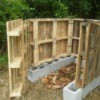
Anything can be used that is the right size to make a four sided box, usually with the front removable for easy loading and unloading. The dimensions are at least 1yard square. Scrap planks of wood are good - even better are wooden pallets, (don't know if they're called that in the US). They are the double layered flat stands used in warehouses to keep goods off the floor and allow stacking with a forklift truck. They can be just wired together - dead easy. Its best to make 3 'bays' so you can have a fresh heap, a partly decomposed heap and a completed heap! Without the tumbler your working heaps will need turning regularly to aerate and fold the outer layers in so everything composts evenly. You can insert an old piece of plastic pipe with holes drilled in it to increase aeration.

I built heaps supported by straw bales at one stage - good insulation and as the bales start to break down after a couple of seasons they can be incorporated into the compost.

You can just make a compost heap on the ground if you have enough material - the heap should be at least 1yard square or 1 yard high/wide and any length - it just takes longer to break down.

The proprtions of carbon to nitrogen are important to get good breakdown - any gardening book will give you that - try the library.

A bit sketchy I'm afraid as I'm in a hurry but hope this helps!

Regards

Jo


Post By (Guest Post) (06/07/2004)
Here are some ideas:
http://www.rrfb.com/pages/Secondary%20pages/Complan.html


Post by Zeolite King (6) | (06/06/2004)
Contact
Adding Zeolite to compost will help keep the nutrients from leaching, will absorb bacteria and will help keep odors at bay. For more information check out www.dirtdoctor.com


1x1

Post Feedback:
Login using the form on the top of the page to post feedback if you have registered with ThriftyFun. If you have not yet registered, click here. It's FREE!. If you are not registered you can post feedback as a guest below. Please don't use your email address for your name because spam robots can dredge it from our site. Please do not post your feedback more than ONCE. We need to approve all guest feedback and it may take from minutes to hours for that to happen.
(1x1 graphic )
Your Name

Subject

Feedback

text tool text tool text tool text tool

Image Upload: Add an image to your post! Click the "Browse" button below and select an image from your hard drive. Please only select gifs or jpegs. If you have any problems, just email the image to images@thriftyfun.com


If you want to post your email address for responses from readers, obscure it in some way like put spaces between the name and @ sign and service address with (remove spaces) behind it or name (at) server (dot) com . This is for your protection from those creepy Robots.

(1x1 graphic )

© 1997-2008ThriftyFun.com - Design by Cumuli Design
Disclaimer: ThriftyFun.com cannot accept any responsibility for any injury or damage that you may cause to yourself, others, or property when following any advice given on this site. Read the full disclaimer. If you find any information on ThriftyFun.com or in our newsletters that is either erroneous and/or potentially harmful to others, please Contact Us, immediately.