Cheryl
A: Cheryl,
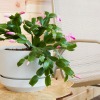
It sounds like sooty mold. This type of mold is associated with aphids, scales, and other sucking insects. The insects excrete a sticky substance called honeydew, that unless washed off by the rain, sticky to the leaves. The spores of sooty molds then travel by wind and land on the sticks honeydew to develop. These molds develop exclusively on honeydew, and although the molds themselves won't harm your plant, they look pretty awful and if you have a large mold problem, the leaves may not receive enough light.
To control sooty mold you need to control the sucking insects that secret the honeydew (in your case, probably aphids or scale).
About The Author: Ellen Brown is our Green Living and Gardening Expert. Click here to ask Ellen a question! Ellen Brown is an environmental writer and photographer and the owner of Sustainable Media, an environmental media company that specializes in helping businesses and organizations promote eco-friendly products and services. Contact her on the web at http://www.sustainable-media.com
Add your voice! Click below to answer. ThriftyFun is powered by your wisdom!
Hopefully some help that I got from NDSU Extension office.
Q: Can you tell me what kind of fungus is growing on the enclosed sample of white lilac bush? (Cando, N.D.)
You have two maladies with the present lilac. One is the shelf-like structure on the wounded branch. What is happening is internal rot and what you are seeing are the results of this process. It is often found on old trees that have fallen or will soon fall, from internal decay.
The other disease is powdery mildew. This usually arrives on lilac leaves in late July or August. To keep under control, spray with sulfur, Bordeaux mixture or Benlate prior to the disease showing up.
Add your voice! Click below to answer. ThriftyFun is powered by your wisdom!