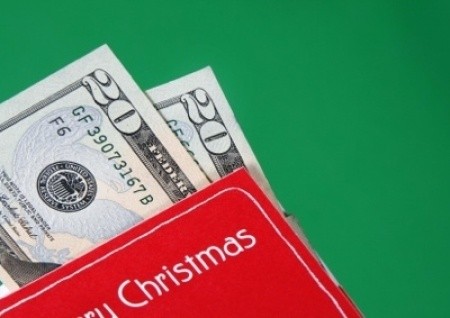
When your children receive cash gifts for the holidays or their birthdays, it's a parent's job to be fiscally responsible with it. You want your children to enjoy it, but you want them to learn how to manage their money at the same time. Likewise, investing a child's money is different than investing your own. How can you be a fiscally responsible parent?
It's important that children have some fun with their money. Just like when we diet, if you deny yourself snacks for too long you're headed towards a binge. Children who never handle their own money are bound to go on a spending spree the first time they control some cash. Instead, split their money.
If your eight-year-old daughter receives $50 from her grandparents, allow her to spend $25. Help her to make a wise spending decision, but let it be her decision. She might opt for the toy she didn't receive at the holiday, or she might head to the movies. It's her choice. Feel free to save another $25 for spending on the family vacation or later in the year. Either way, you're teaching her to save half of her money.
Talk to your bank about opening a custodial account for your child. Credit unions offer them, and so do some banks. The account will allow the balance to be low, and it will require you to sign off on any withdrawals to the account.
The benefits of the account aren't monetary. It's a safe house for the money, and it will allow your child to see the money accumulate. The small amount of interest earned won't impress anyone other than your child.
Interest rates on certificates of deposit are extremely low right now, but when they rise they make nice investments. Once your child accumulates $500 in his account, investigate the rates and purchase a CD. Consider purchasing the shortest term investment available to take advantage of future rates; they're bound to rise.
Savings bonds seem to be an antiquated way to save, but right now they're earning more interest than CDs. Pay attention to the penalties for early withdrawal and watch your rates. You can cash out bonds in a few years if CDs offer a better return. While the bond won't give it's advertised rate (most are purchased for half of the amount that they carry when mature) it will give more than the original investment. However, for extremely young children, these long standing savings are easy and guaranteed. Antiquated or not, they still work.
Once a CD or savings bond is cashed or reaches maturity, you'll be required to pay taxes on the interest. The taxes are waived until maturity or cash out. One way around it is to use the money for college. If investments are cashed out to pay for higher education, the taxes are waived. A nice plan is to make a deal with your child to "trade" the bonds. For instance, if my son wants to buy a car I'll give him the $5,000 in return for his still immature $5,000 savings bonds. They still have his name, but we agree that they're mine. Then, when he heads off to college I'll cash them in to pay the tuition and avoid the taxes. He learned to save, he reaped the benefits of his cash gifts, and we saved on taxable interest.
Add your voice! Click below to comment. ThriftyFun is powered by your wisdom!
My kids each get $100 dollars for their birthday from my grandparent's estate. We have them use the money for their birthday parties (including activities, cake, snacks, and party favors). They get to plan whatever they want and keep what money is left over. We have a few rules for example, if your party is during a meal time you must provide food.
This helps us because otherwise we wouldn't be able to afford the big skating party or whatever it is they want, but it also helps them learn to work within a budget. They plan and calculate deciding what is really important to them and get excited about finding pizza coupons and sales. They've really toned back the number of people they want to invite and how "much" they want to do now that the cost means something to them. Some years they decide to go for the big expensive outings, other years they've planned smaller parties at home with fun activities, either way they've always had a blast. Instead of throwing the money away on toys they'll forget in a few months, they are buying themselves an experience they'll remember forever.
They also get money for Christmas and always agree to pool it toward a family gift or activity. This year they're taking us to Great Wolf Lodge for two days at the water park we agreed to pay for food and their combined $300 will pay for admission/hotel room and the wand game. They had been begging to go, but we just didn't have the money to take them but they were able to make it happen by working together. One year, we decided to go without any Christmas gifts (except Santa) and pool all the money we would have spent, plus their gift money and money we saved over the year, to buy a hot tub. Another year they purchased a video game system.
We also put half their allowance into savings. This amounts to about $20 a month. This money is used for major expenses we approve, like new bikes or a DS. Hopefully this will teach them to save, plan, budget, and work together to pay for the things they want.
Mine always got money for birthdays or Christmas, when he had many other presents. I always put it aside in his bank account. He never missed it. When he was older, he bought his first used car with that money (he had a job from the time he was 12 years old). He used some for college, and we gave him the rest after he was married and getting his graduate degrees, a time when he really appreciated it. It meant so much more to him when he was older and knew the value of money.
Add your voice! Click below to comment. ThriftyFun is powered by your wisdom!